

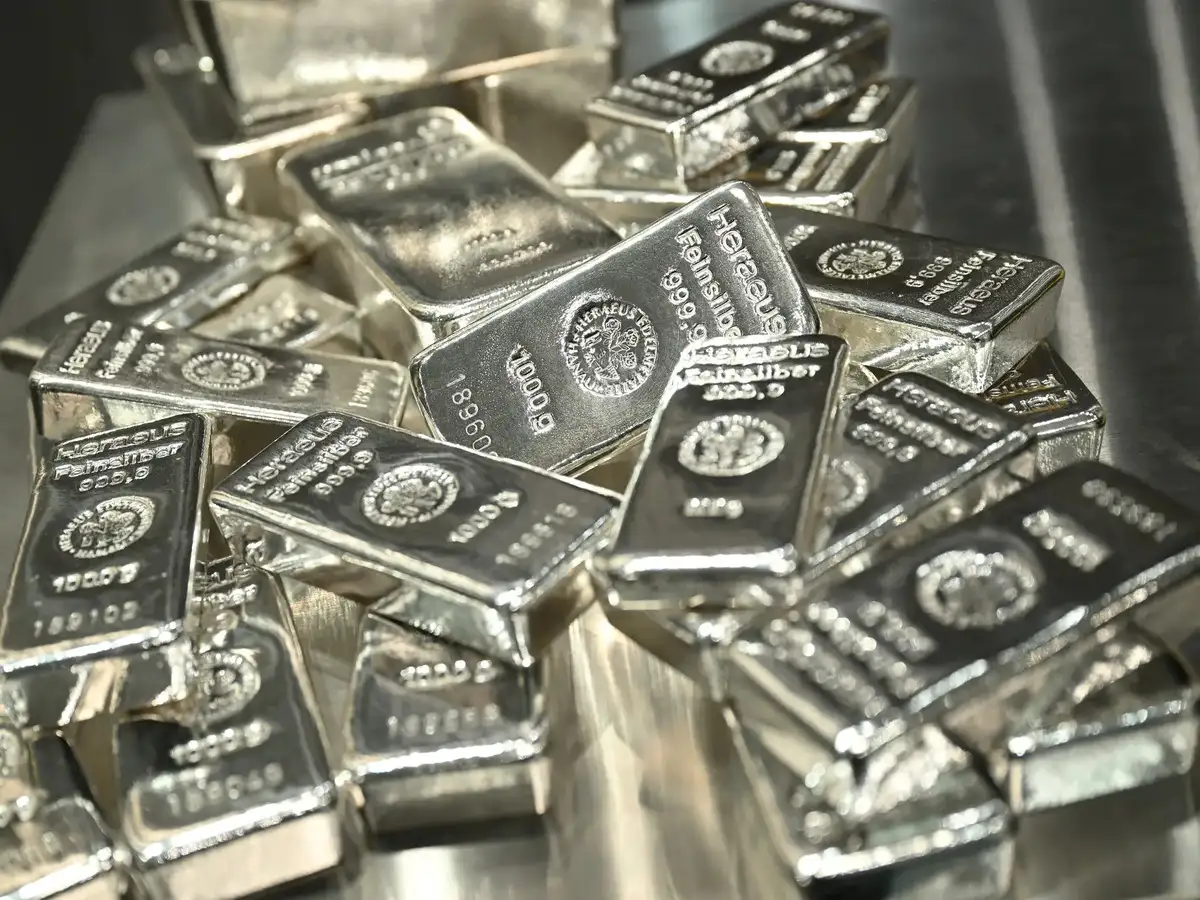
Silver prices slip in domestic and global markets as investors react to currency movements, bond yields and shifting risk sentiment. The correction has triggered fresh debate among retail investors about portfolio allocation and strategy in volatile commodity markets.
Silver prices slip at a time when commodity markets are facing heightened volatility driven by global macroeconomic signals and fluctuating investor appetite for risk assets. In India, silver is closely tracked not only as a precious metal but also as an industrial input used in electronics, solar panels and manufacturing. When prices correct after a rally, retail investors often see it as either a buying opportunity or a warning sign. Understanding the drivers behind the move is essential before making allocation decisions.
Why Silver Prices Move in Global Commodity Markets
Silver is influenced by a mix of monetary and industrial factors. Unlike gold, which is primarily viewed as a store of value, silver has dual characteristics. It acts as a hedge during uncertainty but also tracks industrial demand trends. When global bond yields rise or the dollar strengthens, precious metals often face downward pressure. This is because higher yields increase the opportunity cost of holding non interest bearing assets like silver.
Industrial demand also matters. Slowdowns in manufacturing or reduced demand in sectors like solar energy and electronics can weigh on prices. On the other hand, expectations of infrastructure spending and renewable energy growth can support long term demand. For Indian investors, tracking global cues alongside domestic rupee movement is critical since currency fluctuations directly affect landed prices.
Impact on Retail Investors in India
Retail investors in India typically access silver through physical purchases, exchange traded funds, sovereign instruments or commodity derivatives. When silver prices slip, short term traders may exit positions to limit losses, while long term investors may consider staggered accumulation.
For investors in Tier 2 and Tier 3 cities, physical silver remains popular due to cultural familiarity and accessibility. However, price volatility can create liquidity challenges if purchases are made at peak levels. Digital silver and ETF routes offer greater price transparency and easier exit options. Investors must evaluate storage costs, purity concerns and transaction charges when choosing the physical route.
Portfolio Diversification and Precious Metals Allocation
Commodity markets can be unpredictable. Financial planners often recommend limiting precious metals allocation to a defined percentage of a diversified portfolio. Silver can act as a hedge against inflation and currency depreciation, but excessive concentration exposes investors to sharp price swings.
When silver prices correct, disciplined allocation becomes more important than timing the market. Systematic investment approaches in silver ETFs can reduce the impact of volatility. Investors should avoid leveraging commodity trades unless they fully understand margin risks and mark to market settlements. A balanced approach combining equities, debt and limited commodity exposure tends to deliver more stable long term outcomes.
Trading Versus Investing in Volatile Phases
The strategy differs for traders and investors. Short term traders monitor technical indicators, global commodity trends and intraday price movements. Stop loss discipline is essential in volatile phases. For long term investors, the focus should be on structural demand drivers such as renewable energy expansion, electric mobility and industrial usage.
India’s push toward solar energy capacity supports long term silver demand due to its use in photovoltaic cells. However, short term price corrections may not reflect changes in underlying demand fundamentals. Investors must differentiate between temporary sentiment driven dips and structural demand shifts.
Risk Management in Commodity Investing
Risk management is central when silver prices slip. Commodities can react sharply to geopolitical developments, central bank commentary and inflation data. Retail investors should avoid allocating emergency funds to volatile assets. Liquidity planning is equally important since commodity prices can remain subdued for extended periods.
Diversification across asset classes reduces dependency on a single commodity cycle. Investors should also track taxation norms applicable to physical silver, ETFs and derivatives. Understanding holding period classification and capital gains treatment helps avoid unexpected tax liabilities.
Silver continues to remain relevant in both traditional and modern portfolios. However, reacting emotionally to short term price declines can lead to suboptimal decisions. A data driven and allocation focused approach offers better resilience in uncertain markets.
Takeaways
Silver prices are influenced by both monetary factors and industrial demand trends
Retail investors should differentiate between short term volatility and long term fundamentals
Portfolio diversification helps manage risk in volatile commodity markets
Disciplined allocation and staggered investing reduce timing risks
FAQs
Q1. Why do silver prices fall when bond yields rise
Higher bond yields increase the opportunity cost of holding non interest bearing assets like silver, which can lead to price declines.
Q2. Is silver a good hedge against inflation
Silver can act as a partial hedge against inflation, but it is more volatile than gold due to its industrial demand component.
Q3. Should retail investors buy silver during a price dip
Investors should evaluate their asset allocation and financial goals before buying. Staggered investments are generally safer than lump sum exposure during volatile periods.
Q4. What are the safest ways to invest in silver in India
Silver ETFs and regulated digital platforms offer transparency and liquidity, while physical silver requires attention to purity and storage considerations.










Leave a comment