

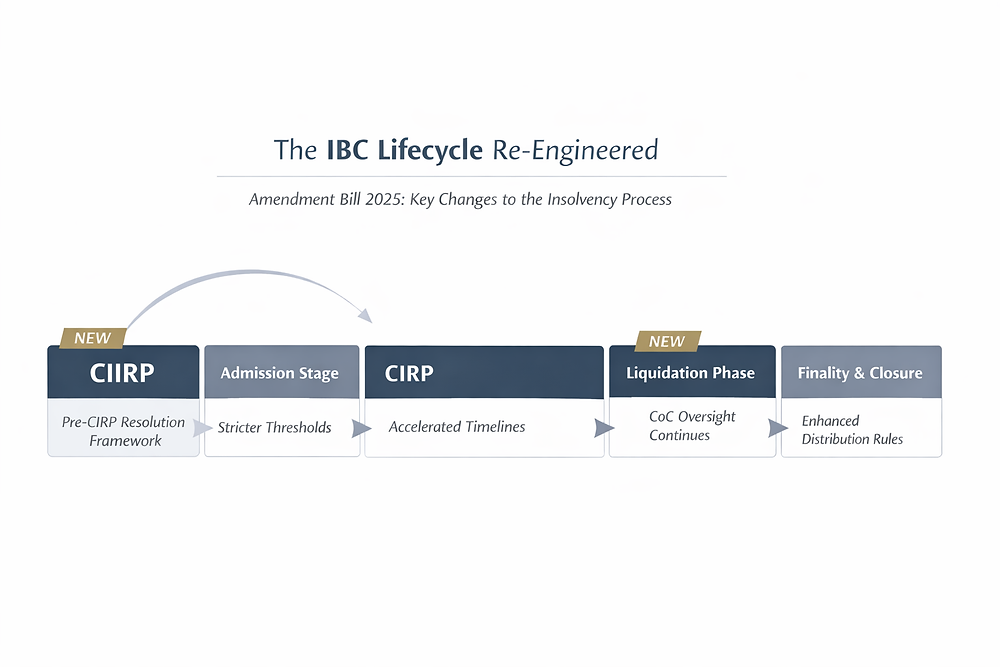
The Insolvency and Bankruptcy Code amendment plan is set to influence how stressed businesses restructure debt and manage operational risk. For local enterprises and MSMEs, proposed changes could affect creditor rights, resolution timelines, and access to revival mechanisms.
The Insolvency and Bankruptcy Code amendment plan is significant for local businesses because the IBC framework determines how financial distress is resolved in India. Since its introduction in 2016, the code has reshaped corporate insolvency resolution by creating a time bound process under the National Company Law Tribunal. Any amendment alters the balance between creditors, promoters, and operational stakeholders.
Why the IBC Amendment Plan Matters for MSMEs
The IBC was designed to address mounting non performing assets and improve credit discipline. Over the years, amendments have focused on faster resolution, protection for homebuyers, and clarity around creditor hierarchy. For MSMEs and regional enterprises, the law is not just about large corporate defaults. It affects supplier payments, loan restructuring, and survival during downturns.
Local manufacturers, traders, and service providers often function as operational creditors. When a large buyer enters insolvency, MSMEs face delayed dues. Amendments that strengthen operational creditor representation in the committee of creditors can directly impact recovery prospects.
The introduction of pre pack insolvency for MSMEs in earlier reforms was a major step. It allowed quicker restructuring with minimal disruption. If the current amendment plan expands or refines the pre pack mechanism, it could reduce liquidation risks for small businesses.
Operational Risks and Creditor Dynamics
Operational risks under the IBC framework arise when cash flow disruptions escalate into insolvency proceedings. Once admitted by the NCLT, control shifts from promoters to a resolution professional. For local businesses, this can mean uncertainty in contracts, halted production, and reputational damage.
The amendment plan is expected to address delays in admission and resolution. While the original code prescribed a 180 day resolution timeline extendable to 330 days, practical delays have often stretched cases. Streamlining procedural bottlenecks is critical for preserving asset value.
Another area of focus is the treatment of personal guarantors. Many MSME promoters provide personal guarantees to secure loans. Clarity in enforcement norms and coordination between corporate and individual insolvency proceedings can influence promoter risk exposure.
Restructuring Mechanisms and Pre Pack Insolvency
Restructuring under the IBC is creditor driven. Financial creditors vote on resolution plans based on feasibility and viability. Local businesses need to understand that majority voting by financial creditors determines the outcome, often leaving operational creditors with limited influence.
The pre pack insolvency process for MSMEs allows debtors and creditors to negotiate a base resolution plan before formal admission. This reduces litigation and preserves business continuity. If amendments strengthen transparency safeguards and prevent misuse, more MSMEs may opt for this route instead of facing full scale insolvency.
Additionally, proposals to introduce a group insolvency framework have been discussed in policy circles. For businesses operating through multiple related entities, such a framework would allow coordinated resolution. This can reduce fragmentation of assets and improve recovery.
Impact on Credit Culture and Lending Environment
The Insolvency and Bankruptcy Code amendment plan also affects how banks and non banking financial companies assess credit risk. A strong insolvency framework improves lender confidence, encouraging more structured lending to SMEs.
If amendments enhance recovery rates and shorten resolution timelines, banks may become more willing to extend working capital to regional businesses. On the other hand, stricter enforcement norms could make lenders more cautious, especially toward highly leveraged sectors.
For local enterprises, maintaining transparent financial records and compliance is essential. In an environment where insolvency processes are becoming more efficient, early engagement with lenders during stress can prevent formal proceedings.
Compliance and Governance Expectations
One indirect effect of IBC amendments is improved corporate governance standards. Businesses that maintain proper documentation, audited accounts, and statutory compliance are better positioned during restructuring.
Promoters must also understand the implications of being classified as wilful defaulters or fraudulent borrowers. The IBC bars certain defaulting promoters from regaining control of their companies during resolution. This principle is unlikely to be diluted and continues to shape promoter behaviour.
Local businesses should review loan covenants, security structures, and cross default clauses. A technical default can trigger insolvency proceedings if not addressed promptly. Proactive financial planning reduces exposure to such risks.
Takeaways
The IBC amendment plan may refine timelines and creditor rights, affecting MSME recovery prospects
Pre pack insolvency remains a key restructuring tool for small businesses
Promoters face heightened scrutiny, especially regarding personal guarantees
Stronger insolvency mechanisms can improve credit access but demand better governance
FAQs
Q1. What is the main objective of the IBC amendment plan?
It aims to improve resolution efficiency, reduce delays, and balance the interests of creditors and debtors within the insolvency framework.
Q2. How does insolvency affect operational creditors like MSMEs?
Operational creditors may face delays in recovering dues when a debtor enters insolvency. Amendments that improve representation can enhance recovery prospects.
Q3. What is pre pack insolvency for MSMEs?
It is a restructuring mechanism that allows negotiation of a resolution plan before formal insolvency admission, ensuring faster and less disruptive outcomes.
Q4. Can promoters lose control of their company under IBC?
Yes. Once insolvency proceedings begin, management shifts to a resolution professional, and defaulting promoters may be barred from bidding for their own company.











Leave a comment