

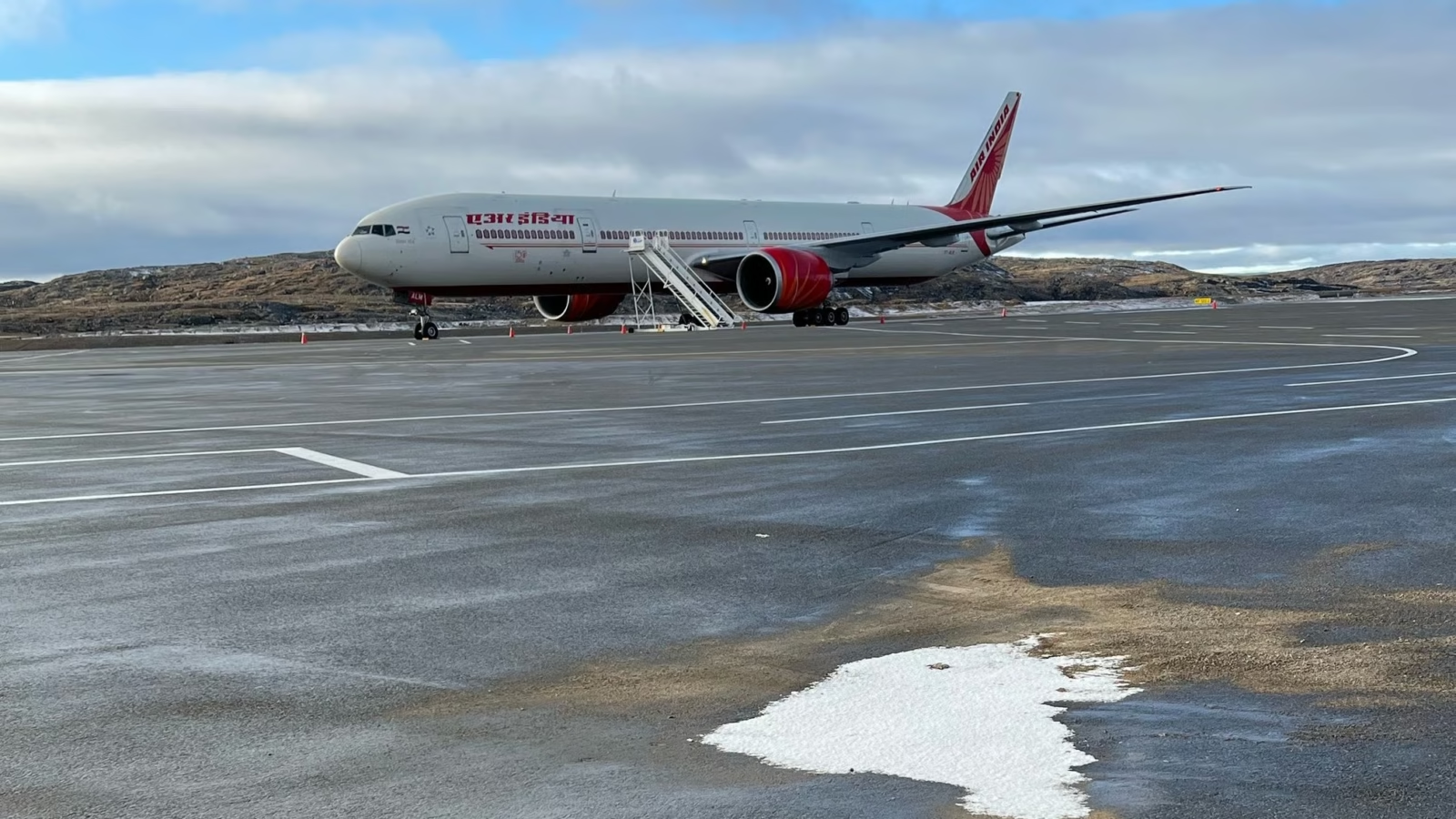
The impact of Middle East tensions on Indian aviation and export logistics is becoming visible as airlines adjust routes and exporters factor in higher freight costs. Airspace restrictions and geopolitical risk are influencing fuel expenses, delivery timelines, and trade flows.
The impact of Middle East tensions on Indian aviation and export logistics is significant because the region is a critical transit corridor for passenger traffic, cargo movement, and energy supplies. Escalating geopolitical risks have led to airspace restrictions, heightened insurance premiums, and route diversions that directly affect Indian carriers and exporters.
This is a time sensitive development. The Middle East connects India to Europe, North America, and parts of Africa through major air corridors and maritime routes. Any disruption in this region alters cost structures and delivery schedules.
Airspace Restrictions And Airline Route Diversions
Indian aviation depends heavily on overflight routes across West Asia for long haul international services. When tensions rise, certain airspaces may become restricted or airlines may avoid them due to safety advisories.
Route diversions increase flying time. Longer flight paths lead to higher aviation turbine fuel consumption. Fuel is one of the largest cost components for airlines, often accounting for a substantial share of operating expenses.
Extended flight duration also affects crew scheduling, aircraft rotation, and turnaround times. For budget carriers and full service airlines alike, this reduces operational efficiency.
Passengers may experience longer travel times and potentially higher fares if fuel costs remain elevated. For airlines already operating on tight margins, prolonged disruptions can strain profitability.
Impact On Air Cargo And Export Logistics
India’s export logistics ecosystem relies on both air freight and sea routes that pass near the Middle East. High value goods such as pharmaceuticals, electronics, perishables, and engineering components frequently move via air cargo.
If airlines reroute flights, cargo delivery timelines can extend. Exporters operating under strict contractual obligations face penalties for delays. Time sensitive sectors such as fresh produce and medical supplies are particularly vulnerable.
Insurance premiums for cargo can also rise during geopolitical tensions. Higher risk perception translates into increased shipping and freight insurance costs.
For small and medium exporters in cities such as Surat, Coimbatore, Ludhiana, and Jaipur, even marginal increases in freight rates can affect competitiveness in global markets.
Energy Prices And Cost Pressures
Another indirect impact of Middle East tensions is through crude oil prices. India imports a significant portion of its energy needs. Escalation in the region often leads to volatility in global oil markets.
Higher crude prices increase aviation turbine fuel costs. They also raise input costs across industries including chemicals, plastics, and manufacturing sectors dependent on petroleum derivatives.
Export oriented industries that operate on thin margins may find it difficult to pass on increased logistics costs to international buyers. This compresses profitability.
For domestic consumers, sustained fuel price increases can translate into broader inflationary pressures, influencing demand patterns and travel decisions.
Maritime Trade Routes And Shipping Risks
Beyond aviation, maritime logistics are equally critical. A significant share of India’s trade passes through the Arabian Sea and nearby strategic chokepoints.
If shipping routes become risk prone due to regional instability, vessels may take longer routes or face delays. Freight charges can rise due to higher insurance premiums and risk surcharges.
Container availability and port congestion can compound the issue. During past disruptions, shipping rates have spiked sharply within weeks, impacting exporters and importers alike.
Indian exporters dealing in bulk commodities, textiles, and machinery must closely monitor shipping schedules and contractual clauses related to force majeure.
Government And Industry Response
Indian authorities typically monitor such developments through civil aviation regulators, shipping ministries, and external affairs channels. Airlines may coordinate with global aviation bodies to assess safe corridors.
Export promotion councils and trade bodies often advise members on risk mitigation strategies, including diversification of routes and forward booking of freight capacity.
Large exporters may hedge fuel and freight costs. Smaller businesses, however, have limited capacity to absorb shocks. This makes policy coordination and communication critical during prolonged tensions.
The ability of Indian aviation and logistics networks to adapt quickly determines the scale of disruption.
Long Term Strategic Considerations
Repeated geopolitical flare ups highlight the need for diversification in trade routes and supply chains. India’s investment in domestic manufacturing, multimodal logistics parks, and alternative shipping corridors can reduce vulnerability.
Airlines may reassess fleet deployment strategies to optimize fuel efficiency on longer routes. Exporters may explore regional warehousing hubs closer to key markets.
While short term volatility is unavoidable, structural resilience depends on infrastructure development and strategic planning.
Takeaways
• Middle East tensions are increasing fuel costs and causing airline route diversions
• Air cargo and export logistics face delays and higher insurance expenses
• Rising crude prices can amplify cost pressures across sectors
• Strategic diversification of routes and supply chains can improve resilience
FAQs
Q1. How do Middle East tensions affect Indian airlines
Airlines may reroute flights to avoid restricted airspace, increasing fuel consumption and operating costs.
Q2. Why are exporters concerned about these tensions
Disruptions can delay shipments, raise freight rates, and increase insurance premiums.
Q3. Does this impact ticket prices
If higher fuel and operational costs persist, airlines may pass some of the burden to passengers.
Q4. Can India reduce its exposure to such risks
Long term solutions include diversifying trade routes, improving domestic logistics infrastructure, and strengthening supply chain resilience.











Leave a comment