

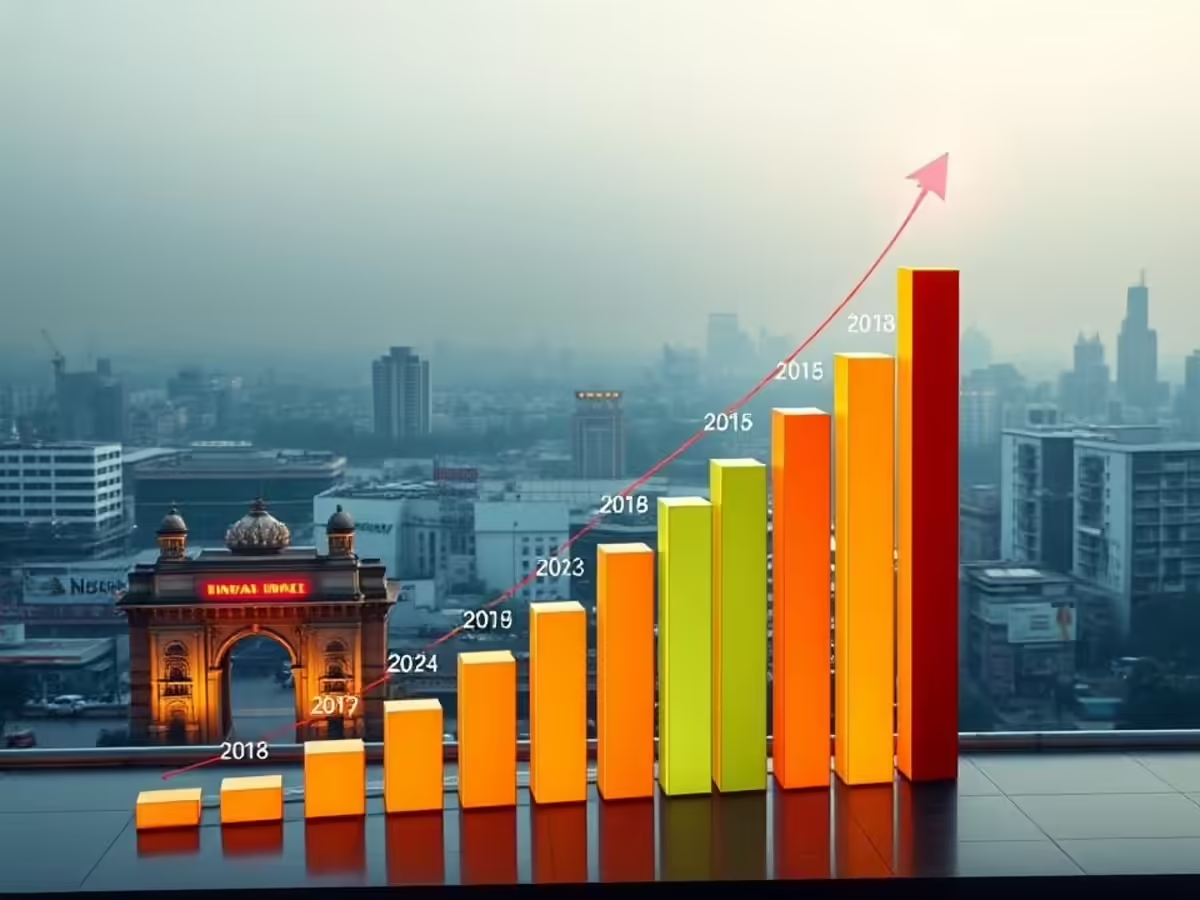
India’s ad market growth forecast is increasingly pointing to a shift in media spending toward smaller cities. Brands are recalibrating marketing strategies as digital adoption, regional content consumption, and rising incomes reshape advertising priorities beyond major metropolitan markets.
India ad market growth forecast signals structural demand shift
India’s ad market growth forecast reflects a broader transformation in how brands allocate marketing budgets across geographies. Over the past decade, metropolitan regions dominated advertising investments due to higher purchasing power and concentrated media infrastructure. However, economic growth in smaller cities has begun to change this dynamic.
Tier 2 and Tier 3 urban centres are witnessing improvements in disposable income, digital connectivity, and consumer awareness. This has made them increasingly attractive for marketers seeking new customer segments. As a result, advertising strategies are evolving from metro centric campaigns to geographically diversified outreach.
Market analysts note that the expansion of ecommerce, fintech services, and regional entertainment platforms has accelerated brand visibility in these regions. Companies that once prioritised large cities are now designing targeted campaigns that reflect local cultural preferences and consumption patterns.
Digital advertising expansion reshapes regional media strategies
Digital advertising growth has been a key driver behind changing media spending patterns in smaller cities. Smartphone penetration, affordable data plans, and vernacular internet usage have enabled advertisers to reach audiences with greater precision. This has reduced dependence on traditional mass media channels such as print and television.
Programmatic advertising tools allow brands to customise messaging based on language, location, and user behaviour. This approach is particularly effective in smaller markets where regional identity plays a strong role in consumer decision making. Social media platforms, video streaming services, and short format content applications are emerging as dominant advertising channels.
The shift toward performance driven marketing is also influencing spending decisions. Advertisers increasingly seek measurable outcomes such as conversion rates, engagement metrics, and return on investment. This has strengthened the case for digital first campaigns in cities that were previously considered difficult to access through conventional media networks.
Regional content ecosystem boosts advertising opportunities
The rise of regional content has played a crucial role in shaping India’s ad market growth forecast. Entertainment platforms producing content in local languages have expanded audience engagement across smaller cities. This has created new advertising inventory for brands looking to connect with diverse consumer bases.
Regional influencers and content creators are becoming important intermediaries between brands and audiences. Their ability to communicate in culturally relevant ways enhances trust and credibility, particularly in markets where national advertising narratives may not resonate strongly.
Traditional media is also adapting to this shift. Regional television channels, radio stations, and print publications are investing in digital integration to remain competitive. Hybrid media strategies that combine offline reach with online targeting are becoming common in campaigns aimed at semi urban and rural audiences.
Economic drivers and long term advertising growth outlook
Economic indicators such as infrastructure development, industrial expansion, and improved financial inclusion are contributing to consumption growth in smaller cities. Government initiatives focused on digital literacy, rural entrepreneurship, and regional industrialisation are further supporting this trend.
For advertisers, these developments represent an opportunity to build early brand loyalty in emerging markets. Companies that establish strong regional presence can benefit from long term customer relationships as purchasing power continues to rise. This has prompted a gradual redistribution of marketing budgets across India’s urban hierarchy.
Industry observers suggest that India’s advertising ecosystem is moving toward a more balanced growth model. While metropolitan markets will remain significant, incremental expansion is likely to come from smaller cities where consumer aspirations are evolving rapidly.
Takeaways
• India ad market growth forecast highlights rising importance of smaller cities
• Digital advertising and regional content are key drivers of spending shifts
• Economic growth and infrastructure development are expanding consumer markets
• Brands are adopting localised strategies to build long term regional presence
FAQ
Why are advertisers focusing more on smaller cities in India
Rising incomes, digital adoption, and expanding consumer demand are making these markets more attractive.
How is digital media influencing advertising in Tier 2 regions
Digital platforms allow targeted campaigns, measurable outcomes, and regional language engagement.
Which sectors are leading advertising expansion in smaller cities
Ecommerce, fintech, consumer goods, and entertainment services are major contributors.
Will metro cities lose advertising importance
Metros will remain significant, but incremental growth is expected from emerging urban markets.











Leave a comment