


India’s business conclaves are no longer limited to major metropolitan cities. Industry events, investment summits, startup conferences, and MSME expos are increasingly being organised in Tier 2 and Tier 3 cities, creating new opportunities for entrepreneurs, investors, local industries, and regional economies.
India’s Business Conclaves Are Expanding Beyond Metro Cities
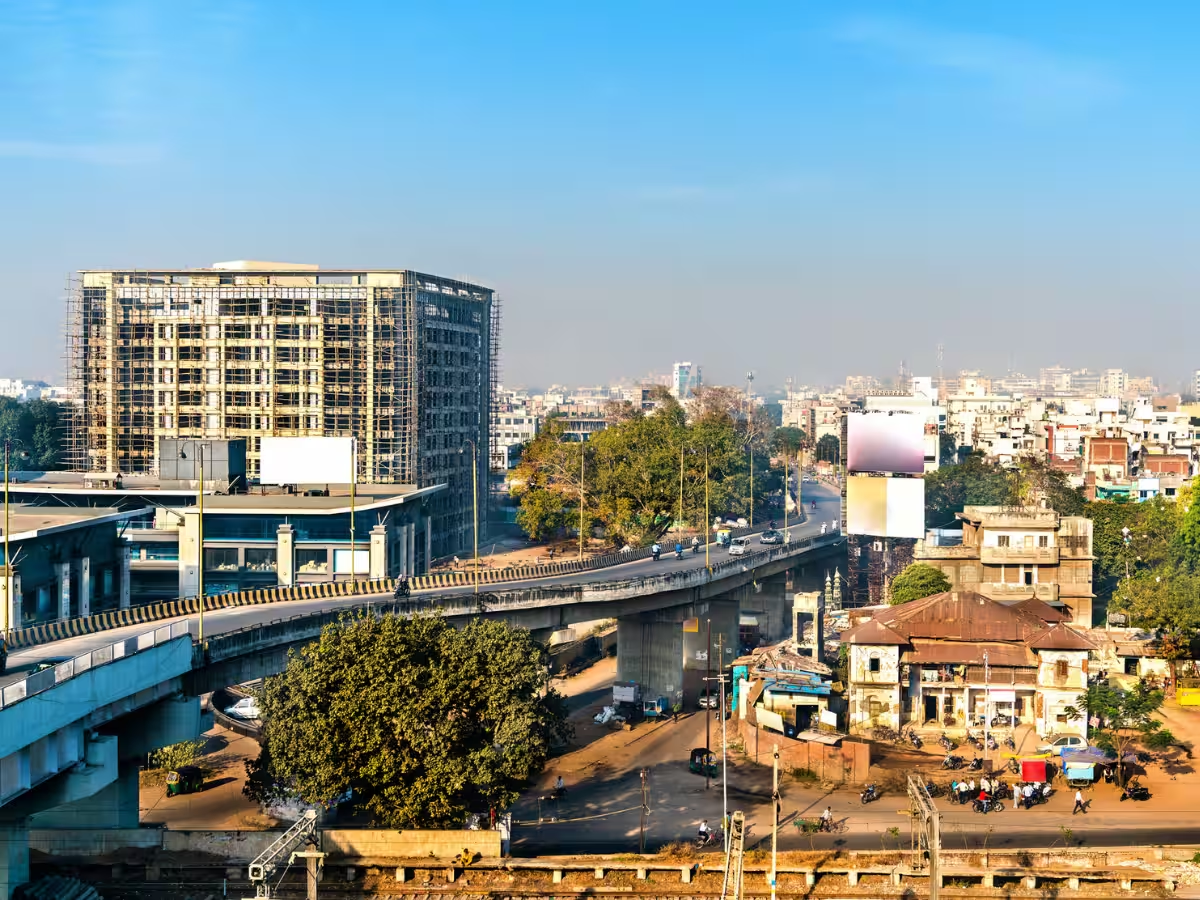
India’s business conclaves are undergoing a noticeable transformation. While cities like Mumbai, Delhi, Bengaluru, Hyderabad, and Chennai continue to host major corporate events, an increasing number of business conferences, startup summits, investor meets, and MSME expos are being organised in emerging cities across the country.
This shift reflects India’s changing economic landscape. Smaller cities are contributing more to industrial production, manufacturing, services, technology, logistics, and entrepreneurship than ever before. Governments, industry associations, and private organisations are recognising that future economic growth will come from a broader geographic base rather than being concentrated in metropolitan regions alone.
For entrepreneurs and businesses located outside metros, this trend brings easier access to investors, policymakers, technology providers, and networking opportunities without the need for expensive travel.
Tier 2 and Tier 3 Cities Are Becoming Business Destinations
Growth of regional business ecosystems
Over the past decade, cities such as Indore, Nagpur, Surat, Coimbatore, Kochi, Bhubaneswar, Lucknow, Jaipur, Chandigarh, Visakhapatnam, and Mysuru have strengthened their business ecosystems.
Improved infrastructure, expanding airports, better highways, digital connectivity, and supportive state government policies have encouraged companies to establish operations beyond traditional business hubs.
Business conclaves organised in these cities often highlight local industries including manufacturing, agriculture, logistics, healthcare, textiles, food processing, information technology, renewable energy, tourism, and financial services.
These events allow regional businesses to showcase their strengths while attracting investors looking for opportunities outside highly competitive metro markets.
Investment Summits Are Supporting Regional Economic Growth
Investment opportunities in emerging cities
State governments are increasingly organising investment summits to promote industrial development in different regions.
These events bring together business leaders, government officials, investors, financial institutions, and entrepreneurs to discuss investment opportunities, infrastructure projects, policy reforms, and sector-specific growth.
Many investment summits also feature announcements related to industrial parks, logistics hubs, renewable energy projects, manufacturing clusters, and startup support initiatives.
Although not every Memorandum of Understanding (MoU) announced during such events results in immediate investment, these conclaves often serve as the starting point for future business collaborations and long-term economic development.
Startup Conferences Are Reaching Regional Entrepreneurs
Startup ecosystem beyond metro cities
India’s startup ecosystem is expanding beyond Bengaluru, Delhi NCR, Mumbai, and Hyderabad.
Incubators, accelerators, educational institutions, industry bodies, and government agencies are hosting startup conclaves in smaller cities to encourage local innovation.
These conferences provide founders with opportunities to interact with venture capital firms, angel investors, successful entrepreneurs, mentors, and technology experts.
For first-time entrepreneurs from Tier 2 and Tier 3 cities, attending regional startup events is often more practical and affordable than travelling to metro cities.
Many successful startups today have emerged from smaller cities by solving local challenges in agriculture, healthcare, education, logistics, financial technology, and manufacturing.
MSME Conclaves Are Strengthening Local Businesses
MSME growth through business networking
Micro, Small and Medium Enterprises (MSMEs) form a significant part of India’s economy, contributing to employment, exports, and manufacturing output.
Business conclaves dedicated to MSMEs focus on digital transformation, financing options, export opportunities, government schemes, quality certification, and technology adoption.
These events help small business owners understand changing market trends while connecting them with banks, financial institutions, industry experts, consultants, and potential buyers.
Networking sessions also create opportunities for business partnerships that may not have been possible through traditional business channels.
As a result, many regional enterprises are becoming more competitive both within India and in international markets.
Technology Is Making Business Events More Accessible
Hybrid conferences have further expanded participation in business conclaves.
Many events now offer live streaming, virtual networking sessions, online workshops, and digital exhibition platforms alongside physical conferences.
This enables entrepreneurs from remote areas to participate even if they cannot travel.
Digital platforms also allow businesses to continue discussions with investors, suppliers, and clients after the event concludes.
The growing use of technology has made business networking more inclusive and cost-effective for small and medium-sized enterprises.
Challenges That Still Need Attention
Despite positive developments, several challenges remain.
Some regional cities still require better convention infrastructure, improved public transport, greater hotel capacity, and stronger connectivity to host large-scale international business events.
There is also a need for consistent follow-up after investment announcements to ensure projects move beyond initial agreements.
In addition, organisers must focus on providing practical business sessions instead of promotional presentations, ensuring that entrepreneurs gain actionable insights and meaningful networking opportunities.
Addressing these issues will help regional business conclaves deliver stronger economic outcomes.
The Road Ahead for India’s Regional Business Events
India’s business conclaves are becoming more geographically diverse as economic activity spreads across the country. Regional cities are emerging as important centres for entrepreneurship, manufacturing, technology, and investment.
By bringing industry leaders, investors, startups, policymakers, and local businesses together, these events are helping build stronger regional economies while creating opportunities that were once concentrated in metro cities.
As infrastructure improves and digital connectivity continues to expand, business conclaves in Tier 2 and Tier 3 cities are likely to play an even greater role in shaping India’s future economic growth.
Key Takeaways
- Business conclaves are increasingly being organised in Tier 2 and Tier 3 cities across India.
- Regional investment summits and startup conferences are attracting entrepreneurs and investors alike.
- MSMEs benefit through networking, technology adoption, financing opportunities, and market access.
- Better infrastructure and stronger follow-up on investment commitments will further strengthen regional business ecosystems.
FAQs
Q1. Why are business conclaves moving beyond metro cities?
Businesses and governments recognise that emerging cities offer growing markets, lower operating costs, improving infrastructure, and expanding entrepreneurial ecosystems.
Q2. How do regional business conclaves benefit MSMEs?
They provide access to investors, government officials, financial institutions, technology providers, industry experts, and new business partnerships.
Q3. Are investment announcements at conclaves always implemented?
Not always. Many announcements begin with Memorandums of Understanding, and actual project implementation depends on regulatory approvals, financing, and execution timelines.
Q4. Which sectors benefit the most from regional business conclaves?
Manufacturing, logistics, agriculture, healthcare, renewable energy, information technology, financial services, food processing, tourism, and startups are among the sectors that benefit significantly.










Leave a comment