

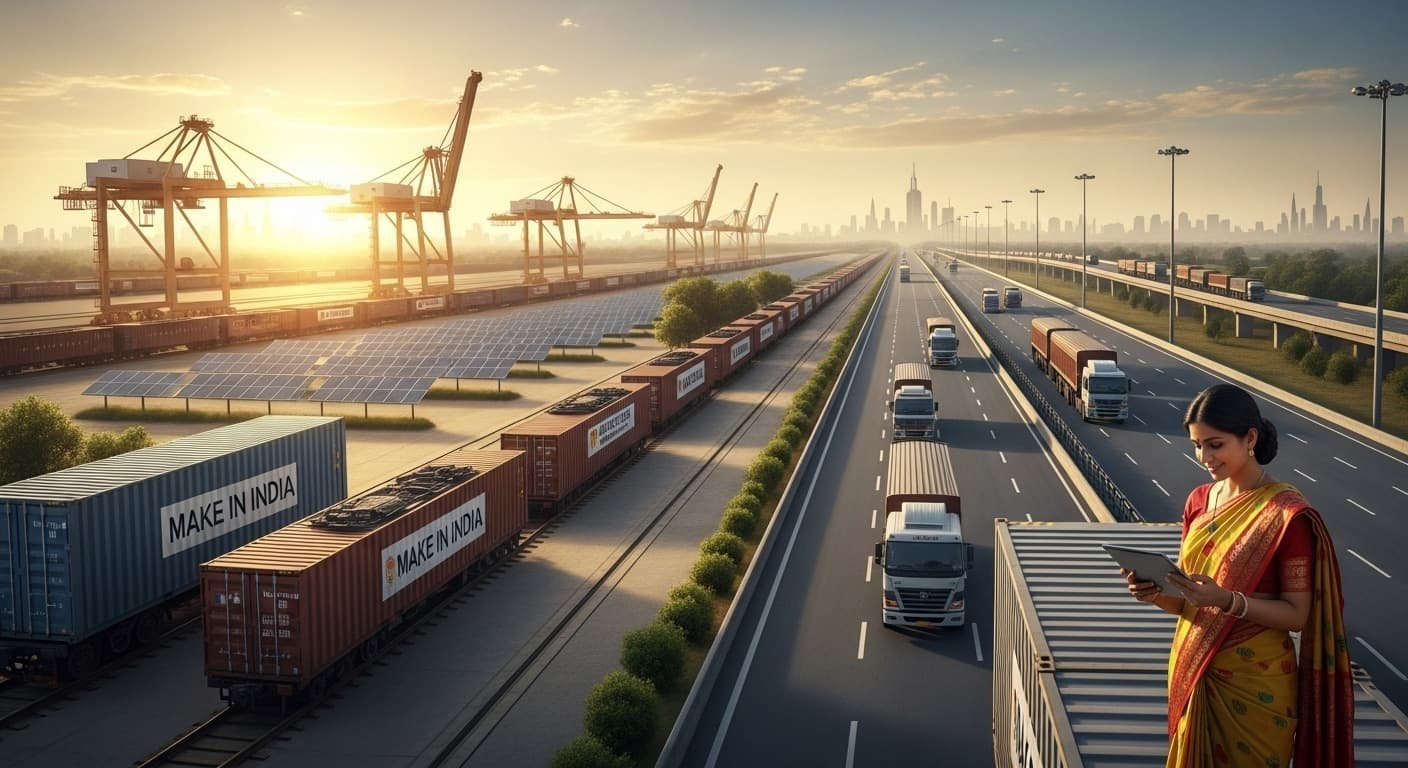
India’s logistics cost reduction plan is gaining policy focus as the government targets lowering logistics costs from around 13 to 14 percent of GDP to near global benchmarks. This shift is expected to directly impact small traders and e-commerce sellers across India.
India Logistics Cost Reduction Plan: Policy Push and Goals
India’s logistics cost reduction plan is part of a broader strategy that includes the National Logistics Policy and PM Gati Shakti initiative. The objective is to improve efficiency across transportation, warehousing, and supply chain networks.
High logistics costs have historically reduced the competitiveness of Indian businesses, especially small traders who operate on thin margins. By improving multimodal transport systems and reducing delays, the government aims to make goods movement faster and cheaper.
Key interventions include better road and rail connectivity, digitisation of logistics processes, and unified platforms for tracking shipments. These changes are designed to reduce fragmentation in the logistics sector and create a more integrated ecosystem.
For small businesses, the plan is not just about cost savings but also about improved reliability and predictability in supply chains.
Lower Costs, Higher Margins for Small Traders
Lower logistics costs can significantly improve margins for small traders. Transportation expenses form a large portion of total costs, especially for businesses dealing in low-value, high-volume goods.
With improved infrastructure and streamlined processes, traders can reduce delivery times and inventory holding costs. Faster movement of goods also means better cash flow cycles, allowing businesses to reinvest capital more efficiently.
In Tier-2 and Tier-3 markets, where logistics inefficiencies are more pronounced, the impact could be even greater. Traders in these regions often face higher costs due to limited connectivity and fewer logistics options.
Reduced costs can also enable competitive pricing, helping small traders compete with larger players and organized retail chains.
E-commerce Sellers Gain From Faster Deliveries
E-commerce sellers are expected to benefit from improved logistics efficiency through faster deliveries and reduced fulfillment costs. Delivery timelines are a critical factor in customer satisfaction and repeat purchases.
With better logistics infrastructure, sellers can expand their reach to new regions without significantly increasing costs. This is particularly important for sellers targeting customers in smaller cities and rural areas.
Improved warehousing and distribution networks also allow for better inventory management. Sellers can position stock closer to demand centers, reducing delivery time and costs.
Additionally, lower logistics costs can enable e-commerce platforms to offer competitive shipping rates, making online shopping more attractive to price-sensitive consumers.
Digitisation and Supply Chain Visibility
A key component of India’s logistics cost reduction plan is digitisation. Unified digital platforms are being developed to improve transparency and coordination across the supply chain.
For small traders and e-commerce sellers, this means better tracking of shipments, reduced paperwork, and fewer delays caused by manual processes. Real-time visibility into supply chains allows businesses to plan more effectively and respond quickly to disruptions.
Digital tools also help in demand forecasting and inventory optimization. Businesses can use data insights to make informed decisions, reducing wastage and improving efficiency.
However, adoption of digital systems requires awareness and training, especially for smaller businesses that may not have prior experience with such tools.
Challenges in Implementation
While the logistics cost reduction plan offers significant benefits, execution challenges remain. Infrastructure projects take time to complete, and delays can impact the pace of change.
Coordination between multiple agencies and stakeholders is another challenge. Logistics involves various sectors, including transport, warehousing, and customs, making integration complex.
For small traders, adapting to new systems and processes can be difficult without proper support. There is also a need for affordable logistics solutions tailored to smaller businesses.
Regional disparities in infrastructure development mean that benefits may not be evenly distributed in the short term. Some areas may see faster improvements, while others lag behind.
Long-Term Impact on India’s Trade Ecosystem
In the long term, reducing logistics costs can transform India’s trade ecosystem. Lower costs improve competitiveness in both domestic and international markets.
Small traders can access larger markets and scale their operations more efficiently. E-commerce sellers can expand their customer base and improve service quality.
The overall economy benefits from increased efficiency, reduced wastage, and higher productivity. As logistics becomes more streamlined, it supports growth across multiple sectors.
For India to achieve its target of becoming a global manufacturing and export hub, efficient logistics will be a critical enabler.
Takeaways
- Lower logistics costs can directly improve margins for small traders
- E-commerce sellers benefit from faster deliveries and wider reach
- Digitisation enhances supply chain visibility and efficiency
- Execution challenges may delay uniform benefits across regions
FAQs
1. What is India’s logistics cost reduction plan?
It is a government initiative aimed at reducing logistics costs through better infrastructure, digitisation, and integrated supply chain systems.
2. How does it benefit small traders?
It lowers transportation costs, improves delivery times, and enhances cash flow, leading to better profitability.
3. What impact does it have on e-commerce sellers?
It enables faster deliveries, reduced fulfillment costs, and expansion into new markets.
4. What are the key challenges in implementation?
Infrastructure delays, coordination issues, and uneven regional development are major challenges.












Leave a comment