

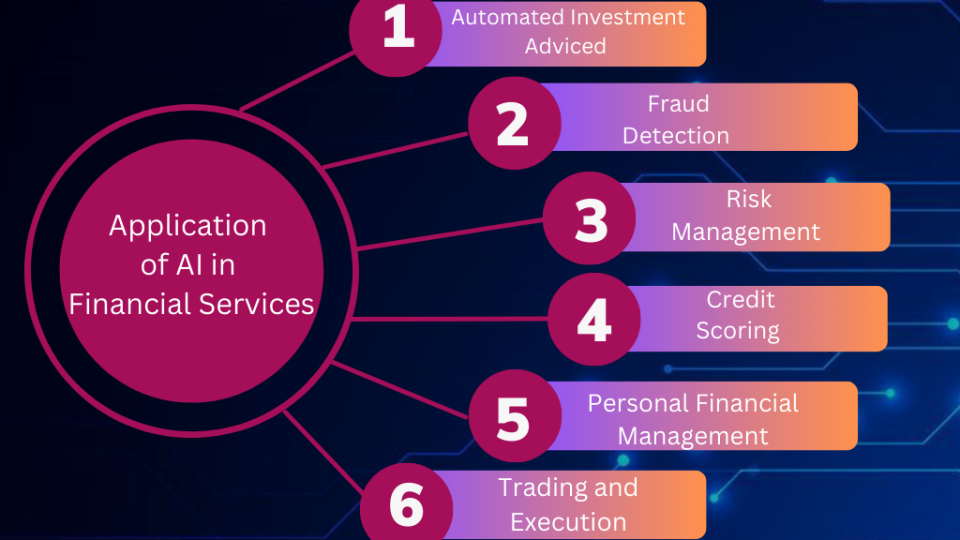
Artificial intelligence is reshaping financial services across banks, NBFCs and insurers by improving credit decisions, automating customer support, detecting fraud and personalizing products. In India, AI is moving from pilot projects to core business functions as financial institutions look to scale efficiently and serve customers faster.
Why AI Is Becoming Central to Financial Services
The adoption of AI in financial services has accelerated as lenders and insurers handle larger volumes of data and customer interactions.
Banks process millions of transactions daily. NBFCs evaluate borrowers with limited formal credit histories. Insurance companies assess risk, settle claims and detect fraud. In each of these functions, artificial intelligence can analyze patterns faster than manual teams.
For Indian financial institutions, AI offers two practical benefits: lower operating costs and better decision-making. This is particularly important in a market where companies are competing to serve customers in smaller cities and semi-urban areas.
AI in Banking Improves Customer Service and Risk Management
Banks are using AI in both front-end and back-end operations.
Customer-facing applications include chatbots, voice assistants and personalized product recommendations. These tools help answer routine questions, suggest relevant credit cards or loans, and provide 24/7 support.
On the risk side, AI systems monitor transactions to flag unusual activity and support anti-money laundering efforts.
Public and private sector banks in India are increasingly deploying AI to streamline operations and improve turnaround times. Loan approvals that once took days can now be processed much faster when data verification and scoring are automated.
NBFCs Use AI for Faster Lending Decisions
Non-banking financial companies have been among the most aggressive adopters of AI.
Many NBFCs serve borrowers who may not have extensive credit histories. AI models can evaluate alternative data such as repayment behavior, bank statements and digital transaction patterns to assess creditworthiness.
This has made it easier to extend loans to small business owners, gig workers and self-employed professionals.
The result is faster approvals, better risk-based pricing and lower default rates when models are designed and monitored effectively.
For Tier-2 and Tier-3 markets, this technology is helping lenders expand access to formal credit.
AI in Insurance Transforms Underwriting and Claims
Insurance companies are using AI to improve underwriting, claims processing and fraud detection.
In health insurance, AI can review medical documents and identify inconsistencies. In motor insurance, image recognition tools can assess vehicle damage and estimate repair costs.
Claims that previously required manual review can now be settled more quickly for straightforward cases.
Insurers also use AI to detect suspicious patterns, such as repeated claims or unusual billing behavior.
This improves efficiency while helping control loss ratios.
Fraud Detection Is One of AI’s Biggest Use Cases
Fraud prevention remains a top priority across financial services.
AI systems can analyze transaction behavior in real time and compare it against historical patterns. When unusual activity is detected, transactions can be flagged for further review.
This capability is increasingly important as UPI payments, digital lending and online insurance sales continue to grow.
For customers, stronger fraud detection can reduce the risk of unauthorized transactions. For institutions, it can prevent financial losses and protect trust.
Personalization Is Improving Product Recommendations
AI is enabling banks and insurers to offer more relevant products to customers.
A salaried professional may receive a pre-approved personal loan offer, while a small business owner might see working capital solutions based on cash flow patterns.
Insurers can tailor premium pricing and coverage suggestions using customer profiles and behavior data.
When used responsibly, personalization can improve conversion rates and customer satisfaction.
Challenges Around Data Privacy and Regulation
Despite its benefits, AI introduces significant governance challenges.
Financial institutions must ensure that models are explainable, fair and compliant with regulations. Biased or inaccurate models can lead to poor lending decisions and customer complaints.
Data privacy is another major concern, especially as institutions process sensitive financial and personal information.
In India, regulators including the Reserve Bank of India and the Insurance Regulatory and Development Authority of India are emphasizing responsible technology adoption and stronger oversight.
The Future of AI in India’s BFSI Sector
AI is expected to become a foundational capability rather than a standalone innovation project.
As computing costs fall and data quality improves, banks, NBFCs and insurers are likely to embed AI more deeply into underwriting, collections, service and compliance.
Institutions that combine technology with strong governance are likely to gain a competitive edge.
For customers, this could mean faster approvals, smarter products and a more seamless financial experience.
Key Takeaways
- AI is helping banks, NBFCs and insurers automate operations and improve decision-making.
- NBFCs are using alternative data and AI models to expand credit access.
- Insurers are accelerating claims processing and fraud detection through automation.
- Responsible use of AI requires strong governance, explainability and data protection.
FAQs
How are banks using AI in India?
Banks use AI for chatbots, fraud detection, credit assessment and personalized product recommendations.
Why are NBFCs adopting AI quickly?
AI helps NBFCs assess borrowers with limited credit history and approve loans faster.
How does AI help insurance companies?
It supports underwriting, claims automation and fraud detection.
What are the main risks of AI in financial services?
Key risks include data privacy issues, biased models and regulatory non-compliance.












Leave a comment