

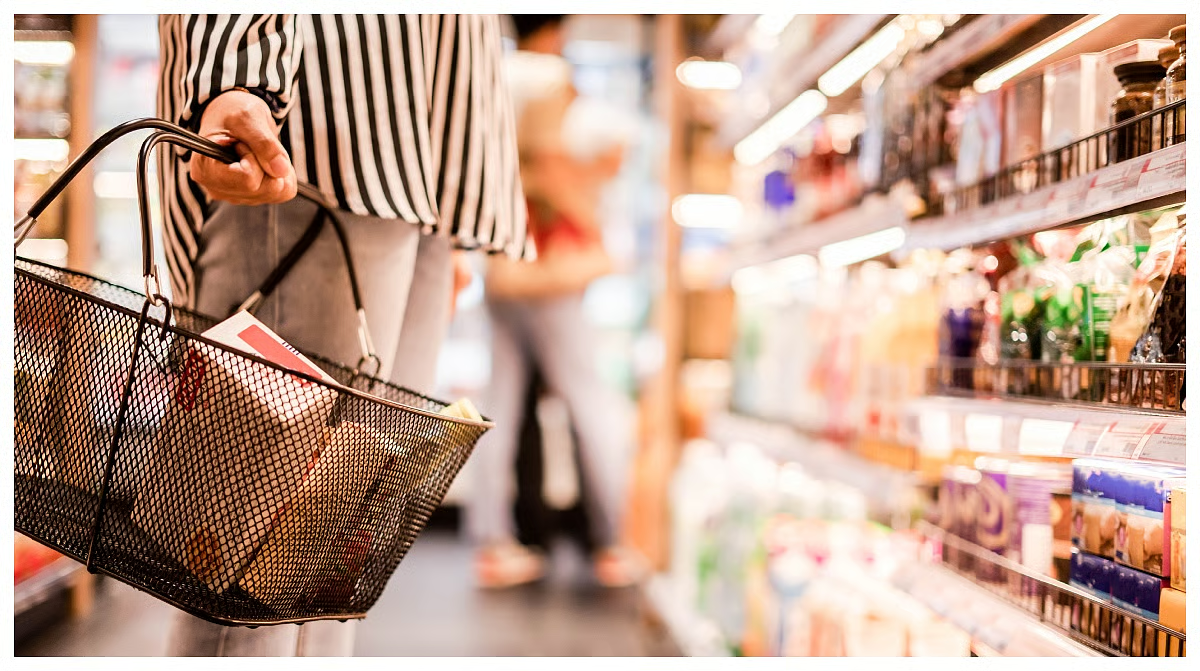
India’s Tier-2 cities are emerging as the primary growth engines for retail expansion in 2026, driven by rising disposable incomes, digital adoption, and improved infrastructure. Retailers are recalibrating strategies to tap demand beyond metros, unlocking new consumption markets across smaller urban centers.
The shift toward Tier-2 cities retail expansion in India is no longer a future trend. It is an active, ongoing transition backed by data across FMCG, apparel, electronics, and quick commerce sectors. Companies are prioritizing cities like Indore, Nagpur, Jaipur, Lucknow, and Coimbatore for both physical and digital retail growth.
Rising Consumption in Smaller Cities Fuels Retail Demand
Retail demand in Tier-2 and Tier-3 cities has accelerated due to increasing income levels, formal employment growth, and access to credit. According to industry estimates, non-metro regions now contribute a significant share of incremental consumption growth in categories like smartphones, fashion, and home appliances.
This growth is not limited to premium segments. Value retail and mid-range brands are seeing faster volume expansion in these markets compared to metros, where demand is relatively saturated. Retailers are observing higher basket sizes and repeat purchases from consumers in smaller cities.
The expansion is also linked to government infrastructure spending, including highways, logistics corridors, and urban development programs that are improving connectivity and supply chain efficiency.
Digital Adoption and E-commerce Penetration Expanding Reach
Digital adoption is playing a critical role in enabling retail expansion in Tier-2 cities. Affordable smartphones, cheaper data, and vernacular content have brought millions of new users online over the past few years.
E-commerce platforms are reporting that a majority of new customers now come from non-metro locations. This has led to the rise of hybrid retail models where brands combine online discovery with offline experience stores.
Quick commerce and hyperlocal delivery platforms are also expanding into smaller cities, although with calibrated rollouts due to logistics challenges. Payment systems like UPI have reduced friction, allowing first-time buyers to transact confidently.
Retailers Shift Strategies with Regional Focus
Retail companies are no longer applying metro-first strategies. Instead, they are building region-specific assortments, pricing models, and marketing campaigns tailored to local preferences.
Regional language advertising has become central to customer acquisition. Brands are investing in local influencers and community-driven marketing to build trust and relevance. Store formats are also evolving, with smaller footprint outlets designed for high efficiency and faster break-even.
For example, apparel brands are launching collections based on regional festivals and climate patterns, while electronics retailers are offering financing options tailored to first-time buyers.
Real Estate and Mall Development Expand in Tier-2 Markets
Retail expansion in Tier-2 cities is also supported by commercial real estate growth. Developers are investing in new shopping malls, high street retail zones, and mixed-use developments in cities beyond metros.
Rental costs in these cities remain significantly lower than in metro markets, allowing brands to experiment with new formats without heavy capital risk. This has encouraged both domestic and international brands to enter smaller cities earlier in their expansion cycle.
Organised retail penetration is still relatively low in many of these markets, which presents a long-term opportunity for growth.
Challenges Remain in Supply Chain and Demand Consistency
Despite strong growth signals, challenges persist. Supply chain efficiency can vary widely across Tier-2 and Tier-3 cities, impacting inventory management and delivery timelines.
Demand can also be more volatile compared to metros, influenced by seasonal income patterns and local economic conditions. Retailers need to balance expansion with careful demand forecasting to avoid overextension.
Talent acquisition for store operations and local management is another constraint, particularly for specialized retail segments.
Takeaways
Tier-2 cities are driving the majority of incremental retail growth in India
Retailers are shifting to region-specific strategies across pricing and marketing
Digital adoption and UPI are accelerating e-commerce penetration in smaller markets
Real estate expansion is enabling faster offline retail presence beyond metros
FAQs
Why are Tier-2 cities important for retail growth in India?
Tier-2 cities offer untapped demand, rising incomes, and lower competition compared to metros, making them key growth markets for retailers.
Which sectors are growing fastest in these cities?
FMCG, electronics, fashion, and value retail are seeing strong demand, along with emerging growth in quick commerce and D2C brands.
What role does digital adoption play in this trend?
Digital access enables consumers in smaller cities to discover, compare, and purchase products online, driving both e-commerce and offline retail demand.
Are there risks in expanding to Tier-2 markets?
Yes, challenges include supply chain inefficiencies, demand variability, and talent gaps, which require localized strategies.








Leave a comment