

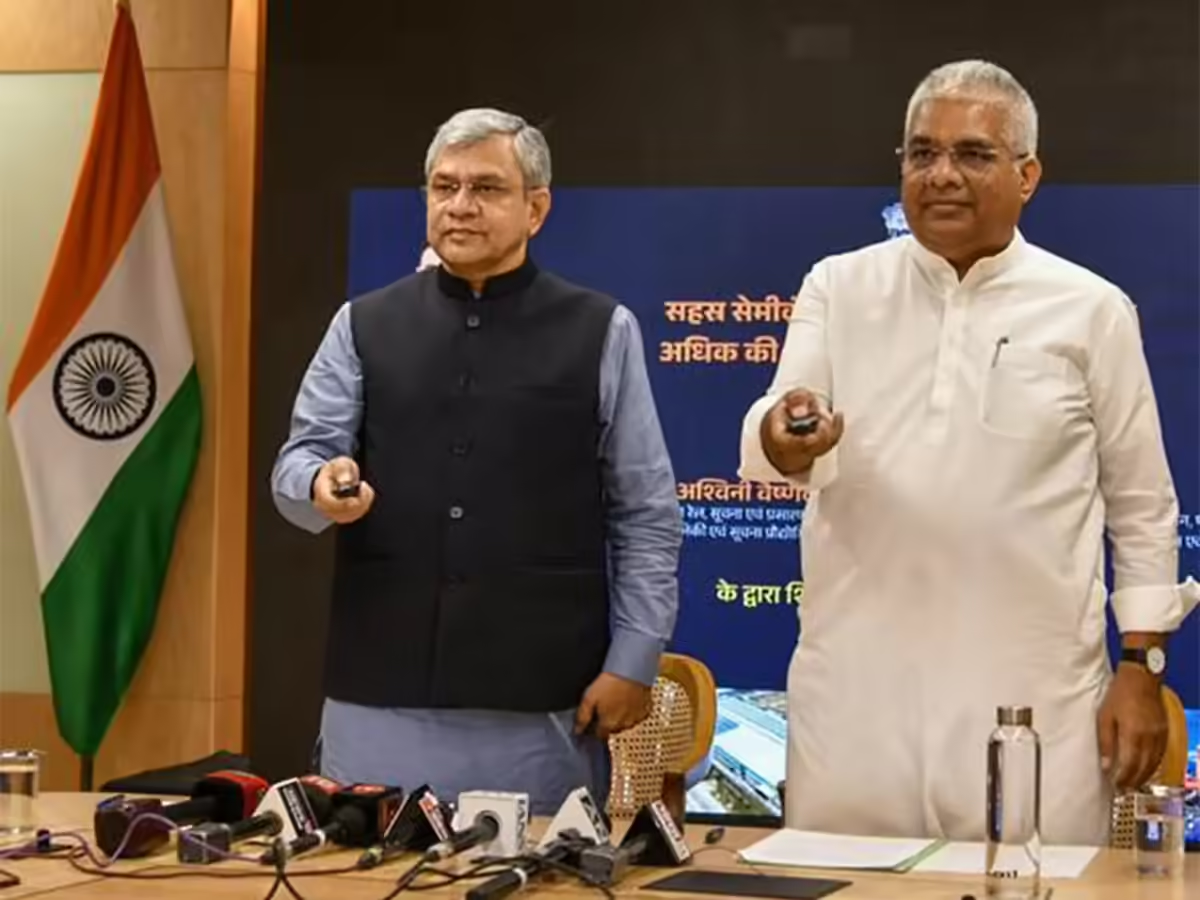
Rajasthan’s first semiconductor facility marks an important step in India’s electronics manufacturing push. The project highlights how advanced technology investments are moving beyond traditional metro hubs and creating fresh industrial opportunities for cities and districts across the country.
Rajasthan Enters India’s Semiconductor Manufacturing Map
Rajasthan’s first semiconductor facility is a significant milestone for the state and for India’s broader ambition to build a domestic chip manufacturing ecosystem. The project is being developed in the state as part of the central government’s semiconductor mission, which aims to reduce dependence on imported chips and strengthen India’s position in global electronics supply chains.
For years, semiconductor manufacturing was seen as an industry limited to countries such as Taiwan, South Korea, and the United States. India is now trying to establish its own capabilities, supported by production-linked incentives, infrastructure support, and policy backing.
Rajasthan’s entry into this sector shows that semiconductor investments are no longer concentrated only in Bengaluru, Hyderabad, or Chennai.
Why Semiconductor Manufacturing Matters for India
Semiconductors are essential components used in smartphones, electric vehicles, medical devices, industrial machinery, and defense equipment. Without a reliable supply of chips, manufacturing sectors can face disruptions.
The global chip shortage during and after the pandemic exposed how vulnerable countries are when they rely heavily on imports. India currently imports a large share of its semiconductor requirements, which creates both strategic and economic challenges.
By building facilities within the country, India hopes to:
- Strengthen supply chain resilience
- Create high-value jobs
- Attract electronics manufacturers
- Reduce import dependence
- Support national security priorities
Rajasthan’s new semiconductor project aligns with these goals.
Why Rajasthan Is Emerging as a Semiconductor Destination
Rajasthan has traditionally been known for mining, cement, and renewable energy. In recent years, the state government has also focused on attracting technology and electronics investments.
Several factors make Rajasthan an attractive location for semiconductor and electronics manufacturing:
Land Availability and Infrastructure
Compared with crowded metro regions, Rajasthan offers larger industrial land parcels and lower setup costs.
Reliable Power Supply
Semiconductor operations require stable electricity. Rajasthan’s large renewable energy capacity strengthens its industrial appeal.
Policy Support
State-level incentives complement central government schemes designed to attract semiconductor investments.
Strategic Connectivity
Cities such as Jaipur, Neemrana, and Bhiwadi are well connected to the Delhi-NCR market and northern India.
Opportunities for Tier-2 and Tier-3 Cities
One of the biggest implications of Rajasthan’s first semiconductor facility is its impact on smaller cities and industrial towns.
Semiconductor manufacturing creates demand across multiple industries, including:
- Chemicals and specialty gases
- Precision engineering
- Clean room construction
- Logistics and warehousing
- Equipment maintenance
- Workforce training
This means cities beyond major metros can benefit from supply chain expansion. Local engineering graduates, technical institutes, and small manufacturers may gain access to new business opportunities.
For entrepreneurs in Tier-2 and Tier-3 cities, this opens doors to become suppliers and service providers to a high-growth industry.
How the India Semiconductor Mission Is Driving Investment
The India Semiconductor Mission, launched by the Government of India, provides financial support and policy incentives for chip manufacturing, packaging, and design.
The country has already announced several major projects in states such as Gujarat and Assam. Rajasthan’s addition broadens the geographic spread of this ecosystem.
The government’s strategy is not limited to large fabrication plants. It also includes assembly, testing, packaging, and design facilities that can be developed faster and with lower capital requirements.
This phased approach increases the chances of building a sustainable semiconductor ecosystem over time.
Economic Impact on Rajasthan
A semiconductor facility can have a multiplier effect on the state economy.
Direct benefits include:
- High-skilled employment
- Increased industrial investment
- Technology transfer
- Stronger infrastructure
Indirect benefits include growth in housing, retail, transportation, education, and hospitality.
Over time, the presence of semiconductor manufacturing can improve Rajasthan’s reputation as a destination for advanced industries, attracting additional investments in electronics and deep technology.
Challenges India Must Address
Semiconductor manufacturing is complex and capital intensive. Projects require large investments, specialized talent, and long-term policy stability.
India must continue to address challenges such as:
- Talent development
- Water and energy management
- Global competition
- Technology partnerships
- Supply chain depth
Success will depend on how quickly supporting ecosystems are built around these facilities.
What This Means for India’s Industrial Future
Rajasthan’s first semiconductor facility is more than a state-level investment announcement. It reflects a broader shift in India’s industrial development model.
Advanced manufacturing is gradually moving beyond established technology centers. States with supportive policies, strong infrastructure, and available land are becoming attractive alternatives.
If this trend continues, smaller cities could play a larger role in sectors once dominated by global manufacturing hubs.
Key Takeaways
- Rajasthan’s first semiconductor facility expands India’s domestic chip manufacturing ambitions.
- The project creates opportunities for Tier-2 and Tier-3 cities through supply chain growth.
- Semiconductor manufacturing supports high-value jobs and reduces import dependence.
- State and central incentives are helping attract advanced technology investments.
FAQ
Why is Rajasthan’s semiconductor facility important?
It brings advanced manufacturing to a new state and supports India’s goal of building a domestic semiconductor ecosystem.
What industries benefit from semiconductor manufacturing?
Electronics, automotive, healthcare, telecom, defense, and industrial equipment all depend on semiconductors.
How can smaller cities benefit?
They can supply components, engineering services, logistics, and trained talent to the semiconductor ecosystem.
Does India already manufacture semiconductors?
India is in the early stages of building chip fabrication and packaging capabilities, supported by government incentives.










Leave a comment