

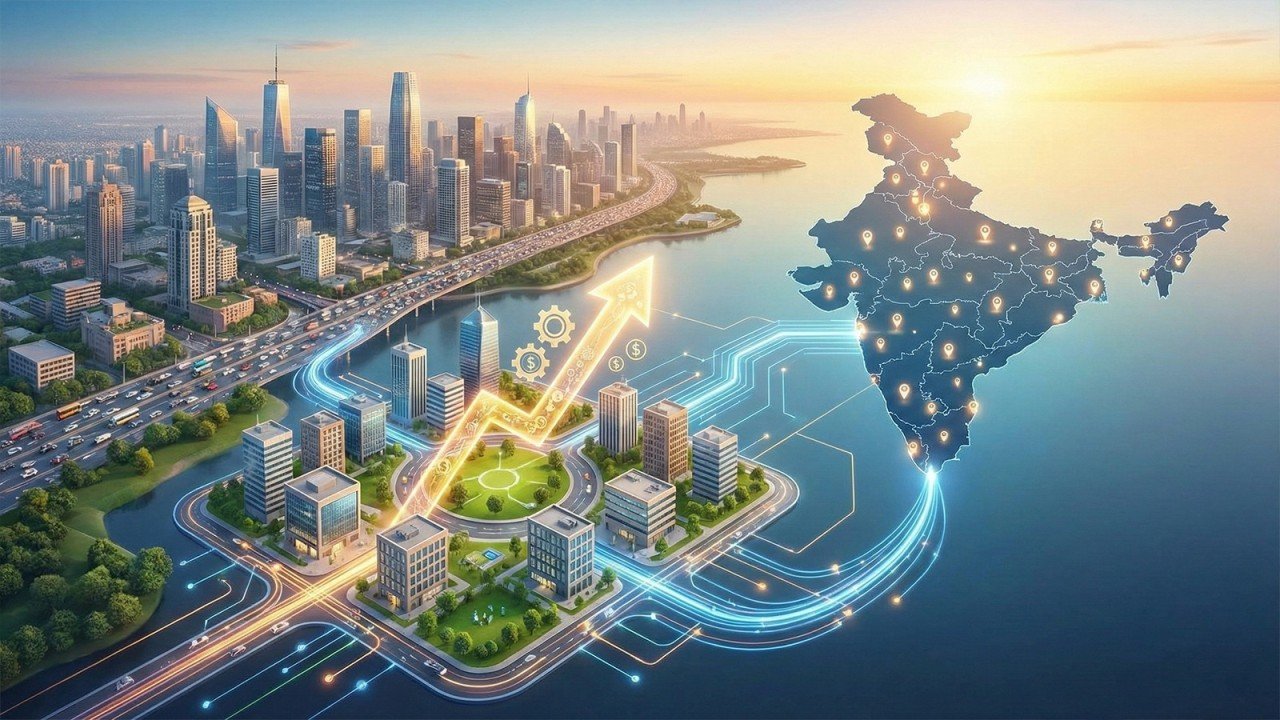
Tier-2 cities are emerging as powerful drivers of India’s consumer economy as rising incomes, digital adoption, and infrastructure improvements reshape spending patterns beyond metros. From online shopping to housing and financial services, consumer demand in smaller cities is expanding at a pace that businesses can no longer ignore.
What Is Driving Consumer Growth in Tier-2 Cities?
Tier-2 cities in India include fast-growing urban centres such as Indore, Nagpur, Lucknow, Coimbatore, and Jaipur. These cities are witnessing higher disposable incomes, better employment opportunities, and increased access to branded products and services.
Over the past decade, government investment in highways, airports, digital connectivity, and urban infrastructure has improved quality of life and boosted economic activity. At the same time, affordable smartphones and cheaper internet have brought millions of consumers online.
This combination has created a large and increasingly aspirational middle class that is willing to spend on education, healthcare, consumer electronics, fashion, and travel.
Rising Incomes and Aspirational Spending
One of the biggest reasons Tier-2 cities are becoming growth engines is the rise in household income.
Professionals in IT services, manufacturing, banking, healthcare, and government jobs are earning more than previous generations. With lower living costs compared with metros such as Mumbai, Delhi, and Bengaluru, consumers in smaller cities often have greater flexibility to spend and save.
This has fueled demand for premium smartphones, cars, two-wheelers, branded apparel, home appliances, and insurance products. Families are increasingly prioritising lifestyle upgrades and long-term financial planning.
For brands, this shift represents a large untapped opportunity.
E-Commerce and Digital Payments Expand Market Access
The rise of e-commerce has fundamentally changed how consumers in smaller cities shop.
Platforms such as Amazon India, Flipkart, and Myntra have made branded products available even in locations where organised retail remains limited.
At the same time, the widespread adoption of Unified Payments Interface (UPI) has simplified transactions. Consumers are now comfortable making payments online, booking services, and investing through mobile apps.
This digital shift has enabled businesses to reach customers in hundreds of cities without setting up physical stores.
Real Estate, Automobiles, and Consumer Durables See Strong Demand
Several sectors are benefiting directly from the rise of Tier-2 city consumption.
Developers are launching more housing projects as families seek larger homes and improved amenities. Automakers are seeing growing demand for SUVs and premium two-wheelers. Consumer durable brands are reporting stronger sales of air conditioners, refrigerators, and smart televisions.
Banks and NBFCs are also expanding aggressively, offering home loans, vehicle financing, and personal credit.
This broad-based demand reflects increasing consumer confidence and a willingness to spend on both essentials and aspirational products.
Why Businesses Are Focusing on Bharat Markets
For many companies, growth in metro markets has become more competitive and expensive.
Tier-2 and Tier-3 cities offer a larger pool of first-time buyers and lower customer acquisition costs. Regional-language marketing and local influencer campaigns are helping brands build trust with new consumers.
Direct-to-consumer brands, fintech startups, and edtech companies are tailoring products for customers outside major metros. In many cases, these markets are contributing a significant share of new user growth.
What this really means is that India’s next wave of consumption is increasingly coming from Bharat rather than a handful of large cities.
Infrastructure Development Is Accelerating Growth
Improved infrastructure is playing a major role in this transformation.
Government initiatives such as expressways, industrial corridors, and airport expansion are strengthening connectivity and attracting investment. Better logistics networks have reduced delivery times and improved access to goods and services.
Cities like Surat, Bhubaneswar, and Vadodara are benefiting from this trend as local industries and consumer markets continue to expand.
As employment opportunities grow, consumer spending tends to rise alongside them.
Challenges That Still Need Attention
Despite strong momentum, several challenges remain.
Income inequality, uneven infrastructure, and limited access to high-quality healthcare and education continue to affect many cities. Consumer demand can also be sensitive to inflation and job market conditions.
Businesses that succeed in these markets typically invest in localisation, affordability, and customer service rather than relying on metro-focused strategies.
Takeaways
- Tier-2 cities are becoming major contributors to India’s consumer economy.
- Rising incomes and lower living costs are driving aspirational spending.
- E-commerce and UPI have expanded access to products and financial services.
- Brands are increasingly focusing on Bharat markets for long-term growth.
Frequently Asked Questions
What are Tier-2 cities in India?
These are fast-growing urban centres such as Indore, Nagpur, Jaipur, and Lucknow that are smaller than major metros but economically significant.
Why are companies targeting Tier-2 cities?
These markets offer large numbers of new consumers, lower acquisition costs, and growing purchasing power.
Which sectors benefit the most?
E-commerce, banking, housing, automobiles, healthcare, and consumer durables are seeing strong demand.
Are Tier-3 cities also contributing?
Yes. Many businesses are expanding beyond Tier-2 cities as digital access improves across smaller towns.









Leave a comment