


India’s IPO market is slowing in 2026 after two years of record fundraising, as volatile global conditions, cautious investor sentiment, and valuation concerns prompt several companies to delay public offerings. The slowdown reflects a shift toward more disciplined capital markets rather than a loss of confidence in Indian businesses.
India’s IPO Market Faces a Pause in 2026
After a historic run in 2024 and 2025, India’s IPO market has entered a quieter phase. Companies that were expected to tap the stock market in early 2026 are choosing to wait, and investors are becoming more selective.
This is a time-sensitive business news story because the decline in IPO activity is visible in current market data and ongoing listing decisions. According to recent reports, fundraising through initial public offerings has dropped sharply compared with the same period last year.
The slowdown comes after two exceptional years in which Indian companies raised record amounts from public markets. Strong retail participation, improving corporate earnings, and abundant global liquidity created favorable conditions for listings across sectors such as fintech, manufacturing, consumer brands, and technology.
Record-Breaking Years Changed Expectations
India’s IPO market saw unprecedented momentum in 2024 and 2025. Both mainboard and SME listings attracted heavy subscription from retail and institutional investors.
Several high-profile companies debuted at premium valuations, and many newly listed stocks delivered strong gains during the first few months of trading. This encouraged more businesses to prepare IPO plans.
At the same time, millions of new demat accounts were opened, especially in Tier-2 and Tier-3 cities. Retail investors from cities like Nagpur, Indore, Jaipur, and Lucknow became an increasingly important force in the market.
The success of these years created a pipeline of startups and established firms hoping to go public. But market conditions in 2026 have become more demanding.
Global Volatility Is Affecting IPO Sentiment
One of the biggest reasons for the IPO market slowdown is uncertainty in global financial markets.
Rising crude oil prices, geopolitical tensions, and higher interest rates in developed economies have made investors more cautious. Foreign institutional investors are taking a selective approach, particularly toward richly valued offerings.
When market volatility increases, companies often delay listings rather than risk weak demand or lower pricing.
This trend is not unique to India. Equity markets around the world have seen a similar moderation in new listings as investors focus on quality and earnings visibility.
Valuation Concerns Are Driving Caution
Another major factor is valuation.
During the IPO boom, some companies listed at ambitious multiples based on future growth expectations. In 2026, investors are demanding more realistic pricing and stronger profitability metrics.
Several recently listed companies are trading below their issue prices, which has reduced enthusiasm for new offers.
This change has forced promoters and private equity investors to reassess expectations. Many companies are postponing listings until they can demonstrate better financial performance or until market conditions improve.
Jio Platforms and Other Delayed IPOs Set the Tone
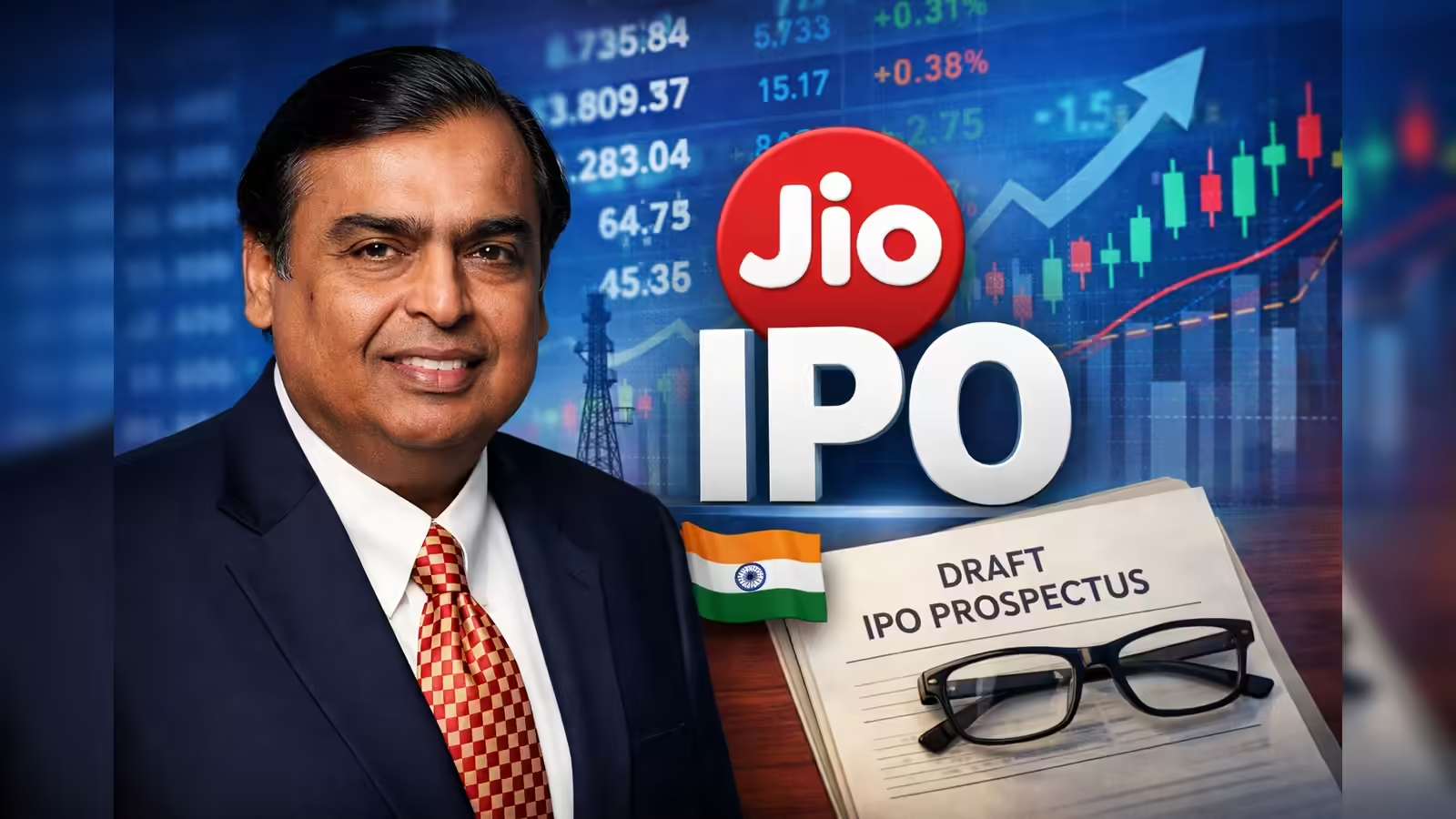
The reported delay of Jio Platforms’ IPO has become a key example of this broader shift.
Jio Platforms, one of India’s most valuable digital businesses, was widely expected to launch a landmark public issue. Instead, reports suggest the company may list later in 2026 and focus on raising fresh capital rather than allowing early investors to exit.
When a company of Jio’s scale decides to wait, it sends a strong signal to the rest of the market.
Other startups and established firms are also reviewing their listing timelines, preferring patience over aggressive pricing.
Retail Investors Are Becoming More Disciplined
The cooling IPO market also reflects a maturing retail investor base.
Many first-time investors who participated heavily in IPOs over the past two years are now paying closer attention to business models, profitability, and long-term prospects.
Rather than applying to every public issue, investors are becoming more selective.
This is a positive development for the market. Better due diligence by retail investors can lead to more sustainable listing outcomes and reduce speculative activity.
India’s Long-Term IPO Story Remains Intact
Despite the current slowdown, the long-term outlook for India’s IPO market remains strong.
India continues to benefit from robust economic growth, rising domestic consumption, digital adoption, and a deepening investor base.
Sectors such as renewable energy, manufacturing, defense, financial services, and consumer technology are expected to produce significant public offerings over the next few years.
The current pause may ultimately strengthen the market by encouraging companies to focus on governance, profitability, and sensible valuations.
What the IPO Slowdown Means for Tier-2 and Tier-3 Investors
For investors in smaller cities, the current environment offers an important lesson.
A slower IPO market does not mean opportunities have disappeared. Instead, it highlights the importance of evaluating each company carefully.
Investors should look at revenue growth, profit trends, debt levels, and how the company plans to use the funds raised.
In many cases, waiting for quality businesses at reasonable valuations can lead to better long-term returns.
Key Takeaways
- India’s IPO market is slowing in 2026 after two record-breaking years.
- Global volatility and valuation concerns are causing companies to delay listings.
- Jio Platforms’ IPO delay reflects broader market caution.
- The long-term outlook for Indian IPOs remains positive.
FAQ
Why is India’s IPO market slowing in 2026?
Companies are postponing offerings due to global uncertainty, weaker market sentiment, and investor concerns about valuations.
Is the IPO slowdown a negative sign for the economy?
Not necessarily. It suggests that investors are becoming more disciplined and companies are waiting for better conditions.
Which companies have delayed IPO plans?
Jio Platforms is one of the most notable examples, and several other firms are reportedly reassessing timelines.
Should retail investors still consider IPOs?
Yes, but they should evaluate each offer carefully and focus on business fundamentals rather than market hype.









Leave a comment