

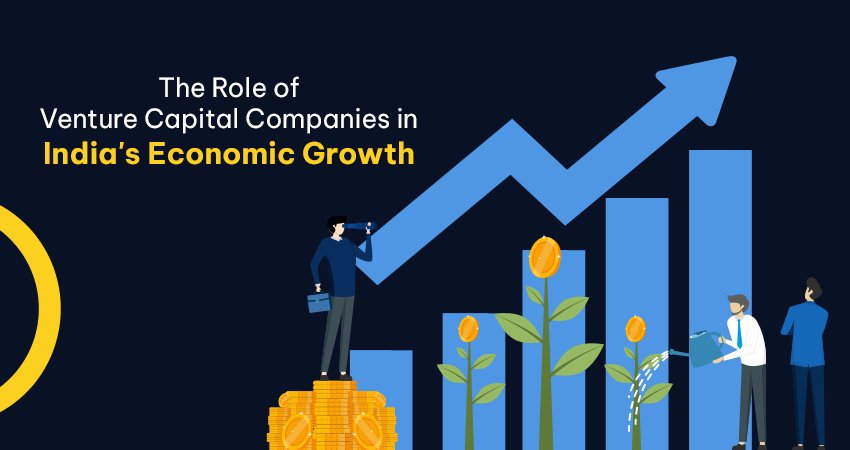
The venture capital industry is undergoing a significant shift. Instead of chasing startup valuations and unicorn status, investors are increasingly focusing on sustainable scale-ups with strong business fundamentals, predictable revenue growth, and long-term profitability. This change reflects a broader evolution in how venture capital firms evaluate startup success.
Venture Capital Firms Rethink the Unicorn Obsession
For much of the last decade, venture capital firms were heavily focused on identifying the next unicorn, a startup valued at more than $1 billion. High valuations became a symbol of success for founders, investors, and the broader startup ecosystem.
However, the funding environment has changed considerably since the post-pandemic boom. Rising interest rates, global economic uncertainty, and increased scrutiny from investors have exposed weaknesses in businesses that prioritized growth at any cost. Several highly valued startups worldwide have faced challenges in maintaining growth, controlling costs, or achieving profitability.
As a result, venture capital firms are becoming more selective. Instead of rewarding rapid customer acquisition alone, investors are increasingly evaluating operational efficiency, revenue quality, customer retention, and the ability to generate sustainable cash flows.
This transition marks a fundamental shift in venture capital strategy and startup funding priorities.
Why Sustainable Scale-Ups Are Attracting More Capital
The term scale-up refers to a company that has moved beyond the startup stage and is demonstrating consistent growth through a proven business model. Unlike early-stage startups that are still testing product-market fit, scale-ups focus on expanding revenue, entering new markets, and building long-term competitive advantages.
Investors view sustainable scale-ups as less risky compared to businesses that depend heavily on continuous fundraising. These companies often have stronger financial controls, more predictable growth trajectories, and clearer paths toward profitability.
In India, sectors such as software-as-a-service (SaaS), fintech infrastructure, logistics technology, enterprise software, healthcare technology, and business automation are producing companies that fit this profile. Many of these businesses are generating recurring revenues while serving both domestic and international markets.
For venture capital firms, supporting scale-ups offers an opportunity to create lasting value rather than relying solely on valuation increases during funding rounds.
The Rise of Quality Metrics in Startup Investing
A major reason behind this shift is the growing emphasis on quality metrics. Venture capital firms are paying closer attention to indicators that reflect business health rather than headline valuations.
Metrics such as annual recurring revenue, gross margins, customer acquisition costs, retention rates, unit economics, and operating efficiency have become critical factors during investment decisions.
This approach helps investors identify companies capable of surviving market fluctuations while continuing to grow. Businesses with disciplined financial management often have greater resilience during economic slowdowns compared to companies that depend on aggressive spending to maintain growth.
The trend is also encouraging founders to focus on sustainable business building. Rather than prioritizing valuation milestones, entrepreneurs are increasingly working toward creating companies that can withstand changing market conditions and generate long-term returns.
How the Indian Startup Ecosystem Is Evolving
India’s startup ecosystem has matured significantly over the past decade. The country now hosts one of the world’s largest startup communities, supported by digital infrastructure, growing internet penetration, and a vibrant entrepreneurial culture.
While unicorn creation remains an important achievement, investors and policymakers are increasingly discussing the importance of building globally competitive businesses. The focus is gradually shifting from the number of startups reaching billion-dollar valuations to the number of companies capable of scaling internationally.
Indian startups are also benefiting from stronger domestic demand across sectors such as financial services, digital commerce, healthcare, education technology, and artificial intelligence. These opportunities allow companies to build sustainable business models before expanding globally.
This evolution reflects a growing understanding that long-term economic impact comes from durable businesses rather than temporary valuation spikes.
What This Means for Founders and Entrepreneurs
The changing priorities of venture capital firms are influencing how founders approach company building. Entrepreneurs are now expected to demonstrate not only growth potential but also operational discipline and strategic clarity.
Founders seeking funding are increasingly required to show evidence of product-market fit, customer satisfaction, and revenue sustainability. Investors are asking tougher questions about profitability timelines, market expansion strategies, and business resilience.
This environment may actually benefit startups in the long run. Companies that develop strong foundations are often better positioned to attract follow-on funding, survive economic downturns, and build lasting market leadership.
The focus on sustainable scale-ups also creates opportunities for startups based in Tier-2 and Tier-3 cities, where businesses often grow more efficiently due to lower operating costs and strong local market demand.
The Future of Venture Capital Investment
The venture capital landscape is unlikely to abandon growth investing entirely. High-growth startups will continue attracting capital, particularly in emerging sectors such as artificial intelligence, climate technology, biotechnology, and advanced manufacturing.
However, the definition of startup success is evolving. Investors are increasingly seeking companies that combine innovation with financial discipline. The goal is no longer to build the fastest-growing company at any cost but to create businesses capable of generating value over decades.
For India’s startup ecosystem, this shift could prove beneficial. By encouraging sustainable growth, venture capital firms may help create a new generation of globally competitive companies that contribute meaningfully to employment, innovation, and economic development.
As capital becomes more selective, scale-ups with strong fundamentals are likely to emerge as the biggest winners in the next phase of startup growth.
Key Takeaways
• Venture capital firms are placing greater emphasis on sustainable growth rather than unicorn valuations.
• Investors are prioritizing revenue quality, profitability, customer retention, and operational efficiency.
• Scale-ups with proven business models are attracting stronger investor interest.
• The shift could help create more resilient and globally competitive startups in India.
FAQ
Q1. What is a scale-up company?
A scale-up is a business that has established product-market fit and is experiencing sustained growth through a proven and scalable business model.
Q2. Why are venture capital firms focusing less on unicorns?
Many investors now believe that sustainable revenue growth and profitability provide a stronger indicator of long-term success than valuation alone.
Q3. What metrics are investors prioritizing today?
Key metrics include recurring revenue, customer retention, unit economics, gross margins, profitability potential, and operational efficiency.
Q4. How does this trend affect Indian startups?
Indian startups are being encouraged to build stronger business fundamentals, improve financial discipline, and focus on long-term value creation rather than short-term valuation growth.
(Keywords: venture capital firms, sustainable scale-ups, startup funding, venture capital trends, unicorn startups, Indian startup ecosystem, startup growth strategy, VC investment trends, startup profitability, scale-up companies)











Leave a comment