

India’s AI economy is rapidly evolving into a major driver of business growth, supported by government initiatives, enterprise adoption and rising investments in digital infrastructure. From startups to large corporations, artificial intelligence is reshaping productivity, innovation and economic opportunities across sectors.
India’s AI economy is emerging as one of the country’s strongest growth drivers, transforming how businesses operate, compete and innovate. While software services have long been the backbone of India’s technology industry, artificial intelligence is creating a new wave of economic opportunities. Businesses across banking, manufacturing, healthcare, retail, agriculture and logistics are increasingly integrating AI into their operations to improve efficiency, reduce costs and deliver better customer experiences.
Recent policy discussions, industry investments and enterprise adoption indicate that India is moving beyond simply using AI tools. The country is investing in AI infrastructure, skilled talent and innovation ecosystems that can support long-term economic growth. As companies accelerate digital transformation, AI is becoming a strategic business asset rather than just another technology trend.
Government Policies Are Accelerating AI Adoption
One of the biggest reasons behind India’s growing AI economy is strong institutional support. Through initiatives such as the IndiaAI Mission, the government aims to strengthen computing infrastructure, support AI startups, improve access to high-performance computing and encourage responsible AI development.
Public investments are also focused on creating AI-ready datasets, expanding research capabilities and supporting educational institutions in developing AI talent. These initiatives are expected to improve access to advanced computing resources for startups, researchers and businesses that previously faced infrastructure constraints.
State governments have also started incorporating artificial intelligence into governance, healthcare, agriculture and urban development projects. This wider adoption creates demand for AI solutions while encouraging private companies to build innovative products and services for public and commercial use.
Enterprises Are Moving from AI Experiments to Business Integration
Artificial intelligence is no longer limited to pilot projects. Indian enterprises are increasingly integrating AI into their core business operations.
Banks are using AI-powered fraud detection systems and intelligent customer support. Manufacturing companies are adopting predictive maintenance to reduce downtime. Retailers are improving inventory management through demand forecasting, while logistics firms are using AI for route optimization and warehouse automation.
Generative AI has further accelerated this trend. Businesses are deploying AI assistants for customer service, content generation, software development and internal productivity. Instead of replacing employees, many organizations are using AI to automate repetitive tasks so teams can focus on higher-value work.
This shift from experimentation to large-scale implementation is creating sustained demand for AI software, cloud infrastructure and specialized technology services.
AI Infrastructure Is Becoming a Strategic Investment
India’s AI economy depends not only on software but also on robust digital infrastructure. Data centres, cloud computing platforms, high-performance GPUs and secure networking systems form the foundation of modern AI applications.
Several companies have announced significant investments in AI-ready infrastructure to meet growing enterprise demand. These investments are expanding India’s domestic computing capabilities while reducing reliance on overseas cloud resources for AI workloads.
The rise of AI infrastructure also benefits businesses outside major metropolitan cities. Companies in Tier 2 and Tier 3 locations can increasingly access cloud-based AI services without investing heavily in expensive hardware. This improves digital inclusion and enables smaller businesses to adopt advanced technologies at lower costs.
As demand for AI applications continues to grow, infrastructure investments are expected to remain a critical component of India’s digital economy.
Startups Are Driving Innovation Across Multiple Sectors
India has one of the world’s largest startup ecosystems, and AI startups are playing a major role in its evolution.
Entrepreneurs are building AI solutions for healthcare diagnostics, financial technology, education, legal services, agriculture, cybersecurity and manufacturing. Many startups are solving uniquely Indian challenges by developing multilingual AI models, affordable automation tools and sector-specific software.
Venture capital firms have also shown increasing interest in AI-focused companies, particularly those addressing enterprise productivity and industrial automation. Access to funding, combined with a large domestic market, allows Indian startups to test and scale AI solutions more rapidly.
The growing collaboration between startups, enterprises, universities and government programs is creating an ecosystem that encourages continuous innovation and commercial adoption.
AI Could Reshape Employment and Economic Growth
Artificial intelligence is expected to change the nature of work across industries. While some routine tasks may become automated, AI is also creating demand for new roles in machine learning, data science, cybersecurity, cloud computing and AI governance.
Businesses increasingly require professionals who can combine technical expertise with industry knowledge. At the same time, organizations are investing in employee reskilling to ensure existing workforces can effectively use AI-powered tools.
Economic studies suggest that responsible AI adoption has the potential to significantly improve productivity across multiple sectors. Higher productivity often translates into stronger business competitiveness, increased investment and greater economic output.
For India, where digital transformation is expanding rapidly, AI represents an opportunity to strengthen both domestic industries and global technology leadership.
Challenges That Need Continued Attention
Despite its potential, India’s AI economy faces several challenges. High-quality computing infrastructure remains expensive, particularly for smaller businesses. Access to advanced AI chips, reliable datasets and skilled professionals continues to be uneven.
Responsible AI governance is another important priority. Businesses must address concerns related to data privacy, cybersecurity, algorithmic bias and regulatory compliance while deploying AI solutions at scale.
Workforce development also remains essential. Expanding AI education, vocational training and digital literacy programs will help ensure that businesses have access to skilled talent capable of supporting long-term AI adoption.
Addressing these challenges will determine how effectively India converts technological progress into sustained economic growth.
The Road Ahead for India’s AI Economy
India’s AI economy is entering a defining phase. Strong government support, rising enterprise adoption, expanding infrastructure and a vibrant startup ecosystem are together creating a foundation for long-term business growth.
Rather than replacing existing industries, artificial intelligence is enhancing their capabilities through automation, better decision-making and improved customer experiences. As AI becomes more accessible to businesses of all sizes, its impact is likely to extend beyond technology companies into manufacturing, agriculture, healthcare, financial services and public administration.
If investments in infrastructure, talent development and responsible innovation continue at the current pace, artificial intelligence could become one of India’s most significant economic growth engines over the coming decade.
Key Takeaways
- India’s AI economy is expanding through enterprise adoption, startup innovation and government support.
- Investments in AI infrastructure are strengthening domestic computing capabilities.
- Businesses across multiple industries are integrating AI into core operations.
- Continued investment in skills, infrastructure and responsible AI will shape long-term economic growth.
Frequently Asked Questions
Q1. Why is India’s AI economy growing rapidly?
Growing enterprise adoption, supportive government initiatives, expanding AI infrastructure and startup innovation are driving rapid growth across industries.
Q2. Which sectors are adopting AI the fastest in India?
Banking, healthcare, manufacturing, retail, logistics, agriculture and financial technology are among the leading sectors using AI for automation and decision-making.
Q3. How can small businesses benefit from AI?
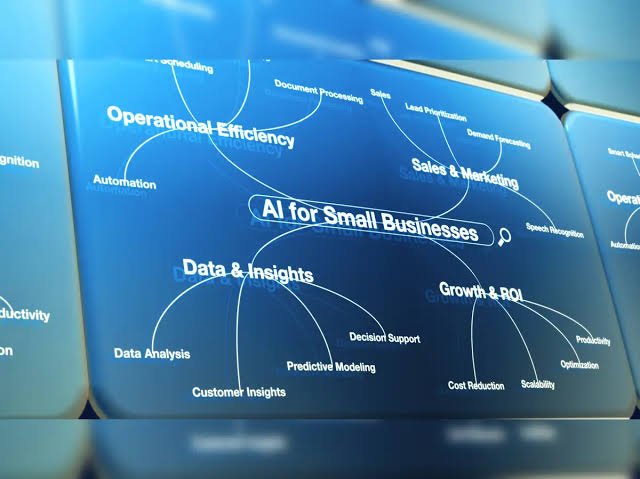
Cloud-based AI services allow small businesses to improve customer support, automate routine tasks, optimize operations and enhance productivity without investing heavily in infrastructure.
Q4. What challenges does India’s AI economy still face?
Key challenges include access to advanced computing infrastructure, AI talent shortages, responsible AI governance, data privacy and cybersecurity requirements.












Leave a comment