

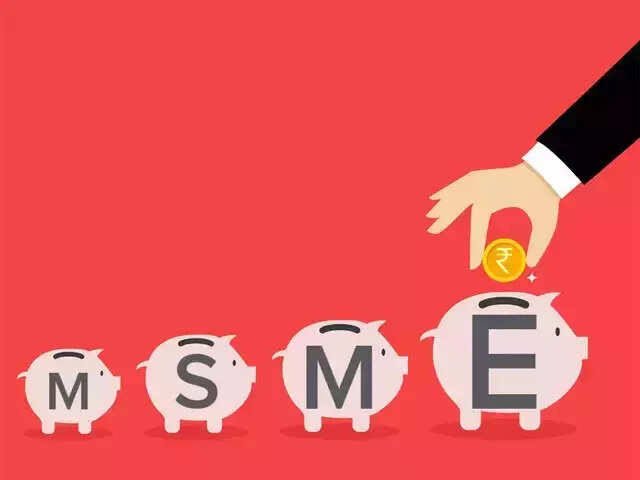
India’s MSMEs are navigating a changing business environment as consumer demand shows signs of moderation across several sectors. While the country’s economic growth remains resilient, slower discretionary spending, rising costs, and cautious buying behaviour are prompting many small businesses to rethink their strategies for growth.
Micro, Small and Medium Enterprises (MSMEs) form the backbone of India’s economy, contributing around 30 percent of the country’s Gross Domestic Product and employing more than 110 million people. As consumer demand softens in parts of the economy, many MSMEs are facing fresh challenges in maintaining sales, managing cash flow, and planning future investments.
The impact is not uniform across industries. Essential goods, healthcare, education, and digital services continue to see healthy demand, while businesses dependent on discretionary spending such as apparel, furniture, restaurants, consumer electronics, and lifestyle products are experiencing a more cautious market. This shift reflects changing consumer priorities rather than a broad economic slowdown.
Why Consumer Demand Is Becoming More Selective
Consumer spending remains one of the biggest drivers of India’s economy. However, several factors have encouraged households to become more careful with their purchases.
Inflation over the past two years has increased the cost of everyday essentials, leaving consumers with less disposable income for non-essential products. Although inflation has moderated compared to previous highs, many households continue to prioritise savings and necessary expenses.
Higher borrowing costs over recent years have also influenced spending decisions. Consumers are taking more time before making large purchases, while businesses that rely on impulse buying are noticing longer decision cycles.
Changing consumption patterns are another important factor. Customers are increasingly comparing prices online, looking for discounts, reading reviews, and choosing products that offer better long-term value. This has made competition more intense for small businesses that cannot always match the pricing power of larger brands.
How MSMEs Are Feeling the Impact
For many MSMEs, slower consumer demand does not necessarily mean declining business. Instead, it often results in slower sales growth and greater uncertainty.
Retail stores are carrying inventory for longer periods, manufacturers are receiving smaller order volumes, and service providers are seeing customers delay discretionary spending. Businesses with limited financial reserves are particularly affected because even short periods of reduced sales can strain working capital.
Cash flow management has therefore become one of the biggest priorities for MSME owners. Many businesses are reviewing inventory levels, reducing unnecessary expenses, negotiating better payment terms with suppliers, and focusing on faster collections from customers.
Companies operating in Tier 2 and Tier 3 cities are also adapting to changing customer behaviour. While these markets continue to grow, consumers are becoming more value conscious and are increasingly influenced by online shopping platforms and digital price comparisons.
Digital Transformation Is Becoming a Competitive Advantage
One of the biggest lessons from recent market conditions is the importance of digital adoption.
MSMEs that have invested in e-commerce, digital payments, social media marketing, and customer relationship management tools are often better positioned to reach new customers beyond their local markets.
Online marketplaces have enabled small manufacturers and retailers to sell products across India without establishing a physical presence in multiple cities. Digital advertising also allows businesses to target specific customer segments more efficiently than traditional marketing methods.
Technology is helping businesses improve operational efficiency as well. Inventory management software, accounting platforms, cloud-based billing systems, and AI-powered customer support tools are reducing operating costs while improving customer experience.
For many MSMEs, digital transformation is no longer an optional investment. It has become an important part of remaining competitive in an evolving marketplace.
Government Support and Financial Access Continue to Matter
Government initiatives continue to play a significant role in supporting India’s MSME ecosystem.
Schemes that improve access to formal credit, encourage digitalisation, and promote entrepreneurship have strengthened the sector over the past decade. The Udyam Registration portal, Credit Guarantee Fund Trust for Micro and Small Enterprises (CGTMSE), Emergency Credit Line Guarantee Scheme during the pandemic, and digital lending initiatives have expanded financing opportunities for eligible businesses.
However, many MSMEs still face challenges in obtaining affordable working capital, particularly newer businesses without extensive credit histories.
Industry experts believe that improving access to finance, simplifying compliance requirements, and strengthening digital infrastructure will remain important for sustaining MSME growth, especially during periods of slower consumer demand.
What MSMEs Can Do to Stay Competitive
Businesses cannot directly control consumer sentiment, but they can adapt to changing market conditions.
Diversifying product offerings, improving customer service, strengthening online presence, and focusing on quality can help businesses build stronger customer loyalty. Monitoring inventory carefully and maintaining healthy cash flow also reduce financial pressure during slower sales cycles.
Many successful MSMEs are expanding into new geographic markets through digital platforms while using customer feedback to improve products and services. Businesses that remain flexible and respond quickly to changing consumer preferences are generally better positioned for long-term growth.
India’s domestic market continues to offer significant opportunities. Although consumer demand may fluctuate over time, the country’s expanding middle class, increasing internet penetration, and ongoing digital adoption provide a strong foundation for future MSME growth.
Key Takeaways
- Consumer demand has become more selective, particularly for discretionary products and services.
- MSMEs are focusing on cash flow management, operational efficiency, and cost optimisation to manage changing market conditions.
- Digital transformation is helping small businesses reach new customers and improve competitiveness.
- Businesses that adapt to changing consumer behaviour are likely to be better positioned for long-term growth.
Frequently Asked Questions
Q1. What is an MSME?
An MSME is a Micro, Small or Medium Enterprise classified under the Government of India’s investment and turnover criteria. These businesses play a major role in employment, exports, and economic growth.
Q2. Does softer consumer demand affect all MSMEs equally?
No. Businesses selling essential goods and services often remain more stable, while sectors dependent on discretionary spending may experience slower sales.
Q3. How can MSMEs respond to weaker consumer demand?
They can improve cash flow management, strengthen digital marketing, expand online sales, optimise costs, and focus on customer retention.
Q4. Why are Tier 2 and Tier 3 markets important for MSMEs?
These markets continue to witness rising incomes, increasing digital adoption, and growing entrepreneurial activity, making them important drivers of India’s long-term economic growth.
(Internal Keyword Suggestions: MSMEs in India, consumer demand slowdown, small businesses India, MSME challenges, Tier 2 business growth, MSME digital transformation, Indian economy, MSME sector, consumer spending India, business trends 2026)










Leave a comment