


Impact-focused startup funds are increasingly looking beyond India’s largest cities for their next growth opportunities. The shift reflects rising demand for businesses serving underserved consumers, farmers, informal workers and MSMEs, while investors look for models combining commercial returns with measurable economic impact.
India’s startup funding landscape is changing, and the latest ₹250 crore fund launched by TILT Capital provides a clear example of that shift. The investment platform of The/Nudge Foundation has launched an impact-first venture fund focused on early-stage businesses serving what it calls India’s Next Billion. The fund will invest ₹2 crore to ₹16 crore in seed to Series A companies.
The development comes as investors become more selective about where they deploy capital. Indian startups raised more than $5.2 billion across 501 deals in the first half of 2026, according to Inc42, but total funding was down 9% from the same period last year. At the same time, seed-stage funding increased 18%, showing that early-stage opportunities remain relevant even as investors scrutinise larger cheques more closely.
Why smaller cities are becoming important startup markets
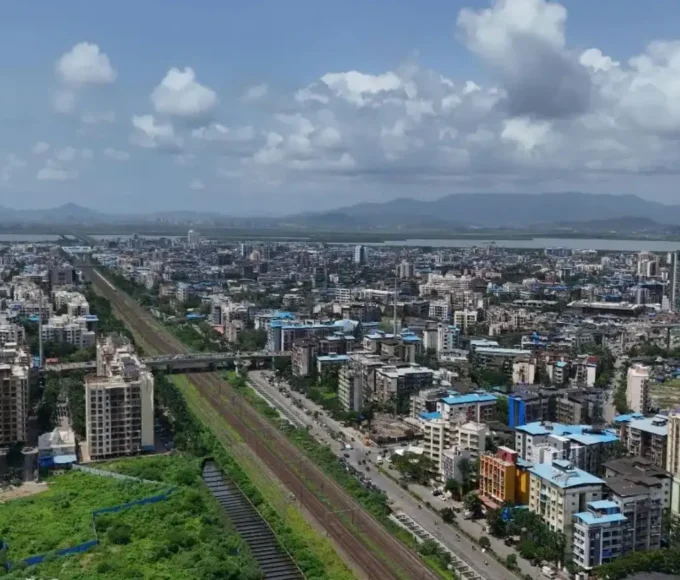
For years, a large share of India’s venture capital activity was concentrated in Bengaluru, Mumbai, Delhi-NCR, Hyderabad and other major technology hubs. These cities offered founders access to talent, customers, investors and established startup networks.
That concentration is gradually becoming less practical for businesses whose customers live outside major urban centres.
India’s smaller cities and towns represent large consumer and business markets. Farmers, informal workers, small manufacturers, retailers and micro-enterprises all have financial and operational needs that remain only partly served by existing products.
The opportunity is not simply about moving a startup’s headquarters from a metro to a Tier-2 city. It is about building products specifically for customers whose income patterns, purchasing behaviour and access to formal services can differ considerably from those of urban consumers.
That creates space for startups working on agricultural supply chains, affordable financial services, employment, healthcare access, MSME productivity and climate resilience.
The rise of India’s Next Billion consumers
TILT Capital’s investment strategy is built around this broader market opportunity. The fund describes its target customers as India’s Next Billion, referring to underserved and lower-income Indians gaining greater access to markets, technology and financial services.
This group is becoming increasingly relevant to startups because digital infrastructure has lowered some of the barriers to reaching customers outside major cities.
Smartphones, digital payments and online marketplaces can allow businesses to reach consumers and small enterprises that previously depended heavily on local intermediaries.
However, digital access alone does not guarantee a viable business. Startups still need to solve issues involving affordability, trust, distribution, language, customer support and local infrastructure.
That is why investors focused on underserved markets are increasingly looking for companies with strong operational models rather than simply large user numbers.
Why impact startups need patient capital
One of the biggest challenges for startups serving lower-income communities is the time required to establish a sustainable business.
A company selling a high-value digital service to urban consumers may be able to acquire customers through online advertising and scale rapidly. A startup working with farmers, informal workers or small businesses may need to build physical distribution networks, develop partnerships and establish trust over a much longer period.
TILT says businesses serving low-income communities often take longer to achieve product-market fit, build distribution and develop resilient economics. Its new fund is therefore designed around patient capital that gives founders more time to build sustainable businesses while maintaining financial discipline.
This is an important distinction from simply increasing the amount of money available to startups. The structure and time horizon of the capital can matter as much as the size of the investment.
Agriculture and climate are key investment opportunities
Agriculture is one of the sectors where this investment approach could have significant relevance.
Indian agriculture involves millions of farmers operating across highly fragmented supply chains. Startups can potentially create value through better access to markets, farm inputs, logistics, financial services, climate information and productivity tools.
TILT has identified agricultural value chains and climate resilience among its focus areas. It will also consider businesses working on informal employment, MSME productivity, employability, financial inclusion, market access and distribution. Technology and artificial intelligence applied to livelihood challenges are also part of its mandate.
The common thread is not the sector itself. It is whether technology and business models can address large economic problems while creating a sustainable commercial opportunity.
For investors, this can open markets that are large but historically difficult to serve efficiently.
MSMEs offer another large opportunity
Small businesses are another major area attracting attention.
India’s MSMEs operate across manufacturing, retail, services, logistics and local trade. Many continue to face challenges related to credit, productivity, market access, technology adoption and skilled workers.
A startup that can reduce these constraints has the potential to serve a large customer base without depending exclusively on affluent consumers.
Recent developments in financial services also point towards growing investor interest in underserved MSME borrowers. Business Standard reported that Tier-II to Tier-IV cities could emerge as attractive pockets of the retail lending market, particularly for lenders able to serve borrower segments that traditional banks have not fully addressed.
This creates opportunities not only for fintech companies but also for businesses offering software, logistics, commerce and productivity tools to smaller enterprises.
Funding is becoming more selective
The shift towards impact and underserved markets also needs to be viewed against the broader funding environment.
Indian startup funding declined 9% year-on-year to $5.2 billion in H1 2026, according to Inc42. The number of funding deals, however, increased 7%, suggesting that investors continued to participate but were writing fewer very large cheques. Only four funding rounds above $100 million were recorded during the period, compared with 11 in H1 2025.
This environment can encourage funds to search for differentiated investment opportunities.
Rather than competing for the same pool of large consumer internet companies, impact-focused investors can target businesses operating in markets with less venture capital saturation.
That does not make these businesses automatically safer investments. Many underserved markets involve higher operational complexity. But the potential market size and limited competition can create a compelling long-term investment thesis.
Government capital is also encouraging patient investment
The growing emphasis on long-term startup financing is not limited to private impact funds.
In February 2026, the Union Cabinet approved Startup India Fund of Funds 2.0 with a corpus of ₹10,000 crore. The scheme focuses on areas including deeptech, early-growth startups through smaller funds and technology-driven manufacturing, while also encouraging a long-term investing culture and patient capital.
The government-backed framework and private funds such as TILT are different mechanisms, but both reflect a broader recognition that some Indian startups require longer investment horizons.
This is particularly relevant for companies working in areas where infrastructure, regulation, customer behaviour or technology adoption can take time to develop.
For founders outside traditional startup hubs, the availability of such capital can potentially widen the funding pool.
Tier-2 and Tier-3 cities could benefit from the shift
The impact of this trend could extend beyond startup founders and investors.
When startups build businesses in smaller cities, they can create demand for local talent, sales teams, service providers and distribution networks. Companies serving farmers or MSMEs can also create indirect economic opportunities by improving market access and productivity.
However, it would be misleading to assume that venture capital alone will transform smaller cities. Startup success depends on infrastructure, skilled workers, customer purchasing power, reliable connectivity and access to follow-on funding.
The more significant change is that smaller markets are increasingly being viewed as opportunities rather than limitations.
For India’s Tier-2 and Tier-3 cities, that change in investor perception could be important over the long term.
Impact investing is moving beyond philanthropy
TILT’s launch also illustrates a broader change in how impact businesses are being financed.
The/Nudge Foundation says it has spent eight years supporting livelihood-focused social enterprises and has backed more than 190 social enterprises through approximately ₹180 crore in grants. TILT was created to provide investment capital to ventures that have moved towards building commercially sustainable businesses.
This distinction matters.
A grant can help an organisation test an idea or develop an early solution. Venture capital, by contrast, expects businesses to generate financial returns while growing in value.
Impact investing attempts to bring these objectives together. The challenge is maintaining measurable social or economic outcomes without compromising business discipline.
TILT’s model is therefore part of a wider effort to move some impact businesses from grant dependence towards sustainable commercial models.
The real test will be scalable economics
The growing interest in underserved consumers is promising, but investors will still demand evidence that these businesses can scale.
A large potential customer base does not automatically translate into a profitable company. Startups serving lower-income customers may face lower margins, higher distribution costs and greater customer acquisition challenges.
Their success will depend on whether technology can reduce those costs enough to make the business commercially viable.
That is why the next phase of India’s impact startup ecosystem will likely focus less on the size of the underserved population and more on measurable outcomes, repeat usage, unit economics and sustainable revenue.
If founders can demonstrate those metrics, smaller cities and underserved consumers could become an increasingly important part of India’s venture capital story.
What this shift means for India’s startup ecosystem
The movement of impact-focused funds towards smaller cities and underserved consumers reflects a more mature view of India’s startup opportunity.
The next major businesses may not necessarily come from markets where consumers already have high incomes and extensive access to digital services. They could emerge from agriculture, small businesses, informal employment, financial inclusion, climate resilience and other areas where millions of people still face structural gaps.
TILT’s ₹250 crore fund is one recent example, but the broader funding environment suggests that investors are becoming more deliberate about capital allocation.
For smaller cities, the significance is potentially larger than the arrival of individual startups. If investors continue to recognise underserved markets as commercially viable, founders outside India’s traditional startup hubs could gain greater access to capital.
The opportunity now is to prove that impact and financial sustainability can grow together.
Key Takeaways
- Impact-focused funds are increasingly targeting underserved consumers, farmers, informal workers and MSMEs outside India’s largest urban markets.
- TILT Capital’s ₹250 crore fund will invest ₹2 crore to ₹16 crore in seed to Series A companies working across livelihoods, climate resilience, agriculture, financial inclusion and MSME productivity.
- India’s startup funding market became more selective in H1 2026, with total funding falling 9% year-on-year even as deal volumes increased.
- The long-term opportunity will depend on whether startups can combine measurable impact with sustainable revenue, strong unit economics and scalable distribution.
FAQs
Why are impact investors looking at smaller Indian cities?
Smaller cities have large underserved markets across agriculture, MSMEs, financial services, employment and consumer businesses. Investors see an opportunity to build companies that solve these gaps while addressing large potential customer bases.
What does India’s Next Billion mean?
The term generally refers to underserved and lower-income Indians who are gaining greater access to technology, markets and financial services. TILT Capital uses the term to describe the customers its portfolio companies are intended to serve.
Why do startups serving underserved consumers need patient capital?
These businesses can take longer to build distribution, establish customer trust and achieve sustainable unit economics. Patient capital gives founders more time to develop these models instead of forcing them to optimise for rapid short-term growth.
Which sectors are attracting impact-focused startup funding?
Current areas of interest include agriculture, climate resilience, informal work, MSME productivity, employability, financial inclusion, market access and distribution. Technology and AI applied to livelihood challenges are also emerging areas.
(Internal keywords: impact investing India, impact startup funds India, Tier-2 city startups, Tier-3 city startups, underserved consumers India, India Next Billion, startup funding 2026, impact venture capital India, patient capital India, rural startups India, agriculture startups India, MSME startups India, financial inclusion startups, climate startups India, startup ecosystem India)









Leave a comment