

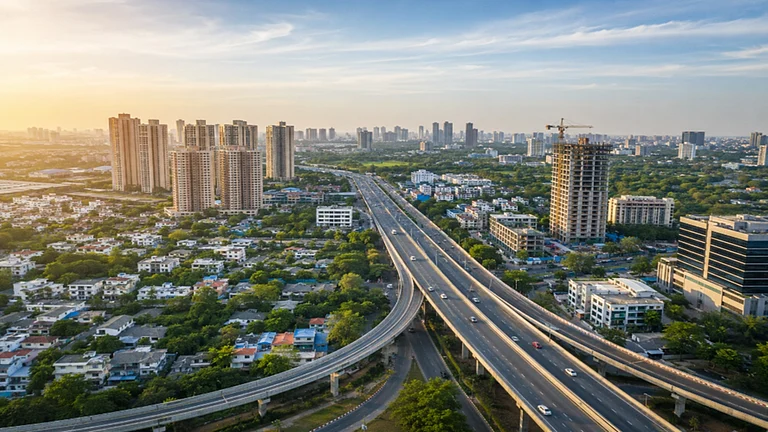
India’s venture capital ecosystem is increasingly looking beyond traditional startup hubs as government-backed funds, state initiatives and stronger digital infrastructure create new opportunities outside major metros. Smaller cities are developing startups across deep tech, manufacturing, healthcare, fintech and consumer businesses, but access to investors remains uneven.
India’s Venture Capital Map Is Slowly Expanding
For years, Bengaluru, Delhi-NCR and Mumbai have dominated India’s startup funding landscape. These cities offer dense networks of founders, investors, technology talent, incubators and corporate customers, making them natural destinations for venture capital.
That concentration has not disappeared. However, the startup ecosystem outside the largest metros is becoming more visible.
Recent developments show why. Uttar Pradesh, for example, has grown from 120 recognised startups nine years ago to more than 24,000, according to a report by The Times of India. The state has expanded its startup infrastructure through incubators, academic institutions and funding mechanisms.
The government has also created mechanisms designed to widen access to venture funding. In April 2026, the Centre notified the ₹10,000 crore Startup India Fund of Funds 2.0, with a focus that includes deep tech, early-growth startups supported by smaller alternative investment funds and technology-driven manufacturing.
These developments do not mean venture capital has already become evenly distributed across India. They point instead to a gradual broadening of the ecosystem.
Startup India Fund of Funds 2.0 Could Support Smaller Hubs
One of the most important developments for India’s venture capital market this year is Startup India Fund of Funds 2.0.
The scheme has a ₹10,000 crore corpus and is designed to invest through eligible SEBI-registered Alternative Investment Funds rather than directly funding individual startups. The government says the scheme will support deep tech, early-growth companies, innovative manufacturing and other startups.
The structure matters for smaller cities because some of the barriers faced by founders are not necessarily a lack of business ideas. They include limited access to local investors, fewer specialised funds and weaker connections to established venture networks.
In July, Mint reported that the Centre had asked states and Union territories to co-invest through the revamped Fund of Funds framework as India seeks to extend venture financing beyond the country’s biggest startup hubs. The initiative specifically identified smaller cities and emerging startup centres as areas where access to capital could be widened.
If implemented effectively, such mechanisms could help local funds develop stronger pipelines outside the traditional metro ecosystem.
State Startup Funds Are Creating Local Funding Channels
State-level initiatives are another part of the changing venture capital landscape.
SIDBI’s latest annual report shows that several states have established or operationalised dedicated startup funds. These include a ₹1,000 crore Uttar Pradesh Startup Fund, a ₹100 crore Maharashtra Fund of Funds and a ₹100 crore Odisha Startup Growth Fund. Bihar also has a ₹50 crore Startup Scale-up Financing Fund.
The structure of these funds is important. Rather than replacing private investors, government-backed funds can contribute capital to SEBI-registered AIFs, which then invest in eligible startups.
This can create a multiplier effect. Public capital can help attract private investors and fund managers while allowing local startup ecosystems to build relationships with investment firms.
For founders in smaller cities, that could eventually mean more opportunities to meet investors without immediately relocating their companies to Bengaluru, Mumbai or Delhi-NCR.
Tier-2 Cities Are Building More Than Consumer Startups
The growth opportunity outside metros is not limited to consumer internet businesses.
Smaller cities are increasingly connected to sectors such as healthcare, agriculture, logistics, manufacturing, education, financial services and climate technology. These sectors can produce businesses based on local problems that have wider national markets.
Deep tech is particularly relevant.
Members of the India Deep Tech Alliance invested approximately ₹2,170 crore across 56 deep-tech startups during the alliance’s first year, according to a report published by Financial Express. The investments covered areas including artificial intelligence, quantum computing, robotics, energy, biotechnology and the digital economy.
The development is relevant to smaller cities because innovation is not necessarily tied to a company’s physical presence in a major financial centre. Research institutions, engineering colleges and specialised industrial clusters can become sources of new companies.
The challenge is connecting these founders with the capital and expertise required to commercialise their technologies.
Digital Infrastructure Is Reducing Some Geographic Barriers
Technology has changed how startups operate and communicate with customers and investors.
Founders no longer need to maintain a large office in a metro simply to access digital tools, customers or distributed teams. Video conferencing, cloud computing, digital payments and online commerce have made it easier for companies based outside major cities to serve national markets.
This does not eliminate the advantages of metro ecosystems. Investors still value proximity to experienced founders, other portfolio companies, professional advisers and potential customers.
But digital infrastructure can reduce some of the practical disadvantages faced by companies operating from smaller locations.
The growth of digital payments is also helping local businesses participate in broader online markets. A recent NPCI proposal to allocate 5% of collections from a proposed UPI Merchant Discount Rate framework toward bringing small merchants online shows how digital financial infrastructure is increasingly being linked to smaller towns and cities.
Talent and Mentorship Remain Major Challenges
Capital alone will not create a strong venture ecosystem in smaller cities.
Startups need engineers, product managers, sales professionals, financial specialists and experienced leadership. They also need access to mentors who have previously built and scaled companies.
This is where smaller startup ecosystems can still face limitations.
A founder in a Tier-2 city may have a strong understanding of a local problem but limited exposure to venture capital processes. Preparing for institutional investment requires knowledge of valuation, governance, financial reporting, intellectual property, hiring and future fundraising.
Incubators, accelerators and universities can help bridge this gap.
The development of Uttar Pradesh’s startup ecosystem illustrates the role such institutions can play. The state has increasingly connected universities and research institutions with entrepreneurship programmes, while its startup policy and fund mechanisms are designed to strengthen the wider ecosystem.
Why Investors May Look Beyond Traditional Startup Hubs
For venture capital firms, smaller cities can offer access to different markets and business models.
Lower operating costs can help some startups extend their runway. Local knowledge can also be valuable for businesses serving regional consumers, agricultural markets, manufacturing clusters or underserved financial segments.
However, lower costs alone are unlikely to convince institutional investors.
Venture capital firms typically need businesses capable of achieving substantial growth. A company based in a smaller city therefore still needs a scalable product, strong management and a sufficiently large market.
The location of the startup may become less important when the business can demonstrate strong economics and national or international potential.
That is why the next phase of India’s smaller-city startup growth may depend less on simply encouraging founders to remain outside metros and more on building investment-ready companies in those locations.
Smaller Funds Could Help Close the Funding Gap
Large venture capital firms often concentrate on companies capable of raising substantial rounds. Smaller alternative investment funds can potentially play a different role by backing early-stage businesses that need relatively modest amounts of capital.
Startup India Fund of Funds 2.0 explicitly includes support for early-growth startups backed by smaller AIFs among its priorities.
This could be significant for Tier-2 and Tier-3 ecosystems.
A local startup may not immediately require a large institutional round. It may first need seed funding to validate its product, hire a small team, build technology or expand into neighbouring markets.
A stronger network of micro-VCs, angel investors, accelerators and regional funds could create a funding pathway from early validation to institutional investment.
The Next Challenge Is Building Sustainable Startup Hubs
Expanding venture capital beyond metros will take more than government funding.
Cities need incubators, skilled talent, research institutions, corporate customers, experienced founders and investors who understand local markets. These elements reinforce one another.
A successful startup ecosystem can attract talent, which creates more companies. More companies create deal flow, which attracts investors. Investors then provide capital and networks that help successful businesses scale.
Several Indian states are attempting to build these cycles through dedicated startup policies and funding programmes.
The opportunity is particularly relevant as India’s startup ecosystem moves into areas such as artificial intelligence, deep tech, manufacturing, climate technology and healthcare. These businesses can emerge from universities, industrial clusters and research centres outside traditional startup capitals.
The expansion will not happen uniformly. Some cities are likely to develop faster than others based on their talent base, infrastructure and industry strengths.
But the direction of policy and ecosystem development suggests that India’s venture capital map is gradually becoming broader.
Key Takeaways
- India’s startup ecosystem remains concentrated in major metros, but smaller cities are developing stronger entrepreneurial networks.
- The ₹10,000 crore Startup India Fund of Funds 2.0 is designed to mobilise venture capital for deep tech, manufacturing and early-growth startups.
- State-backed funds in Uttar Pradesh, Maharashtra, Odisha and Bihar are creating additional channels for startup investment.
- Talent, mentorship, incubators and investment-ready businesses will remain essential for smaller cities to attract sustained private capital.
FAQs
Can startups in Tier-2 cities get venture capital?
Yes. Startups based in smaller cities can raise venture capital if they meet investors’ requirements around market opportunity, scalability, management, technology and business performance. Government-backed funds and regional investment initiatives are also expanding funding channels.
Which sectors could attract venture capital outside major metros?
Potential sectors include deep tech, manufacturing, healthcare, agriculture technology, financial technology, logistics, climate technology and consumer businesses. The relevant opportunity depends on the capabilities and industrial strengths of each city.
What is Startup India Fund of Funds 2.0?
Startup India Fund of Funds 2.0 is a ₹10,000 crore government-backed scheme designed to mobilise venture and growth capital through eligible Alternative Investment Funds. Its stated focus includes deep tech, early-growth startups, innovative manufacturing and other startup segments.
What prevents more venture capital from reaching smaller cities?
The main challenges include limited investor networks, shortage of specialised talent, fewer experienced mentors, smaller local funding ecosystems and limited exposure to institutional fundraising. Building stronger incubators, funds, research institutions and founder networks can help address these gaps.








Leave a comment