

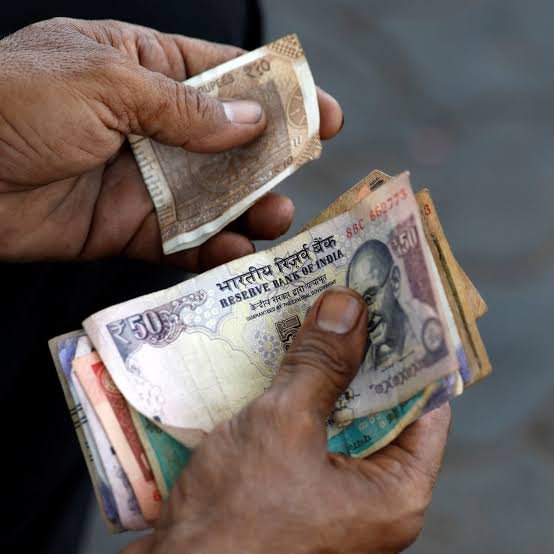
The RBI dollar intervention has become a major market development as the central bank steps up foreign exchange operations to limit pressure on the rupee. Bankers estimate the RBI sold at least $8 billion last week, while strong oil prices add to currency risks.
RBI sells dollars as rupee faces fresh pressure
The Reserve Bank of India has intensified its presence in the foreign exchange market as the rupee faces pressure from higher oil prices and global financial uncertainty. Bankers told Reuters that the RBI sold at least $8 billion last week, with estimates of the intervention ranging as high as $15 billion.
The intervention helped the rupee strengthen to a two-month high of 94.2850 per US dollar on September 3. By September 7, however, the currency closed almost unchanged at 94.4850 per dollar as higher crude prices continued to weigh on sentiment.
The scale of the reported intervention is significant because it shows how actively the central bank is managing volatility in the currency market. The RBI does not need to announce every foreign exchange transaction, so market participants often infer intervention from trading patterns, changes in liquidity and movements in the central bank’s reserves.
The immediate objective is not necessarily to establish a particular rupee-dollar exchange rate. Rather, the intervention is aimed at reducing excessive volatility and cushioning the currency against sharp external shocks.
Why the rupee is under pressure from oil prices
One of the biggest challenges for the rupee at present is the rise in crude oil prices.
Brent crude was trading around $96.6 a barrel on September 7, close to a six-week high, amid heightened tensions around the Strait of Hormuz and concerns about possible disruptions to energy supplies.
This matters particularly for India because the country imports a large share of its crude oil requirements. When international oil prices rise, Indian importers need more dollars to pay for energy purchases. If demand for dollars increases sharply, it can put downward pressure on the rupee.
A weaker rupee then makes imported crude more expensive in domestic currency terms. That can increase costs for fuel, transportation and businesses that depend heavily on imported inputs.
The RBI therefore has an interest in preventing an abrupt fall in the currency when an external shock such as an oil-price spike hits the economy.
How RBI dollar intervention works
The basic mechanism is relatively straightforward.
When the RBI sells US dollars in the foreign exchange market, it increases the supply of dollars available to buyers. At the same time, the transaction absorbs rupees from the banking system.
If demand for dollars is greater than supply, the dollar normally becomes more expensive in rupee terms. By supplying dollars from its foreign exchange reserves, the central bank can help moderate that imbalance.
The intervention can therefore influence both the exchange rate and domestic liquidity.
This does not mean the RBI can permanently prevent the rupee from moving in response to economic fundamentals. Exchange rates continue to respond to oil prices, capital flows, interest-rate expectations, trade conditions and global risk sentiment.
The central bank’s role is primarily to smooth disorderly movements and maintain orderly conditions in the foreign exchange market.
India has a large reserve cushion
The RBI has considerable foreign exchange reserves with which to conduct such operations.
India’s forex reserves reached a record $740.8 billion as of August 21, according to Reuters. J.P. Morgan estimated that reserves had subsequently moved above $750 billion.
That reserve cushion gives the central bank substantial capacity to supply dollars during periods of stress.
However, foreign exchange reserves are not an unlimited resource. Selling dollars reduces reserves, while buying dollars increases them, although the overall reserve position also changes because of valuation movements and other factors.
The RBI therefore has to balance intervention with the need to maintain adequate external buffers.
At the current level, India’s reserves provide a significant defence against sudden external shocks. But the central bank is unlikely to treat reserves as a tool for defending any single exchange-rate level indefinitely.
Strong dollar inflows are also changing the picture
The recent intervention is taking place against an unusual backdrop. India has been receiving substantial dollar inflows.
Reuters reported that dollar inflows had exceeded $136 billion, helped by RBI measures including a discounted hedging facility for overseas borrowings and a no-cost hedging option for foreign currency deposits.
This creates a different problem from a conventional foreign exchange shortage.
When large quantities of dollars enter the country, the RBI may buy some of those dollars to prevent excessive rupee appreciation. When demand for dollars rises and the rupee comes under pressure, the RBI can sell dollars.
The central bank can therefore intervene in both directions depending on market conditions.
In the current episode, the RBI’s dollar sales have helped absorb pressure on the rupee even as the global oil market has become more difficult.
Why the RBI does not simply let the rupee fall
A weaker rupee is not necessarily harmful in every situation. Exporters can benefit because their overseas earnings translate into more rupees. But a sharp or disorderly depreciation can create broader problems for an import-dependent economy.
India’s oil imports are one important channel. Other imported goods, components and raw materials can also become more expensive when the rupee falls.
A weaker currency can additionally affect companies and households with foreign-currency liabilities.
The impact can eventually feed into inflation if higher import costs are passed through to consumers and businesses.
This is why the RBI may intervene when currency movements become unusually rapid or disconnected from underlying market conditions.
The goal is generally stability rather than maintaining an artificially strong rupee.
RBI intervention also affects banking liquidity
Foreign exchange intervention has another consequence that is less visible to ordinary consumers.
When the RBI sells dollars and receives rupees in return, the operation can reduce rupee liquidity in the banking system. Reuters recently reported that India’s banking system had moved into a record liquidity surplus, driven partly by a flood of dollar deposits.
This interaction between foreign exchange operations and domestic liquidity is important because the RBI has to manage both markets at the same time.
If currency intervention absorbs too much rupee liquidity, the central bank can use other tools to influence liquidity conditions. Conversely, strong dollar inflows can add rupee liquidity when the RBI purchases foreign currency.
This is one reason foreign exchange management is closely connected to monetary and liquidity management.
What the intervention means for Indian businesses
For businesses, a more stable rupee can make financial planning easier.
Import-heavy companies benefit when currency movements are less volatile because they can estimate the rupee cost of imported goods and raw materials more accurately. Oil marketing companies, airlines, manufacturers and businesses with significant foreign-currency exposure are among those that closely monitor exchange-rate movements.
Exporters have a more complicated relationship with the rupee. A weaker currency can improve the rupee value of overseas revenue, while a stronger currency can reduce that benefit.
Companies that borrow or make payments in dollars also need to manage currency risk carefully.
The RBI’s intervention therefore does not simply create winners and losers based on whether the rupee rises or falls. What matters for businesses is often the predictability of the exchange rate and their ability to hedge exposure.
What the intervention means for ordinary consumers
For consumers, the rupee-dollar exchange rate can eventually affect prices.
The most direct impact is through imported products and commodities. Crude oil is especially important because changes in international oil prices and the exchange rate can influence the domestic cost structure of fuel and transportation.
Imported electronics, machinery, chemicals and other products can also become more expensive when the rupee weakens significantly.
At the same time, the final consumer impact depends on several factors. Businesses may absorb some additional costs, use hedging contracts or adjust prices gradually.
The RBI’s intervention therefore cannot guarantee lower prices. Its more immediate purpose is to prevent excessive currency volatility from becoming another source of economic instability.
What happens if oil prices remain high
The biggest test for the RBI could come if elevated crude prices persist.
Brent crude was near $97 a barrel on September 8 as geopolitical tensions continued to affect expectations around energy supply.
If oil remains expensive, India’s dollar demand could stay elevated. That could put recurring pressure on the rupee, particularly if global investors also favour the US dollar.
The RBI has enough reserves to intervene, but prolonged intervention would need to be weighed against other considerations, including reserve management and domestic liquidity.
Market participants are therefore watching both crude prices and the central bank’s foreign exchange activity.
The direction of global interest rates will also matter. Reuters reported that traders were pricing in a significant possibility of a US Federal Reserve rate hike following stronger employment data, while US inflation data was expected to provide another important signal.
The RBI is managing volatility, not fixing the rupee
The recent RBI dollar intervention should be understood as part of India’s broader approach to exchange-rate management.
The central bank has the reserves and market presence to influence short-term currency movements, but it cannot eliminate the forces that determine the rupee’s longer-term direction.
Oil prices, India’s trade balance, foreign investment flows, US monetary policy and global risk appetite will continue to shape the currency.
The immediate evidence suggests that the RBI’s intervention has helped limit the rupee’s decline despite a difficult external environment. The currency was around 94.42 per dollar on September 7, compared with 94.4850 at the previous close.
For India, the priority is likely to remain orderly currency markets rather than a specific exchange-rate target. With oil prices elevated and global monetary conditions uncertain, the RBI’s foreign exchange operations are likely to remain an important part of the market landscape in the weeks ahead.
Key Takeaways
- Bankers estimate the RBI sold at least $8 billion last week to support the rupee, with some estimates reaching $15 billion.
- Rising crude oil prices and geopolitical tensions are creating additional pressure on India’s currency.
- India’s foreign exchange reserves stood at $740.8 billion on August 21 and were estimated by J.P. Morgan to have subsequently exceeded $750 billion.
- RBI intervention is intended primarily to manage excessive volatility and maintain orderly market conditions rather than permanently defend a fixed rupee-dollar level.
FAQ
Why is the RBI selling US dollars?
The RBI sells US dollars in the foreign exchange market when it wants to provide additional dollar supply and reduce pressure on the rupee. The intervention can help limit sharp or disorderly depreciation.
How does RBI dollar intervention affect the rupee?
Selling dollars increases dollar availability in the market while absorbing rupees. This can reduce upward pressure on the dollar and support the rupee, particularly during periods of heavy demand for foreign currency.
Why are higher oil prices a problem for the rupee?
India imports a large amount of crude oil. When global oil prices rise, Indian importers generally require more dollars to pay for energy, increasing demand for the US currency and potentially putting pressure on the rupee.
Does RBI intervention mean the rupee will keep rising?
No. Intervention can influence short-term volatility, but the rupee remains affected by oil prices, global interest rates, capital flows, trade conditions and broader investor sentiment. The RBI is not necessarily targeting a permanently stronger rupee.
(Internal keyword suggestions: RBI dollar intervention, RBI rupee intervention 2026, rupee dollar rate, Indian rupee today, RBI forex intervention, RBI selling dollars, rupee depreciation, India forex reserves, RBI foreign exchange reserves, crude oil prices India, dollar rupee exchange rate, RBI currency policy, rupee outlook 2026, Indian currency news, RBI dollar sale)











Leave a comment