

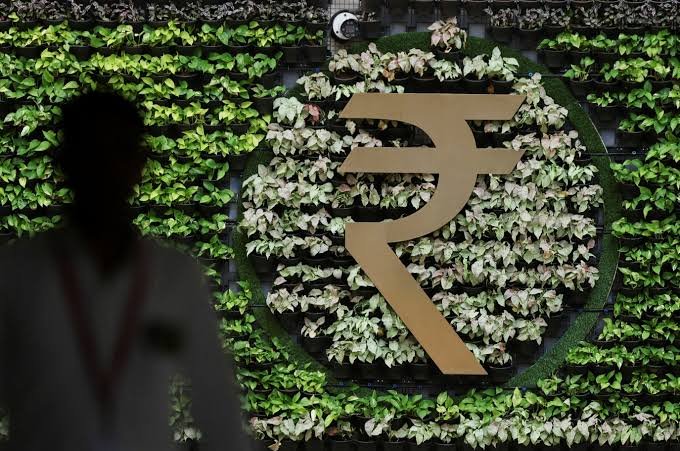
Indian companies are preparing around $3 billion in rupee-denominated debt issues as borrowers seek to lock in financing costs before a possible Reserve Bank of India rate hike in October. The planned fundraising comes amid rising inflation, higher oil prices, tighter global financial conditions and changing bond-market expectations.
Companies move early as rate hike expectations rise
Indian companies are accelerating debt fundraising ahead of the RBI’s October 7 monetary policy meeting, with several large issuers preparing bond sales worth a combined $3 billion, or roughly ₹29,000 crore. The move reflects growing concern that borrowing costs could rise if the central bank increases its policy rate.
Reuters reported on September 28 that major companies including Reliance Industries, Vedanta, Delhi International Airport, Adani Airport Holdings and JSW Energy are expected to raise about ₹18,500 crore. Infrastructure-focused issuers including Cube Highways Trust, Interise Trust and India Infradebt are also planning additional borrowing of around ₹6,000 crore.
The timing is significant because companies that issue fixed-rate bonds before a potential policy tightening can lock in current financing costs. If market yields rise later, new borrowers may have to offer higher interest rates to attract investors.
Why the RBI rate decision matters for companies
The RBI’s repo rate influences the broader cost of money in the Indian financial system. A rate increase can eventually affect lending rates, bond yields and the cost of financing for companies, although the exact transmission depends on liquidity conditions and market expectations.
Economists polled by Reuters on September 28 expected the RBI to raise its key rate by 25 basis points to 5.50% in October. Such an increase would be the first RBI rate hike since February 2023, according to the Reuters poll.
The rate outlook has changed as inflationary pressures have strengthened. India’s consumer inflation reached 4.82% in August, according to the Reuters report, remaining above the RBI’s medium-term 4% target for a third consecutive month. Higher energy and food costs have added to the pressure.
However, a rate hike remains a policy expectation rather than an announced decision. The RBI’s Monetary Policy Committee will determine the policy rate at its October meeting.
High oil prices add to India’s inflation concerns
One of the major factors influencing the current financial environment is the sharp rise in crude oil prices.
India imports most of its crude oil requirements, making domestic inflation and the rupee sensitive to movements in international energy markets. Reuters reported that Brent crude rose to around $108 per barrel on September 28 amid concerns over disruptions linked to the Middle East conflict.
Higher crude prices can increase costs for companies across transportation, manufacturing, logistics and other energy-intensive sectors. They can also increase pressure on India’s import bill and the rupee.
On September 29, Reuters reported that the rupee was facing renewed pressure from higher US Treasury yields and rising oil prices, with the currency trading close to the ₹96-per-dollar level.
This broader environment is one reason companies may prefer to secure funding before financial conditions potentially become more expensive.
Large companies are already tapping the bond market
The current borrowing push is not limited to one company or sector. Large Indian businesses have already been active in the corporate bond market.
Reliance Industries, for example, has been preparing multiple debt issuances. The Economic Times reported that the company planned to raise ₹10,000 crore through a 10-year bond issue, following a ₹12,000 crore five-year debt issuance.
Earlier in September, Reliance was also reported to be raising ₹12,500 crore through five-year bonds. The issue was being arranged by several Indian banks, according to the Economic Times.
This activity illustrates how large companies are using the domestic bond market to secure funding while liquidity remains available.
Surplus banking liquidity is supporting debt issuance
Another important part of the story is liquidity in India’s financial system.
Companies are not simply responding to expectations of higher interest rates. They are also taking advantage of current market conditions, including available liquidity and investor demand for corporate bonds.
The Economic Times reported earlier this month that companies were continuing to tap the bond market despite expectations of higher rates and potentially tighter liquidity conditions. Several large issuers were preparing fundraising plans ahead of the October policy meeting.
At the same time, Reuters reported on September 28 that the RBI had net sold government bonds worth ₹1 trillion during the financial year, its biggest annual net bond sale in more than a decade. Market participants expected the central bank’s bond sales to potentially increase further.
Liquidity therefore remains an important variable for the corporate bond market. Companies are watching both the policy rate and the availability of money within the banking system.
What higher borrowing costs could mean for businesses
If interest rates rise, the impact will vary significantly across companies.
Businesses with strong balance sheets and access to multiple sources of funding may be able to absorb moderately higher borrowing costs. Companies with large refinancing requirements or heavy debt loads could face greater pressure.
For infrastructure companies, financing costs are particularly important because projects often require substantial capital and have long repayment periods. A sustained increase in bond yields can influence the economics of new projects and refinancing decisions.
Smaller companies may face a different challenge. Many smaller businesses depend more heavily on bank loans than large corporations with access to the bond market. If banks eventually increase lending rates, their cost of working capital and expansion finance could rise.
This makes the corporate debt market an important indicator not only for large listed companies but also for the wider business environment.
Tier-2 and Tier-3 businesses could feel the impact indirectly
The immediate bond issuance activity is concentrated among large companies and infrastructure issuers, but its effects can extend beyond India’s major financial centres.
Businesses in Tier-2 and Tier-3 cities often depend on bank financing for machinery purchases, expansion, inventory and working capital. If higher policy rates eventually translate into higher lending rates, these businesses could see increased financing costs.
Consumers could also be affected through loans for housing, vehicles and other purchases, depending on how banks and financial institutions transmit changes in policy rates.
However, the effect is not automatic or immediate. Banks may adjust lending rates at different speeds, and the final impact depends on the RBI’s decision, market liquidity and individual lenders’ funding costs.
Companies are trying to manage interest-rate uncertainty
The current debt fundraising wave is therefore less about predicting exactly what the RBI will do and more about managing uncertainty.
Issuing bonds before a potential rate increase gives companies greater visibility over their financing costs. It can also reduce the risk of having to return to the market later when yields are higher.
At the same time, companies must consider the cost of issuing debt today versus waiting for potentially better market conditions. A policy rate increase is not guaranteed, and bond yields can move based on factors beyond the RBI, including global interest rates, oil prices, inflation expectations and investor demand.
For corporate treasurers, the decision is ultimately about balancing financing needs with interest-rate and liquidity risks.
What to watch after the October RBI meeting
The October 7 RBI policy decision will be closely watched by companies, banks and bond investors.
Beyond the repo rate itself, markets will look at the RBI’s assessment of inflation, liquidity, economic growth and external risks. The central bank’s guidance will also matter because it can influence expectations for future policy decisions.
For companies planning large capital expenditures or refinancing, the direction of bond yields could be as important as the headline policy rate.
The current $3 billion fundraising pipeline shows that corporate borrowers are already preparing for a potentially more expensive financing environment. Whether those expectations translate into sustained higher borrowing costs will depend on how inflation, oil prices, global yields and RBI policy evolve over the coming months.
Key Takeaways
- Indian companies are preparing roughly $3 billion of rupee-denominated debt issues ahead of the RBI’s October 7 policy meeting.
- Economists surveyed by Reuters expect a possible 25-basis-point RBI rate increase to 5.50% in October.
- Higher oil prices, inflation and pressure on the rupee are contributing to uncertainty around India’s interest-rate outlook.
- Large companies are using the bond market to secure financing while liquidity remains available, but smaller businesses could experience the effects indirectly if lending rates rise.
FAQ
Why are Indian companies raising debt before the RBI meeting?
Companies are seeking to secure financing before a potential increase in interest rates. Locking in borrowing costs earlier can reduce exposure to higher financing costs if market yields rise after a rate hike.
How much debt are Indian companies preparing to raise?
Companies are preparing approximately $3 billion, equivalent to around ₹29,000 crore, in rupee-denominated debt issues, according to Reuters reporting on September 28, 2026.
Is the RBI definitely going to raise interest rates?
No. A rate increase is an expectation among economists and market participants, not a confirmed decision. The RBI’s Monetary Policy Committee will announce its decision after its October 7 meeting.
How could an RBI rate hike affect smaller businesses?
If higher policy rates are transmitted into bank lending rates, businesses that rely heavily on loans could face higher borrowing costs. The actual impact would depend on individual lenders, loan structures, liquidity conditions and the extent of any policy change.












Leave a comment