

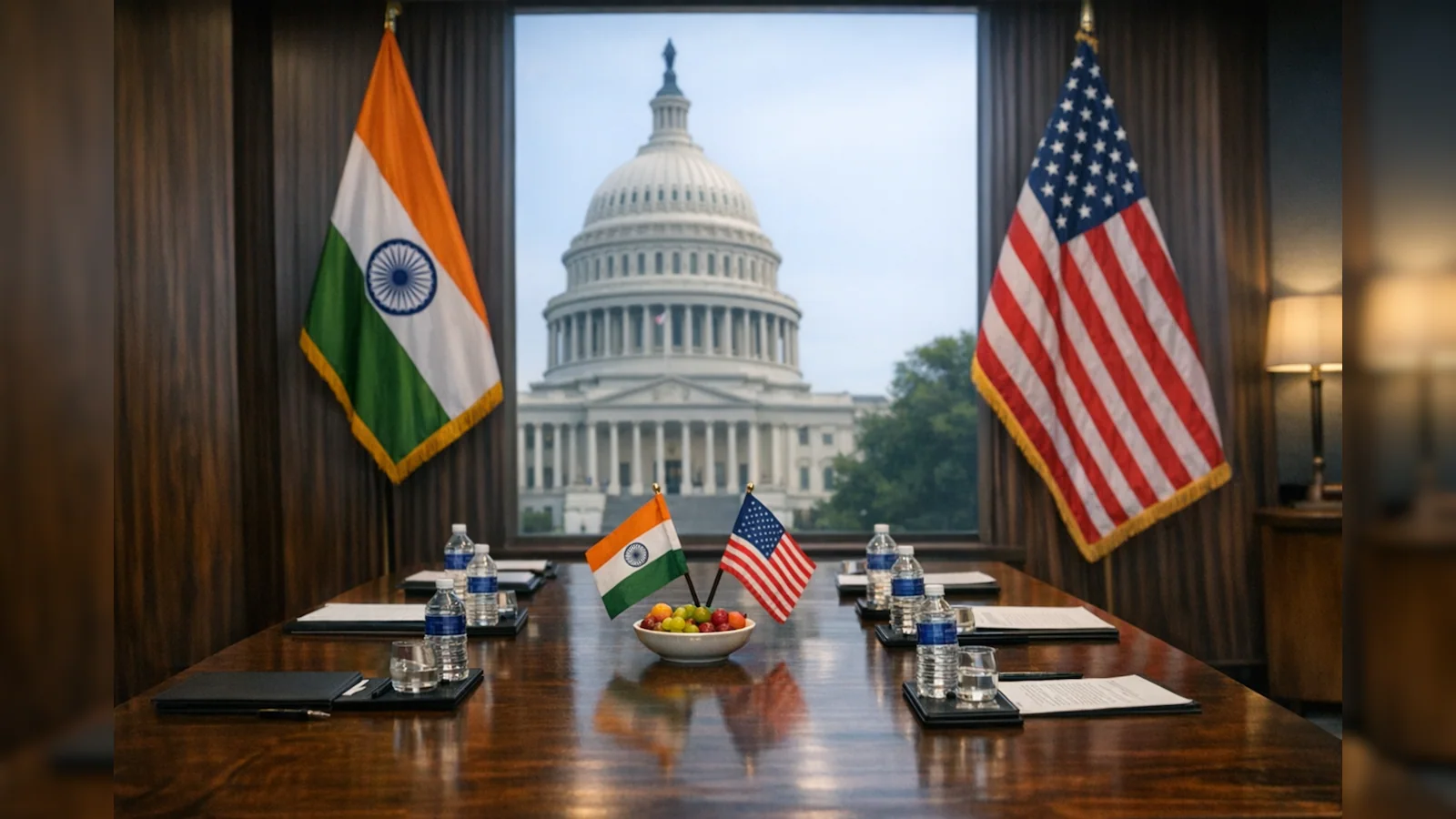
India-US trade talks have entered another important phase as Commerce and Industry Minister Piyush Goyal meets US officials during the G20 Trade Ministers’ meeting in Milwaukee. The discussions are focused on advancing an interim trade agreement while negotiations continue on a broader Bilateral Trade Agreement.
India-US Trade Talks Gain Fresh Momentum
India-US trade talks are once again in focus as officials from both countries work towards an interim trade arrangement and a larger bilateral trade agreement.
Commerce and Industry Minister Piyush Goyal is in the United States from September 29 to October 5 for the G20 Trade Ministers’ meeting and bilateral discussions with US Trade Representative Jamieson Greer. The two sides met in Milwaukee on October 1 as part of ongoing efforts to move the negotiations forward.
Prime Minister Narendra Modi and US President Donald Trump also spoke on September 30. According to the official account reported by Reuters, the conversation covered trade along with defence, energy, emerging technologies and broader bilateral cooperation.
For Indian businesses, the discussions matter because the United States remains a major destination for Indian exports. Recent official trade data cited by Reuters showed Indian goods exports to the US at $42.79 billion during April-August, compared with $40.39 billion during the same period a year earlier.
Tariffs Remain a Key Issue for Indian Exporters
The biggest immediate concern for businesses is the tariff environment.
Indian goods currently face an additional 10% US tariff under a Section 301 action related to concerns over forced labour import restrictions, with certain products subject to exemptions. The United States is also continuing investigations into India’s policies in areas covered by Section 301.
At the same time, Washington has gained additional authority through legislation that could allow tariffs of up to 100% on major buyers of Russian energy. India has warned that such measures could affect bilateral relations and has maintained that energy security remains an important consideration.
This uncertainty makes the final terms of any trade agreement particularly important for exporters.
For a textile manufacturer in Tiruppur, an engineering company in Rajkot or an auto-component supplier in Pune, tariff differences can directly affect the final price offered to American buyers. A lower tariff burden could improve competitiveness, while additional duties could force companies to absorb higher costs, raise prices or search for alternative markets.
What an Interim Trade Deal Could Change
The proposed interim agreement is expected to address selected areas before the broader bilateral agreement is completed.
India and the US had outlined a framework in February 2026 for pursuing an interim arrangement as part of the larger trade negotiations. According to the Economic Times, India had also indicated plans to purchase $500 billion worth of American products over five years across areas including energy, aircraft and aircraft parts, precious metals, technology products and coking coal.
For businesses, an interim agreement could provide greater clarity on tariffs and market access.
That clarity is important for companies making investment decisions. Exporters need to know whether their products can remain price competitive in the US, while manufacturers considering new facilities need visibility on future trade conditions.
The impact would not be limited to large corporations. Smaller manufacturers and exporters in Tier-2 and Tier-3 cities increasingly participate in global supply chains through larger companies, export houses and digital marketplaces.
MSMEs and Smaller Cities Could Feel the Impact
India’s smaller businesses could become an important part of the next phase of India-US trade.
The Commerce Ministry has said that discussions during Goyal’s US visit will focus on opportunities for farmers, fishermen, women entrepreneurs, startups, MSMEs and other enterprises. The minister is also scheduled to engage with American companies across manufacturing, consumer goods, agriculture, retail and technology.
This creates several potential areas of interest for businesses outside India’s traditional metropolitan centres.
Textile and apparel clusters, food processing companies, engineering manufacturers, leather businesses, handicraft exporters and technology service providers in smaller cities can potentially benefit if market access improves.
However, greater access to the US market does not automatically translate into higher exports. Smaller companies also need to meet product standards, documentation requirements, quality certifications, delivery expectations and compliance rules.
That means the trade agreement could be only one part of the opportunity. Businesses will also have to strengthen their ability to compete internationally.
Supply Chains Could Become More Important
Another major factor is the restructuring of global supply chains.
American companies have been looking at ways to diversify manufacturing and sourcing across countries. India is positioning itself as an alternative manufacturing and investment destination, while negotiations with the US are taking place against wider changes in global trade.
At the same time, the United States has raised concerns about Chinese goods being rerouted through other countries to avoid tariffs. A recent White House report placed India among economies identified as having risks related to Chinese transshipment, according to Business Standard.
For Indian exporters, this makes documentation and origin compliance increasingly important.
Companies supplying American customers may face greater scrutiny over where products are manufactured, where components originate and how much value is actually added in India.
Businesses that build transparent supply chains could therefore have an advantage in dealing with stricter trade requirements.
Currency and Energy Costs Add Another Layer
Trade negotiations are taking place alongside pressure on India’s currency and energy costs.
The Indian rupee was under pressure on October 1, with Reuters reporting that rising oil prices and higher US Treasury yields were weighing on the currency. Brent crude had risen sharply in September, adding another cost concern for an economy that imports a significant portion of its crude requirements.
For exporters, a weaker rupee can sometimes improve price competitiveness because foreign earnings translate into more rupees. But the picture is more complicated for businesses that import raw materials, machinery or components.
Higher energy and imported input costs can offset some of the benefits of currency movements.
This means companies cannot look at the trade agreement in isolation. Tariffs, currency movements, energy prices and shipping costs will all influence the final economics of exporting to the US.
What Businesses Will Watch Next
The immediate focus will be on whether the latest ministerial discussions produce progress toward an interim agreement.
India has continued to seek terms that provide its exporters with a competitive position in the American market. Goyal has previously said that India would not rush into an agreement without suitable terms, while the two governments have continued negotiations despite differences over tariffs and other trade issues.
The US position also remains important. At the G20 meeting, USTR Jamieson Greer defended the Trump administration’s tariff approach and raised concerns about industrial overcapacity, forced labour enforcement and the existing global tariff system.
For Indian businesses, the next phase is therefore less about a single headline announcement and more about the details of the final arrangement.
Tariff rates, product coverage, rules of origin, standards, investment provisions and implementation timelines will determine how useful the agreement becomes for individual sectors.
What the Next Phase Could Mean for Indian Businesses
If India and the US reach an interim agreement that improves market access and reduces tariff uncertainty, exporters could gain greater visibility when planning production and investment.
Businesses that already sell into the US may benefit from clearer trade conditions, while companies that have avoided the market because of tariff uncertainty could reconsider their plans.
However, companies should also prepare for continued volatility. The possibility of additional US trade measures linked to Russian energy purchases remains a concern, while the broader Section 301 investigations and tariff framework are still part of the trade environment.
For Tier-2 and Tier-3 businesses, the key opportunity may lie in building export readiness rather than simply waiting for lower tariffs.
Better quality controls, international certifications, digital documentation, reliable logistics and diversified customer bases can make smaller businesses more capable of taking advantage of improved market access.
The India-US trade relationship is already large and diversified. The next phase of negotiations could determine whether that relationship creates a more predictable environment for Indian exporters, manufacturers, startups and MSMEs.
Key Takeaways
- India and the US are continuing negotiations on an interim trade arrangement and a broader Bilateral Trade Agreement.
- Tariffs, market access and rules affecting Indian exports remain central issues in the negotiations.
- MSMEs and businesses in Tier-2 and Tier-3 cities could benefit from improved access to the US market, but compliance and export readiness will remain critical.
- Currency movements, energy prices and wider US tariff policies will continue to influence the actual impact of any trade agreement.
FAQs
Q1. What is the India-US Bilateral Trade Agreement?
The India-US Bilateral Trade Agreement is a proposed trade framework intended to expand and structure economic and commercial relations between the two countries. The current negotiations include work toward an interim arrangement as part of the broader agreement.
Q2. Why are India-US trade talks important for Indian businesses?
The US is a major market for Indian goods and services. Changes in tariffs and market-access conditions can influence the competitiveness of Indian exporters, manufacturing companies, startups and MSMEs.
Q3. Could smaller Indian businesses benefit from a trade agreement with the US?
Potentially. Businesses in sectors such as textiles, engineering, food processing, manufacturing and technology could find greater export opportunities if market access improves. However, they would still need to meet US standards, documentation requirements and other compliance conditions.
Q4. What are the biggest issues businesses should watch?
Businesses should monitor tariff rates, product exemptions, rules of origin, US trade investigations, energy-related measures, currency movements and the final implementation terms of any agreement.











Leave a comment