


Startups from Nagpur, Indore and Jaipur are increasingly part of India’s expanding entrepreneurial landscape. Although Bengaluru benefits from established investor networks and a large technology workforce, smaller-city founders can compete by solving local problems, controlling costs and building products for underserved markets. Their success depends on execution, access to capital and the ability to scale.
India’s Startup Ecosystem Is Expanding Beyond Bengaluru
Bengaluru has built a strong reputation as India’s leading technology startup hub, supported by venture capital firms, technology companies, experienced founders and a large pool of skilled professionals. However, entrepreneurship is no longer concentrated exclusively in major metropolitan centres.
Government data published through Startup India shows that around 50% of recognised startups were based in Tier-2 and Tier-3 cities, according to figures highlighted in a March 2026 government publication. The same publication reported that more than two lakh startups had received recognition under the initiative by 2025. <Cite refs={[“turn859118search42”]}/>
This expansion reflects the growing availability of digital infrastructure, online payments, e-commerce platforms and government-supported entrepreneurship programmes. Founders can now test products, acquire customers and operate businesses without necessarily establishing their headquarters in a major technology hub.
For cities such as Nagpur, Indore and Jaipur, the opportunity lies in developing businesses around local strengths while building products that can serve customers across India.
However, startup recognition does not automatically translate into funding, profitability or successful expansion. The ability to turn an idea into a sustainable business remains the central challenge, regardless of where a company is located.
Bengaluru’s Startup Advantage: Funding, Talent and Networks
Bengaluru’s competitive advantage comes from an ecosystem that has developed over several decades. The city hosts technology companies, venture capital firms, accelerators, research institutions and a large community of entrepreneurs.
This concentration makes it easier for founders to meet investors, recruit experienced employees and find professionals who have already worked in high-growth companies. Experienced founders can also share knowledge about fundraising, product development, hiring and international expansion.
For technology startups, these networks can reduce the time required to find suppliers, partners and potential customers. A founder building a software company may benefit from access to engineers, product managers and experienced technology leaders within the same market.
The presence of established technology businesses also creates opportunities for partnerships and employment. Professionals who leave larger companies can bring technical expertise and operational experience to new ventures.
Yet Bengaluru’s advantages come with costs. Office rentals, employee compensation, competition for skilled workers and customer acquisition expenses can put pressure on early-stage companies.
Startups in smaller cities may not have the same concentration of investors or experienced professionals, but they can sometimes operate with lower overheads. Whether that advantage is meaningful depends on the business model and the quality of its execution.
Nagpur Startups: Opportunities in Logistics, Agriculture and Local Services
Nagpur has several characteristics that could support entrepreneurship, particularly in logistics, agriculture-linked businesses, food processing, healthcare services and business technology.
Its central location within India makes logistics and distribution relevant areas for exploration. Businesses that help companies manage warehousing, transportation, inventory and regional distribution could find opportunities if they identify specific operational problems and demonstrate measurable savings.
Agriculture-linked businesses present another possibility. Startups can develop solutions for farm supply chains, food processing, agricultural advisory services and market access. However, these businesses must understand seasonal demand, local purchasing power and the practical needs of farmers.
Nagpur-based founders can also explore software and digital services for small and medium-sized businesses. Many enterprises need affordable solutions for accounting, customer management, inventory tracking, digital marketing and online sales.
The advantage is that founders may be able to test their products with nearby businesses before expanding into other markets. Early customer feedback can help them improve the product without immediately taking on the costs of a nationwide launch.
The challenge is building connections with investors and experienced mentors who can support expansion. A business that proves demand in Nagpur must still develop the sales, hiring and distribution capabilities required to serve customers in other cities.
For founders, the objective should not be to replicate Bengaluru’s startup ecosystem in Nagpur. It should be to build companies that use the city’s strengths to solve problems with wider commercial relevance.
Indore’s Startup Ecosystem Gains Institutional Support
Indore has a growing entrepreneurial environment supported by educational institutions, business networks and technology-oriented initiatives. The presence of institutions such as the Indian Institute of Technology Indore creates opportunities for research, technical talent and entrepreneurship.
A recent example is IIT Indore’s partnership with IFCI Venture to connect startups with funding opportunities, mentorship and investment channels. The initiative aims to improve access to capital and support the development of emerging businesses. <Cite refs={[“turn859118news36”]}/>
Such partnerships matter because access to funding involves more than finding an investor. Founders also need guidance on preparing business plans, understanding valuation, demonstrating market demand and presenting a credible growth strategy.
Indore-based startups can explore opportunities across software services, manufacturing technology, education, healthcare, financial services and consumer businesses. The city’s commercial base can provide potential customers for companies developing tools that improve business operations.
However, the presence of an incubator or institutional partnership does not guarantee investment. Startups must still demonstrate a clear customer problem, a viable business model and the ability to deliver results.
For companies with technical products, collaboration with academic institutions can also help founders access specialised knowledge and test ideas before committing substantial resources to commercialisation.
Jaipur Startups: Can Local Innovation Attract Larger Investors?
Jaipur’s entrepreneurial ecosystem includes consumer businesses, tourism-related ventures, digital services and technology startups. The city also benefits from Rajasthan’s broader business networks and growing interest in entrepreneurship.
Recent activity around TiE Rajasthan’s startup-investor event, SmashUp, illustrates how regional networks can help emerging companies connect with investors. A Times of India report published in October 2026 noted that startups receiving on-the-spot investments of ₹4.8 crore across the previous two editions had subsequently attracted larger follow-on investments. <Cite refs={[“turn859118news35”]}/>
The example highlights the potential value of local investor networks. Early funding can help startups build prototypes, test products, recruit employees or establish initial sales operations. Strong execution can then improve their chances of securing additional investment.
Jaipur-based businesses may find opportunities in tourism technology, handicrafts, jewellery, fashion, retail technology and digital platforms serving small enterprises. Founders can combine regional knowledge with technology to reach customers outside Rajasthan.
For instance, a business supporting traditional manufacturers with online distribution could help connect local producers to national buyers. Its long-term prospects would depend on product quality, supply consistency, logistics costs and the ability to attract repeat customers.
The key is to turn a local advantage into a scalable business model rather than relying only on regional demand.
Funding Remains a Major Challenge for Smaller-City Startups
Access to capital remains one of the most important differences between established startup hubs and emerging entrepreneurial markets.
Venture capital firms often rely on professional networks, referrals and industry connections to identify promising businesses. Founders outside major hubs may have fewer opportunities to meet investors directly, even when their products address genuine market needs.
The result can be a longer fundraising process. Entrepreneurs may need to travel for investor meetings, participate in accelerator programmes or build relationships with funds operating in other cities.
Government-supported programmes can help address some of these gaps. Startup India’s official platform lists funding options, investor connections, mentorship initiatives and schemes supporting early-stage businesses. The GENESIS programme, for example, is designed to strengthen technology startups in Tier-2 and Tier-3 cities through funding support, capacity building and ecosystem development. <Cite refs={[“turn859118search0″,”turn859118search4”]}/>
Founders should understand the eligibility requirements and application processes before relying on any scheme. Funding availability also varies according to the programme, sector and stage of the business.
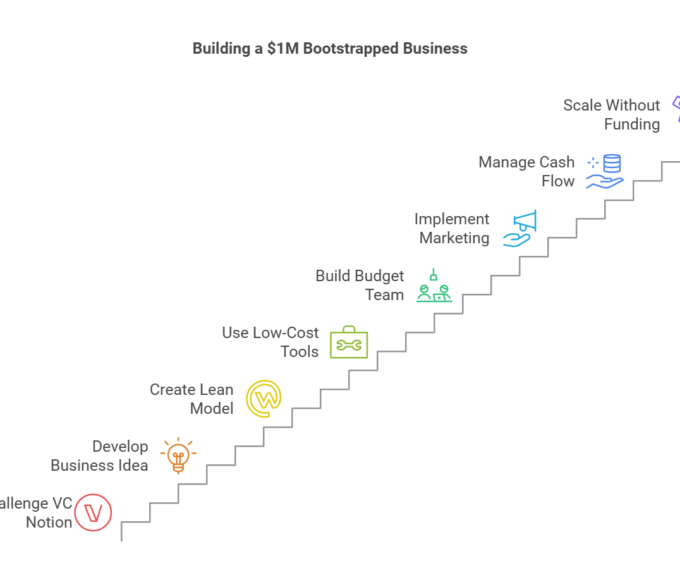
Bootstrapping, revenue-based growth, bank finance and strategic partnerships may provide alternatives for companies that do not immediately qualify for venture capital.
The right funding route depends on how quickly a startup needs to grow, the amount of capital required and the returns it can reasonably generate.
Talent, Technology and Customer Access Will Decide the Winners
Location can influence a startup’s access to talent, but it does not determine the quality of its product or management team.
Smaller-city founders can recruit employees locally, work with remote professionals and hire specialised talent from other markets when necessary. Digital collaboration tools have made distributed teams more practical, although some businesses still require employees to work together in person.
Customer access is equally important. A startup serving a national market must understand customer behaviour across regions, not just in its home city. This may require multilingual support, local distribution partners, reliable customer service and payment options suited to different audiences.
Technology can help reduce some geographical disadvantages. Cloud infrastructure, online marketing, digital payments and e-commerce platforms allow businesses to reach customers without building a large physical presence at the beginning.
Nevertheless, technology cannot replace sound business fundamentals. Startups must manage cash flow, maintain product quality, retain customers and measure whether their marketing and sales expenditure generates worthwhile returns.
Founders who build these capabilities early are better positioned to compete with companies operating from larger startup hubs.
What Smaller-City Founders Must Do to Compete
For startups from Nagpur, Indore and Jaipur, the most effective strategy is to focus on a specific customer problem and demonstrate that the solution works.
The first step is market validation. Founders should speak with potential customers, test prototypes and identify whether buyers are willing to pay for the product. Positive feedback alone is insufficient if it does not translate into actual demand.
The second step is disciplined financial management. Startups should understand their operating costs, revenue sources, customer acquisition expenses and cash requirements. Lower costs can create an advantage, but only when the business also delivers value.
Third, founders should develop investor relationships before they urgently need funding. Industry events, incubators, mentorship programmes and professional networks can help entrepreneurs build credibility and identify suitable capital providers.
Finally, expansion should follow evidence of demand. A startup does not need to enter multiple cities immediately to prove its potential. It can first establish a reliable business in one market, improve its operations and expand when its model is ready.
Key Takeaways
- Startups from Nagpur, Indore and Jaipur can compete with Bengaluru-based ventures by building differentiated products and addressing clearly defined customer needs.
- Bengaluru retains advantages in venture capital, experienced talent and business networks, while smaller cities may offer lower operating costs and stronger local market knowledge.
- Government programmes, incubators and regional investor networks can improve access to funding and mentorship.
- Long-term success depends on customer demand, financial discipline, product quality and the ability to scale, not simply on the city where a startup is founded.
Frequently Asked Questions
1. Can startups from Nagpur compete with Bengaluru-based companies?
Yes. Nagpur-based startups can compete by focusing on sectors where they understand customer needs, such as logistics, agriculture-linked services, food processing and business technology. Their success depends on product quality, access to customers and the ability to expand beyond the local market.
2. Is Indore a good city for starting a business?
Indore offers access to educational institutions, business networks and an expanding entrepreneurial environment. Founders should assess the availability of skilled employees, customers, funding and sector-specific infrastructure before deciding where to establish their business.
3. How can startups in Jaipur attract venture capital?
Jaipur-based founders can approach suitable investors through incubators, startup events, professional networks and government-supported platforms. A clear business model, evidence of customer demand, realistic financial projections and a credible growth plan can strengthen their fundraising efforts.
4. Do startups need to relocate to Bengaluru to raise funding?
No. Relocation is not compulsory. Founders can build investor relationships remotely, attend industry events and apply to relevant funding programmes. However, some startups may benefit from establishing a presence in a larger market if their business requires closer access to investors, specialised talent or enterprise customers.








Leave a comment