

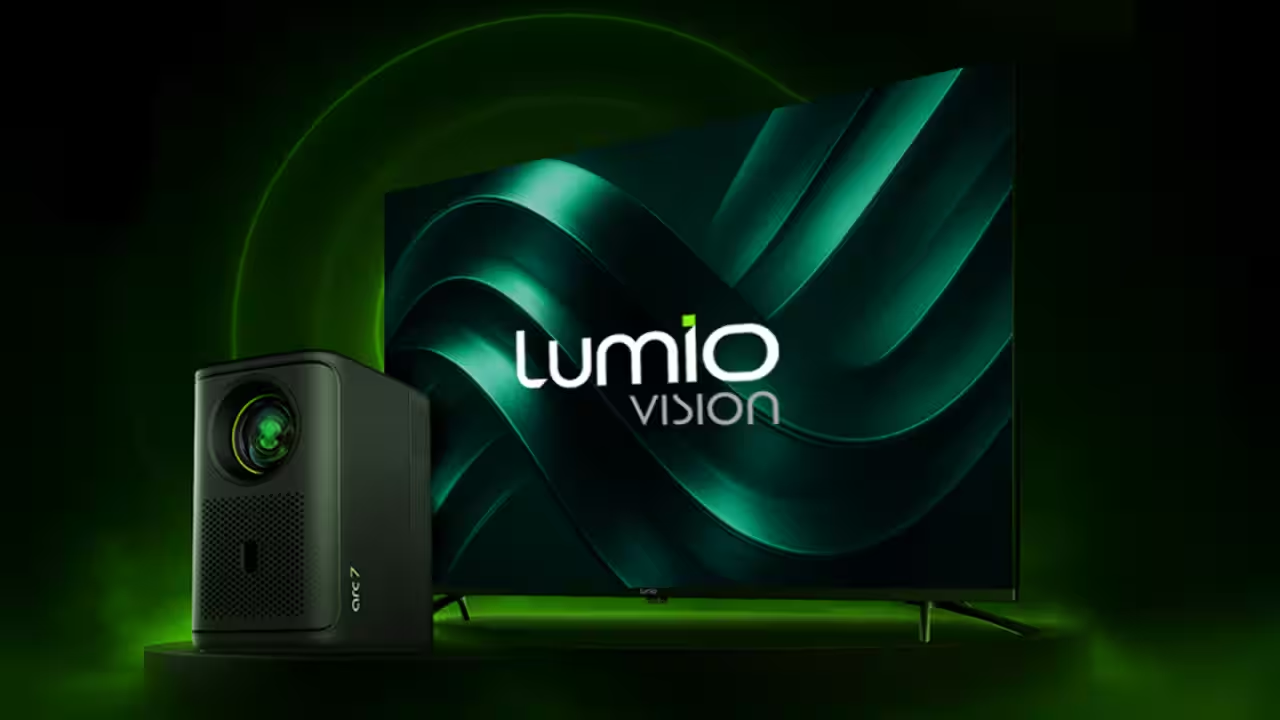
Lumio, an Indian consumer electronics brand, has raised $12 million in Series A funding as investors look for opportunities beyond software-led startups. The Bengaluru-based company plans to invest in research, product development, software, retail expansion and after-sales support as it builds its presence in India’s home entertainment market.
Lumio Funding Round: Who Invested and Why It Matters
Lumio, the consumer electronics brand operated by Circuit House Technologies, announced a $12 million Series A funding round led by Blume Ventures. Existing investors Stellaris Venture Partners and 3one4 Capital also participated in the round.
The funding comes as Lumio expands its range of home entertainment products, which includes Vision smart TVs, Arc projectors and Aura speakers. The company launched its first smart television lineup in early 2025 and has since broadened its portfolio.
The new investment is intended to support research and development, product innovation, software development and expansion into additional home device categories. Lumio also plans to strengthen its retail presence and improve after-sales support.
For the Indian startup ecosystem, the funding highlights how investors are evaluating consumer businesses that combine physical products with technology and customer-focused software.
Why Consumer Electronics Startups Are Attracting Investor Attention
Consumer electronics is a competitive market in which established brands have spent years building distribution networks, customer recognition and service infrastructure. New companies entering the sector must offer a clear reason for buyers to consider alternatives.
Product performance, design, pricing, software and customer service can all influence purchasing decisions. For smart televisions and projectors, for example, buyers may compare picture quality, operating speed, app availability, connectivity and ease of use before choosing a product.
Startups that identify gaps in the customer experience can attempt to compete through targeted product improvements rather than relying only on discounts.
Lumio is positioning its products around hardware performance and software-led features. Its approach reflects a wider business question for emerging electronics brands: can they develop products that offer a distinct experience while building the distribution and service systems required to support customers over the long term?
Investor interest in such companies does not guarantee commercial success. Businesses still need to demonstrate consistent demand, maintain product quality and manage costs as they expand.
Research and Development Will Be Central to Lumio’s Expansion
A significant part of Lumio’s funding plan is focused on research and development. Investment in this area can help an electronics company improve existing devices, develop new products and refine the software that connects its product portfolio.
Lumio has also been developing software for content discovery. Its TLDR and Project Neo initiatives are intended to make it easier for users to find relevant content across supported entertainment platforms. Project Neo has been reported to be in public beta in nine Indian languages.
Language accessibility can be particularly relevant in a country where consumers use different languages at home and across digital services. However, the commercial value of such features depends on whether customers find them useful and continue using them.
For a consumer electronics startup, software development also presents an opportunity to differentiate products in a market where many devices provide access to similar streaming platforms and applications.
The challenge is to turn technical features into practical benefits that customers can understand. Faster navigation, easier content discovery and a reliable user interface may matter more to buyers than complex technical specifications alone.
Retail Expansion and After-Sales Service Remain Key Priorities
Selling electronics involves more than manufacturing a product and listing it online. Customers may want to see a television’s picture quality, assess a speaker’s sound or understand how a projector will work in their homes before making a purchase.
Lumio plans to establish a strategic offline retail presence to give potential customers opportunities to experience its products before buying them.
The company has also identified quality control and after-sales support as areas for investment. According to published reports, Lumio already works with more than 300 service centres, with reported service coverage extending across over 19,000 pin codes.
Expanding these capabilities will be important as the company reaches more households. Electronics products can require installation, repairs, replacement parts and software support. Delays or inconsistent service can affect customer satisfaction even when the original product performs well.
For newer brands, establishing trust is especially important because buyers may be less familiar with their reliability and long-term service capabilities than those of established manufacturers.
Offline retail and service expansion can therefore serve two purposes: helping customers make informed purchasing decisions and giving the company a stronger foundation for repeat business and referrals.
What Lumio’s Growth Figures Tell Investors
Lumio has reported crossing ₹100 crore in gross merchandise value within 13 months of commercial sales. It has also reported serving more than 35,000 households across over 5,000 pin codes in India.
The company further reported that its gross merchandise value more than tripled year on year between April and August 2026.
These figures provide an indication of the company’s early commercial traction, but they should be interpreted carefully. Gross merchandise value, or GMV, represents the value of goods sold through a business over a defined period. It is not the same as recognised revenue, operating profit or cash generated by the company.
For investors, the next stage of evaluation will involve understanding whether sales growth can translate into sustainable economics. Important factors include product margins, customer acquisition costs, inventory management, warranty expenses and the cost of expanding distribution.
A startup can grow its sales rapidly while still facing pressure on profitability. This makes operational discipline as important as market demand.
Lumio’s ability to balance product investment with service quality and cost management will help determine whether its early momentum can be sustained.
What This Means for India’s Consumer Startup Ecosystem
Lumio’s funding round offers a useful example of the opportunities and challenges facing Indian consumer hardware startups. Building an electronics brand requires investment in product design, components, software, supply chains, distribution and customer support.
These requirements can make the business model more capital-intensive than that of many software companies. Hardware businesses may also face inventory risks, changing component costs and competition from brands with established manufacturing and distribution relationships.
At the same time, consumer electronics gives startups opportunities to address specific customer needs through better product experiences, accessible pricing and differentiated features.
For entrepreneurs, the lesson is not simply that electronics startups can attract funding. It is that investors need evidence of customer demand, a credible product roadmap and a realistic plan for supporting buyers after the sale.
For investors, Lumio’s next phase will provide a test of whether its combination of hardware, software and customer service can support a durable consumer brand.
The $12 million investment gives the company additional resources to pursue that goal. Its long-term performance will depend on execution, customer retention and the ability to compete in a crowded market.
Key Takeaways
- Lumio has raised $12 million in a Series A round led by Blume Ventures, with Stellaris Venture Partners and 3one4 Capital participating.
- The company plans to invest in research and development, software, new product categories, retail expansion and after-sales support.
- Lumio has reported crossing ₹100 crore in GMV within 13 months of commercial sales, although GMV should not be confused with revenue or profit.
- The company’s next challenge is to turn early demand into sustainable growth while maintaining product quality, service standards and financial discipline.
Frequently Asked Questions
1. How much funding has Lumio raised?
Lumio has raised $12 million in a Series A funding round led by Blume Ventures, with participation from existing investors Stellaris Venture Partners and 3one4 Capital.
2. What does Lumio manufacture?
Lumio offers consumer electronics products for home entertainment, including Vision smart TVs, Arc projectors and Aura speakers. The brand operates under Circuit House Technologies.
3. How will Lumio use the new funding?
The company plans to invest in research and development, software improvements, new home device categories, retail expansion, product quality and after-sales service.
4. Why are investors interested in consumer electronics startups?
Investors may see opportunities in companies that address specific customer needs through differentiated products, software and service. However, success depends on demand, margins, distribution, product reliability and the ability to compete with established brands.










Leave a comment