

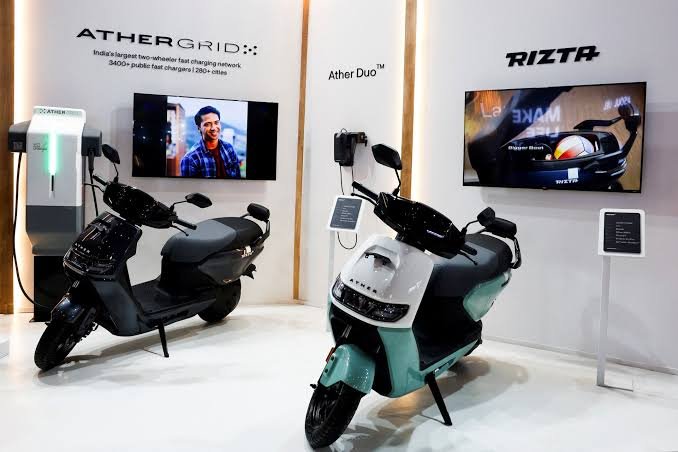
Ather Energy’s first quarterly profit in the July-September quarter of FY2026-27 marks a significant development for India’s electric two-wheeler industry. The Bengaluru-based company reported a net profit of ₹1.26 crore as revenue and scooter sales increased, raising questions about whether India’s electric vehicle manufacturers can achieve sustainable profitability while expanding production and distribution.
Ather Energy Reports First Quarterly Profit in FY2027
Ather Energy reported a consolidated net profit of ₹1.26 crore for the second quarter of FY2026-27, ended September 30, 2026. This compares with a net loss of ₹154.07 crore in the corresponding quarter of the previous financial year. The results, announced on October 26, represent an important step in the company’s effort to improve its financial performance
The company’s revenue from operations increased 62.9% year-on-year to ₹1,464.24 crore, compared with ₹898.88 crore in the same quarter last year. Total income, including other income, reached ₹1,526.95 crore.
The improvement came alongside higher electric scooter sales. Ather sold approximately 93,000 vehicles during the quarter, up around 42% from approximately 66,000 units a year earlier, according to India Today’s report on the results.
However, the scale of the profit matters. A quarterly profit of ₹1.26 crore on revenue of ₹1,464.24 crore represents a very narrow net margin. The results therefore indicate a turning point, rather than proof that the company has established a consistently profitable business model.
For India’s electric vehicle sector, the more important question is whether Ather can maintain this performance as competition intensifies and manufacturing capacity expands.
What Ather Energy’s Financial Results Reveal About EV Profitability
The electric two-wheeler business requires substantial spending before a company can build a large customer base. Product research, battery engineering, manufacturing, software development, retail outlets, charging infrastructure and after-sales service all require investment.
These costs can weigh on profits when sales volumes are low. As production increases, manufacturers may spread certain fixed costs across more vehicles, potentially improving their operating margins. This is one reason scale matters in the EV industry.
Ather’s latest results suggest that higher sales and revenue are helping its financial performance. Nevertheless, rising revenue alone does not guarantee profitability. Companies must also control production costs, maintain competitive prices and ensure that each vehicle sold contributes enough towards covering operating expenses.
The distinction between gross margin, operating profit and net profit is particularly important. Gross margin reflects the difference between sales revenue and the direct cost of goods sold. Operating profit also accounts for operating expenses, while net profit includes additional costs such as financing and applicable taxes.
A company can improve its gross margin and still report a net loss if its other expenses remain high. Ather’s return to a small quarterly net profit is encouraging, but sustained performance across these measures will be necessary to establish the strength of its business model.
EV Business Model in India: Why Scale Matters
Ather’s performance highlights a central challenge facing electric vehicle manufacturers in India: building a business that can sell vehicles at competitive prices while generating enough revenue to cover its costs.
The Indian electric two-wheeler market includes established automotive manufacturers and newer EV-focused companies. Customers compare prices, driving range, charging convenience, reliability, battery performance and service availability before making a purchase. Manufacturers must balance these expectations with the cost of developing and producing vehicles.
Ather’s adjusted gross margin improved to 24% in the September quarter, compared with 22% a year earlier. Its earnings before interest, taxes, depreciation and amortisation (EBITDA) reached ₹74.17 crore, against an EBITDA loss of ₹90.76 crore in the corresponding quarter last year. EBITDA margin improved to approximately 5% from minus 10%.
These figures suggest that the improvement extends beyond the final net profit number. However, manufacturers still need to demonstrate that stronger margins can continue despite fluctuations in component prices, competition and operating expenses.
For smaller EV businesses, the challenge can be even greater. Lower production volumes may limit their ability to negotiate favourable supplier prices, while building a service network across multiple cities requires additional investment.
Rising EV Demand Creates Opportunities and Challenges
Demand growth provides manufacturers with an opportunity to increase sales and improve capacity utilisation. However, strong demand can also expose weaknesses in manufacturing and supply chains.
According to Ather’s September-quarter results coverage, its Hosur manufacturing facility in Tamil Nadu was operating at approximately 98% capacity utilisation. The company planned to add annual production capacity of 75,000 units at Hosur, with another 150,000 units planned at its Chhatrapati Sambhajinagar facility in Maharashtra.
The planned expansion illustrates the relationship between demand and capital expenditure. Manufacturers need additional production capacity to meet orders, but building factories and purchasing equipment require money before the resulting output can generate revenue.
Expanding too slowly may mean losing customers to competitors. Expanding too quickly, meanwhile, can leave a company with underused facilities if demand weakens.
This challenge matters to India’s wider manufacturing ecosystem. Maharashtra’s EV investments can support industrial activity, logistics, component suppliers and employment around manufacturing locations. However, the actual economic benefits will depend on project execution, supplier participation and sustained demand.
For Ather, the priority will be to increase output without allowing higher production costs or new capital requirements to weaken its improving financial position.
Battery Costs and Pricing Remain Key Risks
Battery technology is one of the most important factors influencing the economics of electric vehicles. Battery cells and associated components contribute significantly to vehicle costs, while manufacturers also need to invest in engineering, testing, safety systems and supply-chain management.
Ather has identified input-cost pressures involving materials and electronic components, including aluminium, copper, plastics and memory components. Its reported improvement in margins was supported by product mix and pricing decisions, even as these costs remained a challenge.
For consumers, the effect of these pressures may appear in the final price of an electric scooter, the features offered at a particular price point or the discounts available during competitive sales periods.
Manufacturers cannot simply raise prices whenever input costs increase. Higher prices may improve margins per vehicle but could also discourage price-sensitive customers. Cutting prices may support sales volumes while reducing the contribution earned from each scooter.
This creates a difficult balancing act. EV companies must offer products that are affordable enough to attract customers while maintaining sufficient margins to fund research, service operations and future product development.
The ability to manage this balance will be particularly important as electric two-wheelers compete with petrol-powered scooters in India’s smaller cities and towns.
Beyond Scooter Sales: The Importance of Recurring Revenue
Another important part of the EV business model is revenue generated after the initial vehicle sale. This can include accessories, spare parts, software subscriptions, charging-related services and maintenance.
Ather’s non-vehicle products and services accounted for 15% of revenue in the September quarter of FY2026-27, compared with 12% a year earlier, according to India Today’s report.
Such revenue streams can help manufacturers develop a broader relationship with customers. A vehicle purchase is typically a one-time transaction, whereas servicing, accessories and certain digital services may generate income over a longer period.
However, recurring revenue is not automatically profitable. Service centres require staff, spare-parts inventory and facilities. Charging infrastructure also involves installation, maintenance and utilisation risks. Subscription services need to deliver enough value for customers to keep paying.
The key is to develop services that customers genuinely need and are willing to pay for. Strong after-sales support can also influence future purchases and recommendations, particularly in cities where EV service networks are still developing.
For manufacturers, a successful ecosystem could help diversify income beyond vehicle sales. The challenge is to ensure that these additional services contribute positively to the company’s overall finances.
What Ather Energy’s Turnaround Means for India’s EV Industry
Ather’s return to quarterly profitability is a useful development for investors, suppliers and businesses evaluating the future of India’s electric vehicle market. It shows that a company can make substantial progress in reducing losses while expanding sales.
However, one profitable quarter cannot establish whether a business model is sustainable over the long term. Future results will need to demonstrate that profitability can be maintained across different market conditions.
Investors will need to examine revenue growth alongside margins, cash flow, working capital, capital expenditure and the company’s ability to fund expansion. Customers, meanwhile, will be more concerned with vehicle affordability, reliability, battery performance, resale value and the availability of service centres.
For Tier-2 and Tier-3 cities, the growth of electric two-wheelers will also depend on practical factors such as home-charging access, reliable electricity, local servicing and the availability of replacement parts. A lower running cost can be attractive, but customers must also consider the upfront price and their daily travel requirements.
Ather’s next challenge is therefore not simply to report another quarterly profit. It must demonstrate that its improving financial performance can withstand competition, cost fluctuations and the demands of expansion.
The broader lesson for India’s EV sector is clear: sales growth can help companies move towards profitability, but long-term success depends on disciplined spending, efficient manufacturing, sound pricing and dependable customer support.
Key Takeaways
- Ather Energy reported a consolidated net profit of ₹1.26 crore in Q2 FY2026-27, compared with a net loss of ₹154.07 crore a year earlier.
- Revenue from operations increased 62.9% year-on-year to ₹1,464.24 crore, supported by higher vehicle sales.
- Improved margins and additional non-vehicle revenue indicate progress, but rising input costs and manufacturing expansion remain important challenges.
- Sustainable EV profitability will depend on cost control, capacity utilisation, after-sales services and continued customer demand.
Frequently Asked Questions
1. Did Ather Energy report a profit in Q2 FY2026-27?
Yes. Ather Energy reported a consolidated net profit of ₹1.26 crore for the quarter ended September 30, 2026, compared with a net loss of ₹154.07 crore in the same quarter of the previous financial year.
2. What drove Ather Energy’s profit turnaround?
Higher vehicle sales, revenue growth and improved margins contributed to the turnaround. The company also benefited from product mix and pricing decisions, although input-cost pressures remain a concern.
3. Why is profitability difficult for electric vehicle companies in India?
EV manufacturers must invest in research, battery technology, manufacturing, distribution, software and after-sales service. They must recover these costs while offering competitive prices and managing changes in component costs and customer demand.
4. Can Ather Energy maintain its profitability?
That remains uncertain. Its latest results are encouraging, but sustained profitability will depend on future sales, operating margins, production efficiency, input costs and the financial requirements of expansion.











Leave a comment