

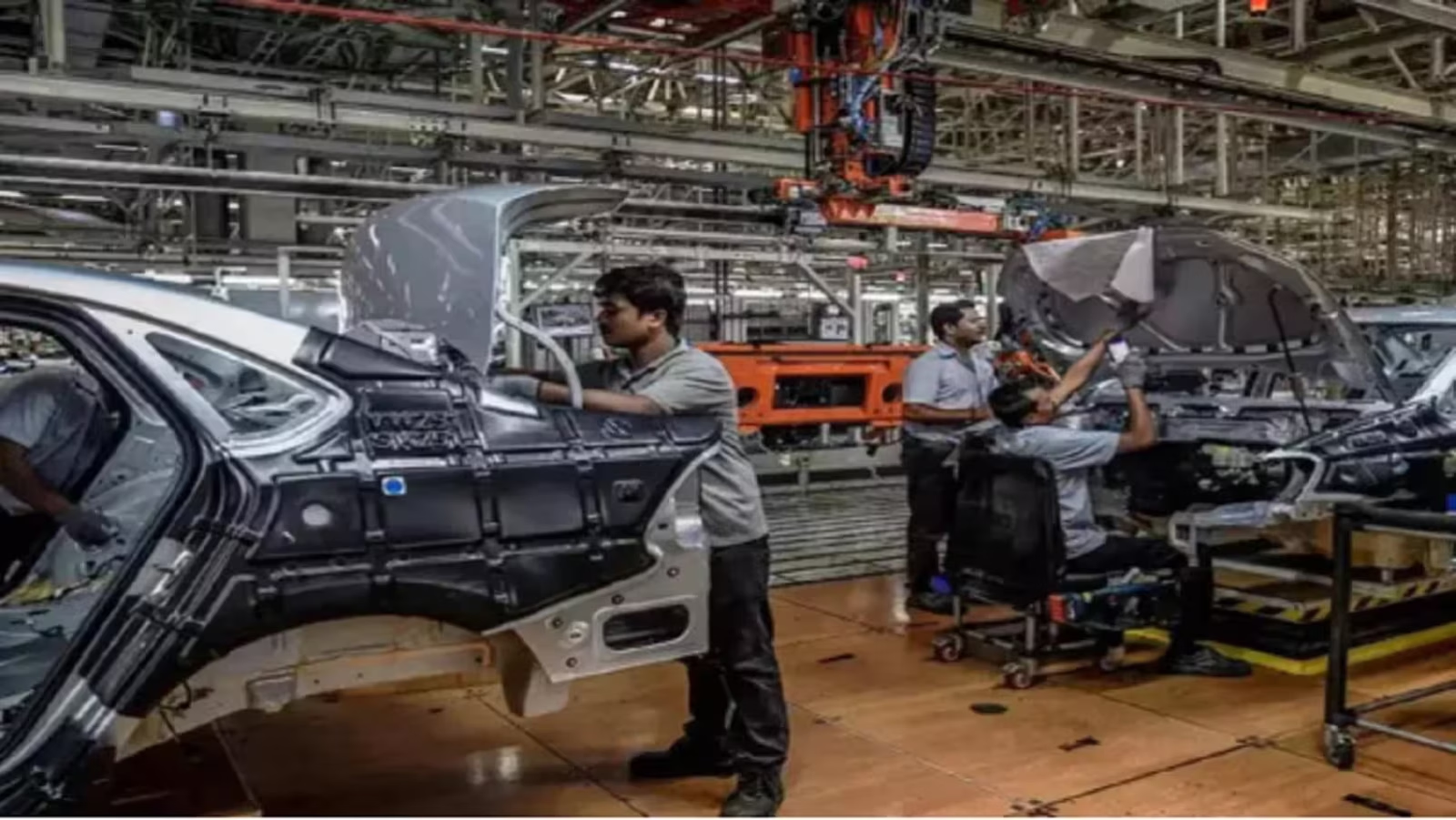
India’s Production Linked Incentive (PLI) scheme for automobiles and auto components has recorded ₹4,385.28 crore in incentive disbursements during FY 2026-27 up to November 25. The development highlights growing investment in domestic manufacturing, advanced automotive technologies and India’s electric vehicle supply chain.
PLI Auto Scheme Records Higher Incentive Disbursements
India’s automobile manufacturing sector has recorded fresh progress under the government’s Production Linked Incentive scheme, with incentive disbursements reaching ₹4,385.28 crore in the current financial year as of November 25, 2026.
The Ministry of Heavy Industries announced the figures following a review meeting chaired by Union Minister for Heavy Industries and Steel H. D. Kumaraswamy.
The latest disbursement takes the cumulative incentives paid under the PLI-Auto scheme to ₹6,771.64 crore since its launch.
The scheme has an approved budgetary allocation of ₹25,938 crore and aims to strengthen India’s manufacturing capabilities in advanced automotive technology products.
The latest figures are significant because the incentives disbursed during the first eight months of FY 2026-27 have already exceeded the ₹2,064.36 crore paid during the entire previous financial year.
This indicates a faster pace of incentive payments to eligible manufacturers compared with earlier financial periods.
Understanding India’s ₹25,938 Crore PLI Auto Scheme
The Production Linked Incentive scheme for the automobile and auto component industry was approved by the Union Cabinet in September 2021.
The programme was introduced to encourage domestic manufacturing of Advanced Automotive Technology (AAT) products and reduce dependence on imported automotive components.
Unlike conventional manufacturing subsidies, the PLI model links financial incentives to eligible production and sales. Companies must meet specified investment, production and eligibility conditions to receive benefits.
The scheme covers advanced automotive products, including electric vehicles and their components, along with other technologies supporting the development of next-generation mobility solutions.
Its approved budgetary outlay stands at ₹25,938 crore, with the original scheme framework covering five financial years from FY 2022-23 to FY 2026-27.
The objective is not limited to increasing vehicle production. The government also wants manufacturers to develop domestic capabilities in important automotive technologies, strengthen component supply chains and improve India’s position in the global automobile industry.
Domestic Investments Cross the Government’s Target
One of the major indicators of the scheme’s progress is the investment reported by approved applicants.
According to the Ministry of Heavy Industries, participating companies had reported cumulative investments of ₹52,806 crore as of September 30, 2026.
This is higher than the government’s original investment target of ₹42,500 crore.
The investment figure suggests that approved manufacturers have committed substantial capital towards expanding production capabilities and developing advanced automotive technologies in India.
Such investments can support the establishment of manufacturing facilities, expansion of existing plants, machinery upgrades and development of specialised component production.
For domestic manufacturers, these investments are particularly important as the automotive industry moves towards electric mobility, connected vehicles and more technologically advanced products.
However, investment figures alone do not establish how much additional production capacity is already operational. The actual impact will depend on project completion, production volumes and the ability of manufacturers to find customers for their products.
Incremental Sales Reach ₹82,993 Crore
The PLI-Auto scheme has also reported incremental sales worth ₹82,993 crore over the base year FY 2019-20.
Incremental sales refer to additional sales of eligible products compared with the sales recorded during the scheme’s designated base year.
This measurement helps assess whether participating companies have expanded their eligible manufacturing business beyond their earlier production and sales levels.
The increase is relevant for the automobile industry because domestic manufacturers are operating in a market undergoing significant technological changes.
Electric vehicles, advanced automotive components and other next-generation mobility technologies are becoming increasingly important to the industry’s long-term development.
The sales performance also indicates that the scheme is supporting activity across the manufacturing ecosystem rather than focusing only on financial incentives.
However, incremental sales should not be confused with the total revenue of India’s automobile industry. The figure specifically relates to eligible products under the PLI-Auto scheme.
How the 50% Domestic Value Addition Rule Affects Manufacturers
A key requirement under the PLI-Auto scheme is the minimum 50% Domestic Value Addition (DVA) threshold.
This means eligible products must meet the prescribed requirement for value addition within India to qualify for incentives.
The rule is designed to encourage manufacturers to source more components, materials and manufacturing services domestically.
For example, an automotive component manufacturer that imports most of its production inputs may need to increase its domestic sourcing and manufacturing activities to meet the eligibility requirement.
The policy is particularly relevant for advanced automotive technologies, where India has opportunities to expand its capabilities in electric vehicle components, power electronics, battery-related systems and other specialised products.
As of November 25, 2026, the government had issued DVA certificates to nine Champion Original Equipment Manufacturers (OEMs), covering 139 products and variants.
Additionally, 10 Component Champions had received certificates covering 53 products and variants.
These certifications indicate that a group of approved manufacturers has met the domestic value addition requirements for the relevant eligible products.
For the wider automotive supply chain, this could create opportunities for Indian component suppliers to participate in manufacturing networks that previously depended more heavily on imported products.
Employment Generation Reaches 77,755 Opportunities
Employment generation is another important indicator of the PLI-Auto scheme’s progress.
The Ministry of Heavy Industries reported that the programme had generated 77,755 employment opportunities as of September 30, 2026.
Automobile manufacturing supports a wide network of industries, including engineering, metal processing, electronics, machinery, logistics and industrial services.
As manufacturers expand production and invest in advanced technologies, demand can increase for skilled workers, technicians, engineers and production specialists.
The transition towards electric vehicles and advanced automotive systems is also changing the type of skills required by the industry.
Manufacturers increasingly need professionals familiar with electronics, power systems, software integration, battery technology and automated production processes.
The employment figure therefore reflects the broader industrial activity associated with the scheme. However, the government-reported figure does not by itself establish how many jobs are permanent, newly created in a particular state or directly related to factory operations.
What PLI Auto Incentives Mean for Small and Medium Component Manufacturers
The impact of the PLI-Auto scheme extends beyond large automobile manufacturers.
India’s automotive industry depends on a large network of small and medium enterprises that supply components, equipment and specialised manufacturing services.
These businesses form an important part of the domestic automotive supply chain.
As larger manufacturers increase localisation requirements, component suppliers may find opportunities to develop new products and expand their production capabilities.
For instance, companies manufacturing electrical connectors, electronic systems, precision components and specialised vehicle parts could benefit from increased demand from eligible manufacturers.
However, smaller suppliers do not automatically receive PLI incentives simply because they supply components to an approved vehicle manufacturer.
The scheme operates through approved applicants and defined eligibility conditions. Businesses must understand the relevant product categories and qualification requirements before assuming that they can directly access financial benefits.
For Tier-2 and Tier-3 industrial cities, the expansion of automotive supply chains could create opportunities in manufacturing, logistics, industrial services and technical employment.
The extent of these benefits will depend on where companies establish their facilities and how much sourcing they undertake from regional suppliers.
Challenges Facing India’s Domestic Automotive Manufacturing Industry
Despite the progress recorded under the PLI scheme, domestic manufacturers continue to face several challenges.
Dependence on imported technology: India still needs to strengthen domestic capabilities in certain advanced automotive technologies and specialised components.
High manufacturing costs: Producing advanced automotive products requires investment in machinery, research, skilled labour and quality control.
Electric vehicle supply chain: The development of domestic battery technology and other EV components remains important for reducing dependence on international suppliers.
Global competition: Indian manufacturers compete with established automotive manufacturing countries that have developed large-scale component and technology ecosystems.
Technology development: Manufacturers must continue investing in research, innovation and product development to remain competitive.
The PLI scheme can support investment and manufacturing expansion, but incentives alone cannot resolve every structural challenge.
Long-term progress will also depend on research capabilities, infrastructure, access to capital and stronger partnerships between automobile companies and domestic suppliers.
Can India’s Automotive Industry Become a Global Manufacturing Hub?
The latest PLI-Auto figures highlight the government’s broader ambition to strengthen India’s position in the global automobile manufacturing market.
India already has an established automotive production ecosystem, supported by vehicle manufacturers, component suppliers, engineering companies and a large domestic consumer market.
The next phase of growth will depend increasingly on the country’s ability to manufacture technologically advanced products.
Electric mobility, automotive electronics, power systems and specialised components are likely to remain important areas of investment.
The PLI scheme is one part of this wider industrial strategy. Its impact will need to be measured through sustained domestic production, higher value addition, technology development and the competitiveness of Indian manufacturers.
The latest investment and sales figures indicate progress against several programme objectives. At the same time, the industry’s ability to build globally competitive supply chains will determine how much of this momentum translates into long-term manufacturing strength.
For domestic manufacturers, the ₹4,385.28 crore disbursement in FY 2026-27 represents more than a government spending milestone. It reflects the growing scale of India’s effort to expand advanced automotive manufacturing and develop a stronger domestic component ecosystem.
Key Takeaways
- India’s PLI-Auto scheme disbursed ₹4,385.28 crore in incentives during FY 2026-27 up to November 25, taking cumulative disbursements to ₹6,771.64 crore.
- Approved applicants reported investments of ₹52,806 crore as of September 30, exceeding the original target of ₹42,500 crore.
- The scheme recorded incremental sales of ₹82,993 crore and generated 77,755 employment opportunities.
- Eligible products must meet a minimum 50% domestic value addition requirement to qualify for incentives.
Frequently Asked Questions (FAQs)
1. How much incentive has been disbursed under India’s PLI Auto scheme?
The government disbursed ₹4,385.28 crore during FY 2026-27 up to November 25, 2026. Cumulative disbursements since the scheme’s launch reached ₹6,771.64 crore.
2. What is the total budget of the PLI Auto scheme?
The PLI scheme for the automobile and auto component industry has an approved budgetary outlay of ₹25,938 crore.
3. What is the minimum domestic value addition requirement under PLI Auto?
Eligible products must meet a minimum Domestic Value Addition requirement of 50% to qualify for incentives under the scheme.
4. How has the PLI Auto scheme benefited India’s manufacturing industry?
According to the Ministry of Heavy Industries, approved applicants reported ₹52,806 crore in cumulative investments, ₹82,993 crore in incremental sales and 77,755 employment opportunities as of the respective reporting dates in 2026.











Leave a comment