

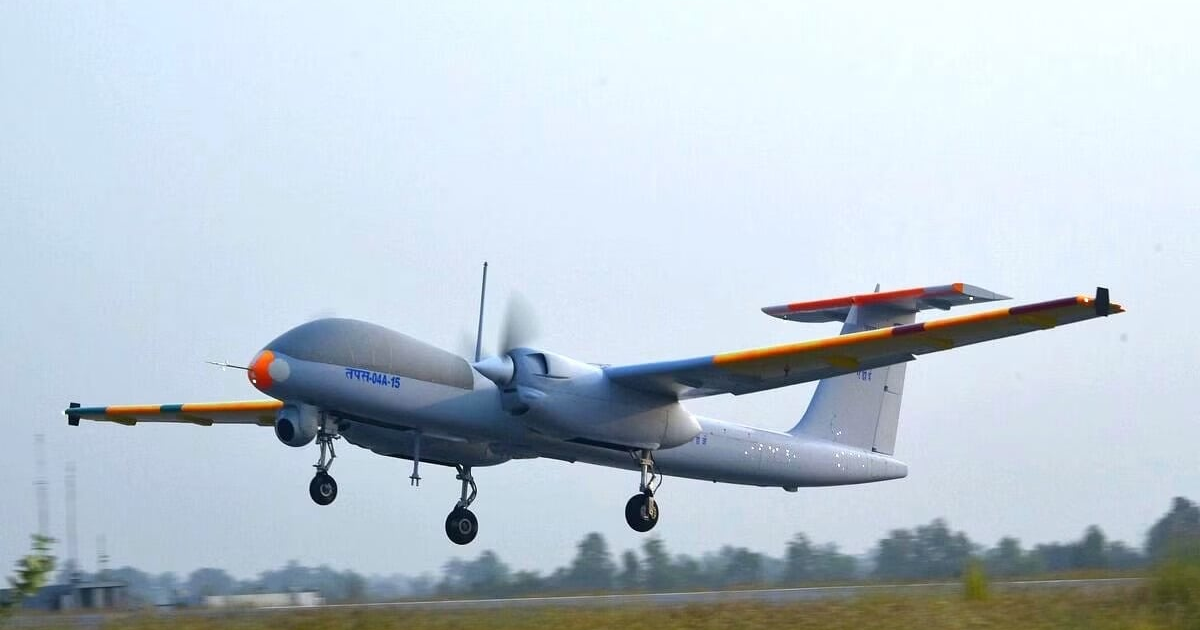
Indian aerospace startup Green Aero has raised $14 million, approximately ₹129.2 crore, in a Series A funding round to develop indigenous jet engines and autonomous combat aircraft. The investment highlights growing interest in India’s defence technology sector, where reducing dependence on imported propulsion systems and critical drone components has become a strategic priority.
Green Aero Raises ₹129.2 Crore for Indigenous Jet Engines
Green Aero announced a $14 million Series A funding round on November 26, 2026, led by Crane Ventures. The round also included participation from 3one4 Capital, Antler Elevate and existing investors pi Ventures, Antler India and Rebalance.
Founded in 2023 by Prithwish Kundu, the deeptech startup is developing jet propulsion systems, avionics and airframes for high-speed drones and autonomous combat aircraft.
The company plans to use the new capital over the next 12 to 18 months to expand its engine testing infrastructure, recruit engineers, develop larger-thrust engines and accelerate the flight qualification of its drone platforms.
According to Inc42, Green Aero operates an 87,000-square-foot research, development, assembly and testing facility in Bengaluru. The company is pursuing a vertically integrated manufacturing approach, bringing engine, avionics and airframe development under one organisation.
The funding represents a significant investment in a technology segment where development requires specialised engineering, testing facilities and substantial research expenditure.
What Technology Is Green Aero Developing?
Green Aero is focusing on jet propulsion technology for high-speed unmanned aircraft. Unlike conventional small drones that typically use electric motors or piston-based propulsion, jet-powered platforms are designed for applications requiring higher speeds and different performance characteristics.
The startup has developed its Blue Dragon engine core. According to the company, this technology demonstrates air-blast atomisers in the sub-kilonewton engine category. These atomisers are associated with fuel-injection systems used in larger jet engines.
Green Aero also says its engines can operate on diesel as well as jet fuel, potentially allowing their use across different aerospace applications.
The company has completed more than 100 ground-fire tests, according to its founder’s comments reported by Inc42. It is now preparing to move towards flight testing.
Green Aero is also developing transonic drones using its existing sub-kilonewton engines. Its longer-term plans include larger propulsion systems and Collaborative Combat Aircraft, which are autonomous aircraft designed to operate alongside manned fighter jets or independently.
These are development objectives rather than confirmed operational capabilities. Flight qualification, performance validation and customer acceptance will determine how quickly the technology can move towards deployment.
Why Indigenous Drone Engines Matter for India
India’s defence drone ecosystem has expanded, but domestic manufacturing does not always mean complete technological independence.
Many Indian manufacturers assemble drones using a combination of locally developed structures, software and imported components. This creates a supply-chain vulnerability when critical parts depend on overseas manufacturers.
Jet engines are particularly important because developing them requires specialised knowledge of aerodynamics, combustion, materials, thermal management and precision manufacturing.
Dependence on foreign propulsion technology can affect product development timelines, maintenance, upgrades and the availability of spare parts.
For defence applications, these issues have strategic implications. If overseas suppliers restrict exports or shipments are disrupted during geopolitical tensions, manufacturers may struggle to maintain production and support existing platforms.
Green Aero’s focus on indigenous jet propulsion is relevant because it targets a technically demanding part of the aerospace supply chain. Developing such capabilities within India could give domestic defence manufacturers greater control over design, production and future upgrades.
However, engine development alone cannot make a drone fully indigenous. A complete platform also depends on electronics, navigation, sensors, communications, software, materials and testing capabilities.
India’s Dependence on Imported Drone Components
The scale of India’s import dependence is visible across several critical drone technologies.
A Drone Federation India white paper cited by Business Standard in November 2026 estimated that:
- 80% to 90% of flight controllers used in Indian drones are imported.
- 90% to 95% of global navigation satellite system modules are imported.
- 70% to 80% of brushless motors are imported.
The report also highlighted the importance of rare earth magnets, which are essential for many brushless motors. China accounts for approximately 94% of global permanent magnet production, according to the figures cited in the report.
These dependencies create challenges for companies attempting to build complete drone systems using domestic technology.
China’s export controls on drone-related components and rare earth magnets have further highlighted the risks of relying on concentrated international supply chains. Business Standard reported that restrictions were extended to additional components, including autopilots, radios, motors and speed controllers, from November 18, 2026.
For Indian manufacturers, the challenge is not simply finding alternative suppliers. They need to develop components that meet the performance, reliability and safety requirements of defence applications.
This is where specialised startups working on propulsion, sensors, navigation and avionics could become important.
Government Support Is Creating Opportunities for Defence Startups
India’s push towards indigenous drone manufacturing is supported by government initiatives and defence innovation programmes.
The Innovations for Defence Excellence (iDEX) initiative provides opportunities for startups, MSMEs and individual innovators to develop technologies addressing the requirements of the armed forces.
At the National Defence Industries Conclave in March 2026, the Ministry of Defence reported that approximately 676 startups, MSMEs and individual innovators had joined the iDEX ecosystem since its launch in 2018.
The ministry also stated that 58 prototypes had received procurement clearance, with an estimated value of ₹3,853 crore. It reported that 45 procurement contracts worth approximately ₹2,326 crore had been signed.
The Defence India Startup Challenge and ADITI programmes are also designed to encourage innovation in areas identified by the armed forces and other defence organisations.
These initiatives can help startups access problem statements, technical guidance, testing facilities and potential procurement opportunities.
For companies such as Green Aero, this wider policy environment matters because developing defence-grade technology requires more than private investment. It also requires access to testing infrastructure, institutional partnerships and credible procurement pathways.
Why Defence Drone Manufacturing Needs More Than Local Assembly
One of the biggest challenges facing India’s drone industry is the difference between domestic assembly and indigenous technology development.
A drone manufactured in India may still depend on imported flight controllers, batteries, sensors, navigation systems or propulsion components.
This distinction is important because the country needs control over the technologies that determine a drone’s performance, security and operational reliability.
A study titled India’s Airborne Ambitions, published by the Takshashila Institution in October 2026, highlighted this gap in India’s defence drone ecosystem. It noted that indigenisation can become limited to assembly when critical components continue to come from overseas suppliers.
The study also discussed the need for stronger research and development investment and deeper domestic manufacturing capabilities.
For Green Aero, developing jet engines within India could contribute to this broader effort. But the company will need to demonstrate that its products can meet demanding performance requirements and compete with established international technologies.
The larger opportunity lies in building an ecosystem where different Indian companies specialise in engines, sensors, communication systems, navigation, electronics and airframes.
Funding Is Only the First Step for Green Aero
The $14 million Series A investment gives Green Aero additional resources to advance its engineering and testing programmes. However, aerospace development involves long timelines, technical risks and demanding certification requirements.
The startup’s immediate priorities include expanding testing infrastructure, developing larger engines and progressing towards flight testing.
According to Inc42, Green Aero is also looking to develop engines in the four-kilonewton-plus category over the next three years. These larger propulsion systems are intended for high-speed and potentially supersonic aircraft platforms.
The company has also reported early interest from domestic and international buyers for its existing engines. It currently generates revenue through the supply of smaller engines, while larger engine categories remain under development.
The next stage will require proof that the technology can operate reliably under actual flight conditions. Defence customers will also evaluate durability, maintenance requirements, operating costs and compatibility with their platforms.
For investors, the challenge is to support a business that must balance long-term research with commercial progress.
Can Indian Startups Reduce Defence Technology Imports?
Green Aero’s funding reflects a wider shift in India’s defence technology ecosystem. Investors are increasingly examining companies working on specialised hardware, propulsion systems and aerospace technologies rather than focusing only on software-based defence solutions.
However, reducing import dependence will require sustained investment across the entire manufacturing chain.
Startups need access to advanced materials, precision manufacturing facilities, skilled engineers and long-term research funding. They also need opportunities to test their technologies with defence organisations and convert successful prototypes into procurement contracts.
Large defence manufacturers, research institutions and specialised component companies will have to work together. No single startup can independently develop every component required for a modern combat drone.
Green Aero’s progress will therefore be one part of a much larger industrial effort. Its ability to move from ground-tested engines to flight-qualified products and commercial orders will be an important measure of that progress.
India has a growing opportunity to develop domestic aerospace capabilities. Whether that translates into lower import dependence will depend on the quality, reliability and commercial competitiveness of the technologies produced at home.
Key Takeaways
- Green Aero raised $14 million, approximately ₹129.2 crore, in a Series A round led by Crane Ventures to develop indigenous jet engines and autonomous combat aircraft.
- The startup has completed more than 100 ground-fire tests and is progressing towards flight testing, while larger engine categories remain under development.
- India continues to depend heavily on imports for drone components, including flight controllers, navigation modules and brushless motors.
- Government programmes such as iDEX and ADITI are creating opportunities for startups, but long-term research, testing and defence procurement will determine the success of indigenous technologies.
Frequently Asked Questions
1. What is Green Aero?
Green Aero is an Indian aerospace deeptech startup founded in 2023 by Prithwish Kundu. It develops jet propulsion systems, avionics and airframes for high-speed drones and autonomous combat aircraft.
2. How much funding has Green Aero raised in November 2026?
Green Aero raised $14 million, approximately ₹129.2 crore, in a Series A funding round led by Crane Ventures. Other participants included 3one4 Capital, Antler Elevate, pi Ventures, Antler India and Rebalance.
3. Why does India need indigenous defence drone engines?
Domestic engine development can reduce dependence on foreign suppliers, strengthen control over critical aerospace technology and improve supply-chain security. It can also support future upgrades and maintenance of locally developed defence platforms.
4. Can Indian startups completely replace imported drone technology?
Not immediately. India still depends on foreign suppliers for several critical components, including navigation systems, flight controllers and motors. Reducing this dependence will require investment in research, manufacturing, testing and collaboration across the domestic aerospace industry.









Leave a comment