

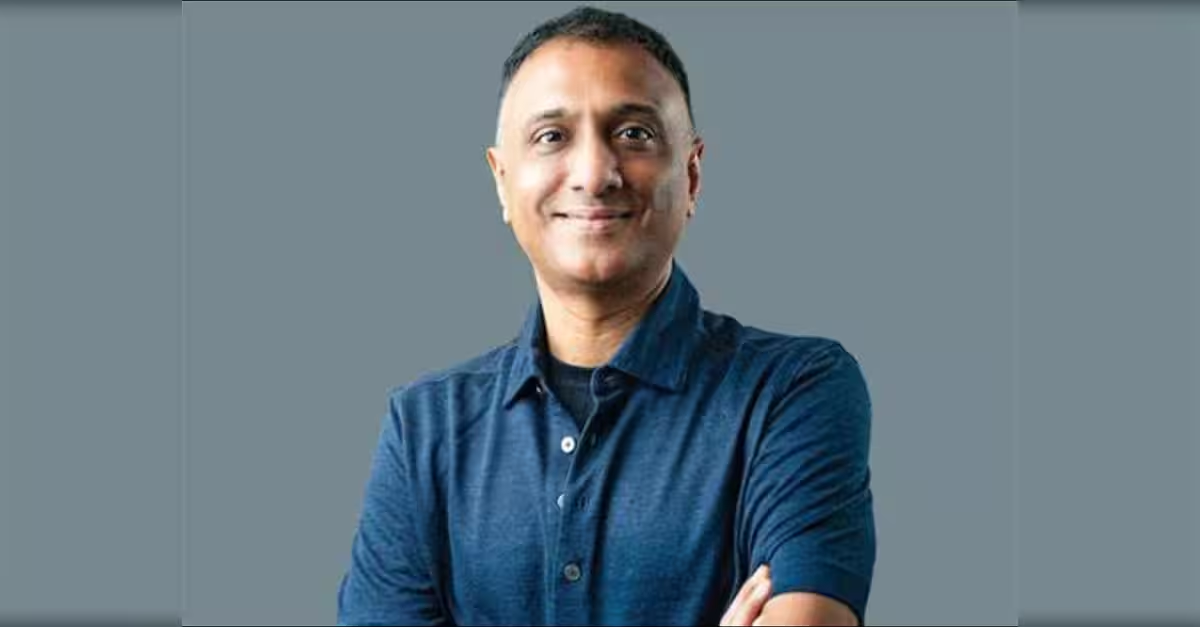
Flipkart has announced that CEO Kalyan Krishnamurthy will leave the company after more than 11 years, marking a major leadership transition at one of India’s largest e-commerce businesses. The departure comes as the Walmart-owned company prepares for a potential IPO and faces growing competition from Amazon and quick-commerce platforms.
Flipkart Confirms Kalyan Krishnamurthy’s Departure
Flipkart announced on November 25, 2026, that Kalyan Krishnamurthy is concluding his tenure as chief executive officer after more than 11 years with the company. The announcement marks the end of a significant period in the development of India’s online retail industry.
The company said it would announce his successor in the coming weeks. Until then, Balaji Thiagarajan, Flipkart’s current Chief Product and Technology Officer, will lead the organisation alongside the company’s board.
Flipkart has not publicly disclosed the reason behind Krishnamurthy’s departure. However, the timing has drawn attention because the company is navigating several important business priorities, including profitability, a potential stock market listing and competition across online retail.
Walmart International President and CEO Chris Nicholas thanked Krishnamurthy for his leadership, highlighting his contribution to business growth and corporate governance.
Kalyan Krishnamurthy’s Role in Flipkart’s Growth
Krishnamurthy joined Flipkart in 2015 after working with Tiger Global, an early investor in the company. He became CEO in January 2017 and later took on the role of group CEO in 2018.
His leadership period included one of the most important developments in Indian e-commerce: Walmart’s acquisition of a controlling stake in Flipkart for approximately $16 billion in 2018.
The acquisition gave Flipkart access to Walmart’s global retail experience, financial resources and supply chain capabilities. It also strengthened the company’s position against international competitors entering India’s online retail market.
According to Flipkart’s announcement, the business grew more than fivefold under Krishnamurthy’s leadership. The company expanded its customer reach, developed services for sellers and consumers, and strengthened its technology and logistics capabilities.
The Big Billion Days sale also became one of India’s most recognised festive shopping events during this period. The annual campaign helped establish online shopping as a major part of the country’s festive retail season.
His departure therefore represents more than an executive change. It marks the conclusion of a leadership chapter that coincided with Flipkart’s transformation into a major Walmart-owned digital commerce business.
Why the Leadership Change Matters Ahead of Flipkart’s IPO
One of the biggest questions surrounding Flipkart is the timing of its proposed initial public offering.
The company completed a major corporate restructuring in March 2026, shifting its holding structure from Singapore to India through a process commonly referred to as a reverse flip. The move was an important step towards preparing the business for a potential domestic stock market listing.
However, an IPO requires more than a change in corporate domicile. Companies must demonstrate financial performance, governance standards, operational transparency and the ability to meet public-market expectations.
Recent media reports have indicated that Flipkart’s listing timeline remains uncertain. Livemint reported that Walmart had prioritised profitability and that the company had been asked to focus on achieving EBITDA break-even before moving ahead with further IPO preparations.
Neither Flipkart nor Walmart has announced a confirmed IPO date.
Krishnamurthy’s departure adds another leadership transition to this process. The incoming CEO will need to work with Walmart and the board on financial priorities, business strategy and preparations for a possible public listing.
For investors and employees, continuity in leadership and clarity on the company’s financial direction will be important during this period.
Profitability Will Remain a Major Business Priority
India’s e-commerce market offers significant growth opportunities, but operating a large online marketplace requires substantial investment.
Companies must spend on technology, warehouses, delivery networks, seller acquisition, customer service and marketing. Discounts and promotional campaigns can also affect margins.
For Flipkart, improving profitability while maintaining growth will be a central management challenge.
The company operates across several businesses, including its main marketplace, fashion platform Myntra, wholesale operations, travel platform Cleartrip and fintech business super.money.
Each business has different operating requirements and revenue opportunities. Managing these operations while controlling costs will require careful allocation of capital.
The next CEO will have to determine which business segments need additional investment, where operational efficiencies can be improved and how the company can increase revenue without depending excessively on discount-led customer acquisition.
This balance will also influence how investors assess Flipkart’s long-term financial prospects.
Amazon and Quick Commerce Are Increasing Competition
Flipkart’s leadership transition comes at a time when India’s e-commerce market is becoming more competitive.
Amazon India remains one of its major rivals in online retail. Both companies compete across electronics, fashion, home products, grocery and other consumer categories.
However, the competitive landscape has expanded beyond traditional e-commerce.
Quick-commerce platforms such as Blinkit, Zepto and Swiggy Instamart have changed consumer expectations around delivery speed. Their rapid growth has increased pressure on traditional online retailers to improve fulfilment times and strengthen their presence in frequently purchased categories.
Flipkart has also been developing its quick-commerce business through Flipkart Minutes. This gives the company an opportunity to participate in a market where customers increasingly expect faster delivery of groceries, electronics and everyday products.
The challenge is that quick commerce requires investments in local fulfilment centres, inventory management, technology and last-mile delivery.
The next CEO will need to decide how aggressively Flipkart should expand in this segment while keeping its broader marketplace operations financially disciplined.
What the New CEO Will Need to Focus On
The incoming CEO will inherit a business with a large customer base, an established seller network and a strong position in India’s digital retail market.
According to Flipkart, the platform has more than 500 million registered users, over 1.4 million sellers and more than 150 million products across over 80 categories.
Maintaining this scale while improving the company’s financial performance will require attention to several areas.
1. Strengthening profitability: The company will need to improve operational efficiency, manage fulfilment expenses and develop revenue streams that support healthier margins.
2. Competing in quick commerce: Flipkart Minutes will require careful expansion, effective inventory management and a sustainable delivery model.
3. Supporting sellers: Small businesses and merchants are an important part of Flipkart’s marketplace. Improving seller services, logistics and access to customers will remain important for long-term growth.
4. Preparing for public markets: A potential IPO will require consistent financial reporting, corporate governance and a clear explanation of the company’s growth strategy.
5. Managing multiple businesses: The CEO will need to coordinate priorities across Flipkart’s different group companies while ensuring that investments are aligned with the group’s broader objectives.
These priorities will help determine the direction of the company under its next permanent leader.
What the Exit Could Mean for India’s E-commerce Market
A change at the top of a major e-commerce company can influence how the business approaches competition, investment and expansion.
However, Krishnamurthy’s departure does not automatically mean that Flipkart will change its overall strategy. The company remains controlled by Walmart, which has reiterated its commitment to Flipkart and its long-term opportunity in India.
The broader market impact will depend on decisions taken by the new leadership, particularly around pricing, delivery infrastructure, seller partnerships and quick-commerce investments.
For smaller sellers, Flipkart’s future priorities could influence marketplace policies, advertising opportunities and access to customers across the country.
For consumers, competition between Flipkart, Amazon and quick-commerce companies is likely to remain centred on product selection, pricing, convenience and delivery speed.
The leadership transition is therefore significant, but its impact will become clearer only after the company announces its permanent successor and outlines its next phase of strategy.
Key Takeaways
- Flipkart confirmed on November 25, 2026, that CEO Kalyan Krishnamurthy is leaving after more than 11 years with the company.
- Balaji Thiagarajan and the board will lead the organisation until a permanent successor is announced.
- The leadership change comes amid uncertainty around Flipkart’s IPO timeline, profitability targets and increasing competition from quick-commerce platforms.
- The next CEO will need to balance business expansion, operational efficiency, seller relationships and preparations for a potential public listing.
Frequently Asked Questions
1. Why is Kalyan Krishnamurthy leaving Flipkart?
Flipkart confirmed his departure on November 25, 2026, but did not publicly disclose the reason. Reports have linked the leadership transition to broader business priorities, including profitability and IPO preparations, but these should not be treated as an officially confirmed explanation.
2. Who will lead Flipkart after Kalyan Krishnamurthy?
Balaji Thiagarajan, Flipkart’s Chief Product and Technology Officer, and the company’s board will oversee the organisation in the interim. A permanent successor is expected to be announced in the coming weeks.
3. Will Kalyan Krishnamurthy’s exit affect Flipkart’s IPO?
The company has not announced any change to its IPO plans because of his departure. Its public listing timeline remains uncertain, and the next leadership team will have to manage the company’s financial and operational priorities.
4. What are Flipkart’s biggest challenges in India’s e-commerce market?
Flipkart faces competition from Amazon India and quick-commerce platforms such as Blinkit, Zepto and Swiggy Instamart. Improving profitability, strengthening delivery infrastructure, retaining sellers and expanding its customer base are among its major business priorities.
(Internal keyword suggestions: Kalyan Krishnamurthy exits Flipkart, Flipkart CEO resignation 2026, Flipkart leadership change, Flipkart IPO 2026, Flipkart new CEO, Walmart Flipkart India, Indian e-commerce market, Flipkart Minutes, quick commerce competition India, Flipkart profitability)










Leave a comment