

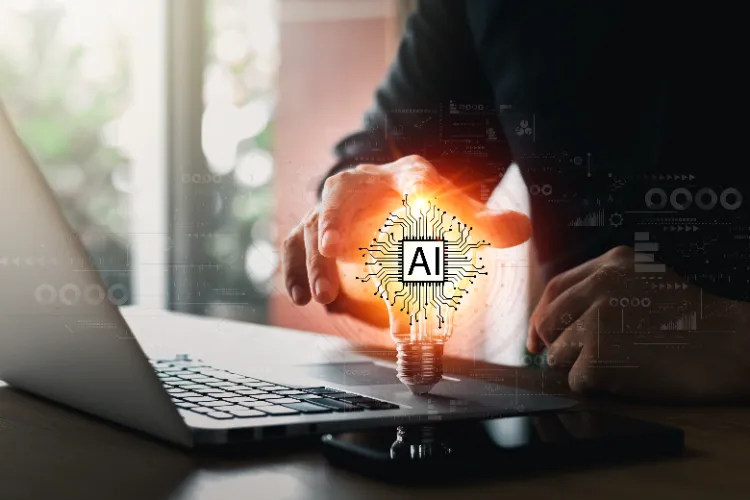
Artificial intelligence is reshaping the advertising industry at an unprecedented pace. From campaign planning and content creation to audience targeting and performance analysis, AI is helping agencies work more efficiently while changing how brands approach marketing in an increasingly digital marketplace.
Artificial intelligence has moved from being an experimental technology to becoming a core part of modern advertising. In 2026, advertising agencies across India and globally are using AI-powered tools to automate repetitive tasks, analyse consumer behaviour, generate creative content, and optimise campaigns in real time. For brands, this shift presents significant opportunities to improve marketing efficiency, but it also requires a clear understanding of AI’s capabilities and limitations.
AI Is Redefining How Advertising Campaigns Are Created
Traditional advertising campaigns often required weeks of planning, multiple creative revisions, and extensive market research before launch. AI has significantly accelerated many of these processes.
Today, agencies use AI tools to generate campaign concepts, write advertising copy, create visual assets, suggest headlines, and personalise content for different customer segments. These technologies assist creative teams by reducing repetitive work and allowing professionals to focus on strategy, storytelling, and brand positioning.
However, AI is not replacing human creativity. Successful campaigns still rely on human judgment, cultural understanding, emotional storytelling, and creative direction. AI serves as a productivity tool rather than a complete substitute for experienced marketers and designers.
Smarter Audience Targeting Is Improving Marketing Performance
One of AI’s biggest contributions to advertising is its ability to analyse large volumes of customer data quickly.
Machine learning algorithms help agencies identify customer preferences, purchasing behaviour, browsing patterns, and engagement trends. This allows brands to deliver personalised advertisements that are more relevant to individual consumers.
Instead of running broad campaigns aimed at mass audiences, businesses can now target specific customer groups based on demographics, interests, online behaviour, purchase history, and location. This often improves campaign efficiency while reducing unnecessary advertising expenditure.
For small and medium-sized businesses, AI-powered advertising platforms have made sophisticated audience targeting more accessible than ever before.
Generative AI Is Changing Content Production
Generative AI has transformed how advertising content is produced.
Agencies now use AI to create multiple versions of ad copy, social media captions, email campaigns, product descriptions, video scripts, and marketing visuals within minutes. This allows creative teams to test different messaging strategies more efficiently.
Brands also benefit from faster campaign execution. Product launches, seasonal promotions, and digital marketing initiatives can be developed and deployed more quickly than traditional production workflows allowed.
Despite these advantages, businesses must maintain strong editorial oversight. AI-generated content requires human review to ensure factual accuracy, brand consistency, legal compliance, and cultural sensitivity before publication.
AI Is Making Campaign Optimisation More Efficient
Advertising no longer ends once a campaign goes live.
AI-powered analytics platforms continuously monitor campaign performance by evaluating click-through rates, conversions, customer engagement, website traffic, and return on advertising spend. These systems can recommend budget adjustments, identify high-performing audience segments, and optimise campaigns while they are running.
This enables agencies to make data-driven decisions rather than relying solely on historical performance or manual analysis.
For brands with limited marketing budgets, continuous optimisation helps maximise advertising efficiency and improve return on investment by allocating resources to the most effective channels.
Opportunities and Challenges for Advertising Agencies
While AI creates new efficiencies, it also introduces important challenges.
Agencies must invest in employee training as marketing professionals increasingly work alongside AI-powered tools. Skills such as strategic planning, data interpretation, prompt engineering, customer psychology, and creative direction are becoming more valuable.
Data privacy and responsible AI use are also receiving greater attention. Agencies handling customer information must comply with applicable privacy regulations and ensure transparent use of consumer data.
Another challenge is maintaining originality. Since AI models generate content based on existing information, agencies must ensure campaigns remain distinctive and aligned with each brand’s identity rather than producing generic marketing material.
What Brands Should Consider Before Adopting AI
Businesses should approach AI as an enhancement to existing marketing capabilities rather than a complete replacement for human expertise.
Before investing in AI solutions, brands should identify specific business objectives such as improving campaign efficiency, reducing production time, increasing customer engagement, or enhancing analytics. Selecting tools that align with these objectives leads to better outcomes than adopting technology simply because it is widely available.
Companies should also establish clear review processes for AI-generated content. Human oversight remains essential for protecting brand reputation, ensuring compliance, and maintaining authentic communication with customers.
As AI technology continues to evolve, organisations that successfully combine automation with human creativity are likely to build stronger customer relationships and achieve more effective marketing results.
The Future of AI in Advertising
Artificial intelligence is expected to become even more integrated into advertising over the coming years. Advances in predictive analytics, conversational AI, multilingual content generation, voice-based marketing, and personalised customer experiences will further reshape how agencies operate.
Rather than reducing the importance of creative professionals, AI is changing the nature of their work. Agencies are increasingly focusing on strategic consulting, brand storytelling, innovation, and customer experience while allowing AI to handle repetitive operational tasks.
For brands, the key to success will be balancing technological efficiency with authentic communication. Companies that combine data-driven decision-making with strong creative vision are likely to remain competitive as the advertising industry continues to evolve.
Key Takeaways
- AI is helping advertising agencies create, manage, and optimise campaigns more efficiently.
- Personalised audience targeting and data-driven decision-making are improving marketing performance.
- Human creativity, editorial oversight, and brand strategy remain essential despite advances in AI.
- Businesses should adopt AI strategically while maintaining responsible data practices and quality control.
Frequently Asked Questions
Q1. Is AI replacing advertising agencies?
No. AI is automating repetitive tasks and improving efficiency, but agencies continue to provide strategic planning, creative direction, branding expertise, and campaign management.
Q2. How does AI improve advertising campaigns?
AI analyses customer data, generates marketing content, personalises advertisements, optimises campaign performance, and provides insights that help improve return on investment.
Q3. Can small businesses benefit from AI in advertising?
Yes. Many AI-powered marketing tools are affordable and help small businesses improve customer targeting, automate content creation, and manage digital campaigns more effectively.
Q4. What are the risks of using AI in advertising?
Potential challenges include inaccurate content, bias, data privacy concerns, copyright issues, and reduced originality if AI-generated material is published without proper human review.
(Internal Keyword Suggestions: AI in advertising, artificial intelligence marketing, advertising agencies India, AI marketing tools, generative AI advertising, digital marketing trends 2026, AI content creation, personalised advertising, marketing automation, AI for brands)









Leave a comment