

For generations, Indian farmers have relied on the timely arrival of the monsoon. A good rainy season has often meant healthy crops, stable incomes, and food security. But in recent years, changing weather patterns have made farming increasingly unpredictable. One of the major reasons behind this uncertainty is the recurring impact of El Niño, a climate phenomenon that influences rainfall across large parts of the world.
During El Niño years, India often experiences delayed or below-normal monsoon rainfall. A delay of even a few weeks can disrupt sowing schedules, reduce soil moisture, and increase the risk of lower crop yields. For farmers who depend entirely on rain-fed agriculture, these changes create financial stress and uncertainty.
However, agriculture has always been about adapting to challenges. Today, climate-resilient farming is emerging as one of the most effective ways to protect both crops and livelihoods.
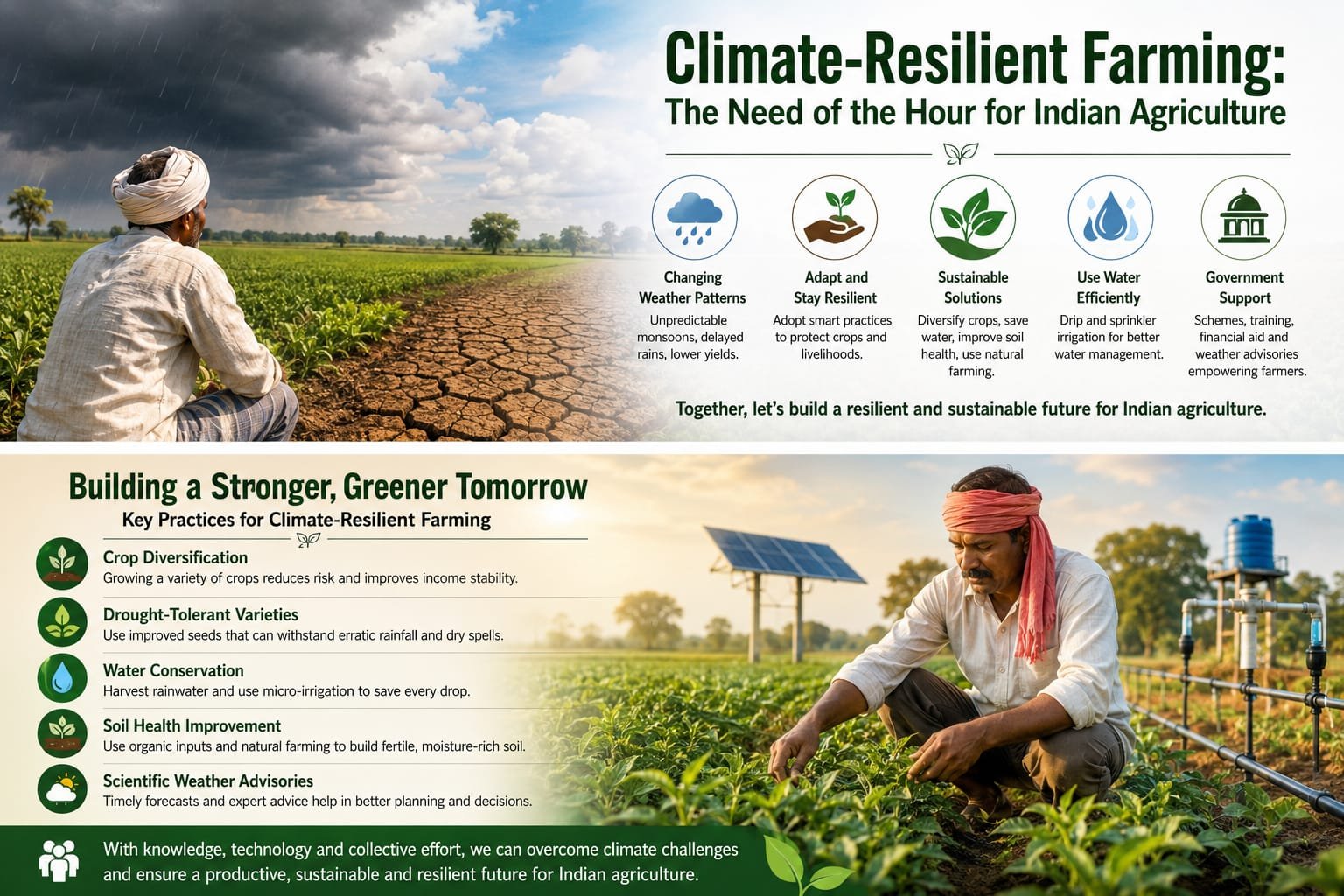
Farmers are increasingly adopting practices such as crop diversification, selecting drought-tolerant seed varieties, conserving rainwater, and improving soil health through organic inputs. These methods not only help crops withstand erratic weather but also reduce the long-term cost of cultivation. Efficient irrigation systems like drip and sprinkler irrigation are also helping farmers use every drop of water more effectively.
Natural farming is gaining attention as another practical solution. By reducing dependence on chemical fertilizers and promoting locally available organic resources, farmers are improving soil fertility while lowering input costs. Healthier soil retains moisture for longer periods, making crops more resilient during dry spells.
Recognizing the growing impact of climate change, the government has introduced several initiatives to encourage sustainable agriculture. Programmes promoting natural farming, micro-irrigation, soil health improvement, and scientific weather advisories are helping farmers make informed decisions. Financial assistance, training programmes, and awareness campaigns are enabling many cultivators to gradually adopt climate-friendly farming practices.
The road ahead requires collective effort. Scientists, agricultural institutions, governments, and farmers must continue working together to strengthen India’s agricultural resilience. Timely weather forecasts, improved access to technology, and greater awareness of sustainable farming techniques can significantly reduce the risks posed by changing climatic conditions.
Climate change may be altering the way agriculture functions, but with the right knowledge, timely support, and innovative farming practices, Indian agriculture can continue to remain productive, sustainable, and resilient for generations to come.
Dr Nawaz Ahmad Khan
Professor
Acharya Narendra Deva University of Agriculture & Technology












Leave a comment