

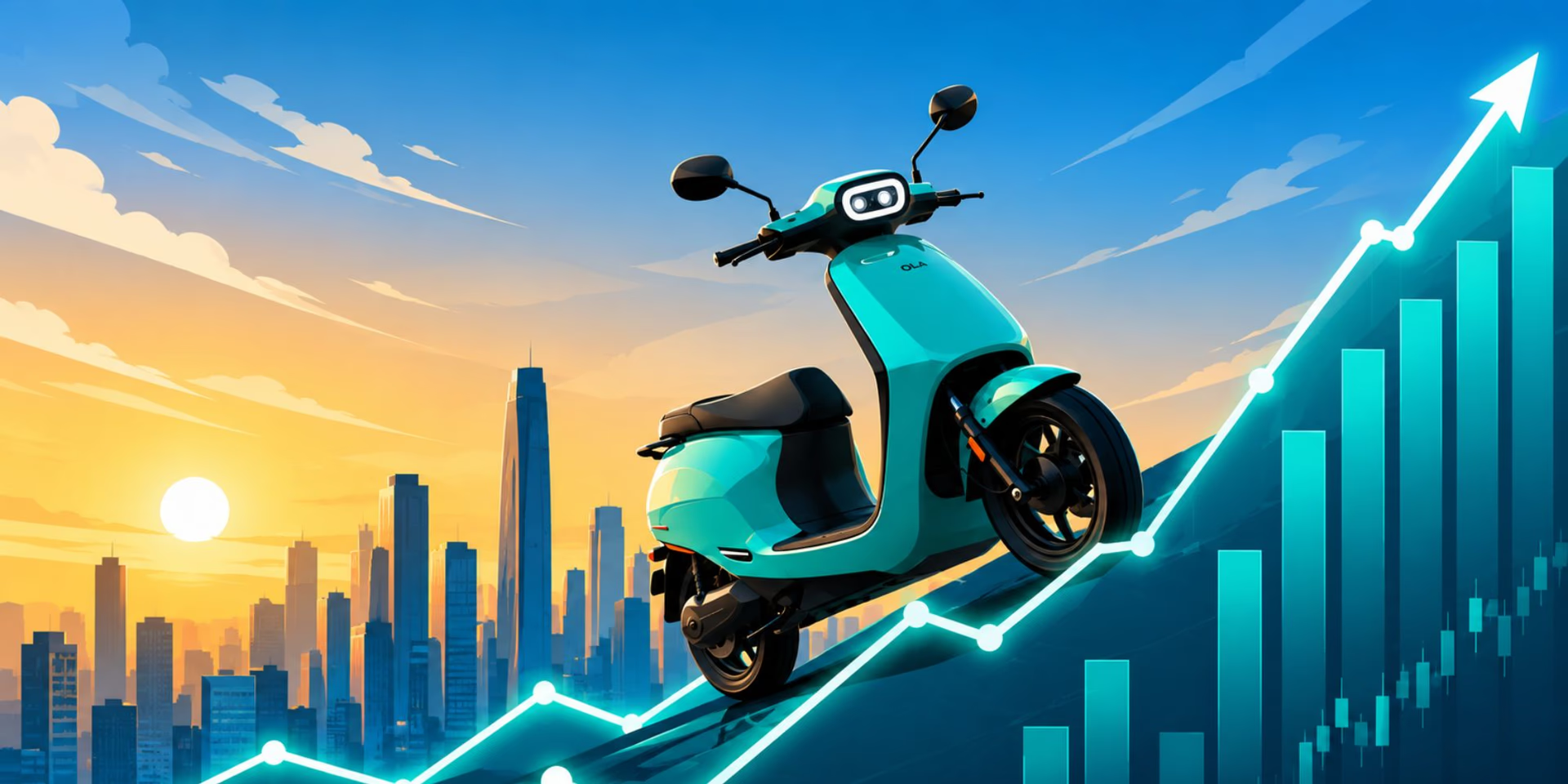
Electric mobility companies across India are entering a new phase of expansion as several firms explore fresh capital-raising opportunities. With electric vehicle adoption increasing and infrastructure investments gaining momentum, the sector is attracting renewed interest from investors and financial markets.
Electric Mobility Sector Gains Fresh Momentum
The electric mobility sector is witnessing significant activity as companies seek new funding to support expansion plans. Electric vehicle manufacturers, battery technology firms, charging infrastructure providers, and mobility startups are all looking to strengthen their market position amid rising demand.
Recent developments indicate that multiple electric mobility firms are evaluating fundraising options through equity investments, debt financing, private placements, and public market routes. The objective is clear: expand production capacity, improve technology, increase distribution networks, and accelerate product development.
India’s electric vehicle market has evolved considerably over the past few years. Government incentives, rising fuel prices, environmental concerns, and improving consumer awareness have contributed to stronger adoption across two-wheelers, three-wheelers, passenger vehicles, and commercial transport segments.
As competition intensifies, access to capital is becoming increasingly important for companies seeking long-term growth.
Why Electric Mobility Firms Need Additional Capital
Expansion in the electric mobility industry requires substantial investment. Unlike many traditional businesses, EV companies must invest heavily in research and development, manufacturing facilities, battery technology, supply chains, and charging infrastructure.
Many firms are now entering a scale-up phase where demand is growing faster than existing production capabilities. To meet market requirements, companies need additional funding to increase manufacturing output and improve operational efficiency.
Battery production remains one of the largest cost components in the electric mobility ecosystem. Investments in battery assembly plants, localization efforts, and advanced battery technologies require significant capital commitments.
Furthermore, electric mobility companies are investing in software platforms, connected vehicle technologies, fleet management systems, and after-sales service networks to enhance customer experience and strengthen their competitive advantage.
Investor Interest Remains Strong in EV Industry
Investor confidence in the electric mobility sector remains relatively strong despite broader market uncertainties. Global and domestic investors continue to view EVs as a long-term growth opportunity supported by policy initiatives and changing consumer preferences.
India’s transition toward cleaner transportation aligns with broader sustainability goals and energy security objectives. This creates a favorable environment for investors seeking exposure to future-focused industries.
Several electric mobility startups have already attracted funding from venture capital firms, private equity investors, strategic corporate partners, and institutional investors. At the same time, more mature companies are exploring public market opportunities and additional fundraising rounds to support their next stage of growth.
Investors are increasingly focusing on companies that demonstrate operational efficiency, clear revenue visibility, scalable business models, and sustainable profitability rather than relying solely on growth projections.
Expansion Plans Include Manufacturing and Charging Infrastructure
A major portion of new capital is expected to be directed toward manufacturing expansion and charging infrastructure development.
Electric vehicle manufacturers are increasing production capacity to address growing demand in urban and semi-urban markets. Many companies are also expanding dealer networks and service centers beyond metropolitan cities into Tier-2 and Tier-3 locations.
Charging infrastructure remains a critical component of India’s electric mobility ecosystem. Industry participants continue investing in public charging stations, battery-swapping solutions, and fast-charging technologies to improve convenience for consumers.
Infrastructure expansion is particularly important because charging availability remains one of the key factors influencing EV adoption. Companies that successfully build reliable charging networks could gain a significant competitive advantage in the coming years.
As a result, capital raised through fresh funding rounds is likely to support both vehicle production and ecosystem development.
Opportunities and Challenges Ahead
While growth prospects remain promising, electric mobility firms continue to face several challenges.
Competition has intensified as new entrants and established automotive manufacturers increase their presence in the EV market. Companies must continuously innovate to differentiate their products and maintain customer interest.
Supply chain disruptions, fluctuations in raw material prices, battery sourcing challenges, and evolving regulations can also affect business performance. Achieving profitability remains a priority for many companies operating in a highly competitive environment.
However, long-term market fundamentals continue to support the industry’s growth trajectory. Rising consumer acceptance, government support, technological improvements, and increasing infrastructure investments are expected to drive further expansion.
Companies that successfully balance growth, efficiency, and innovation are likely to emerge as leaders in India’s rapidly evolving electric mobility landscape.
What the Trend Means for India’s EV Future
The latest wave of fundraising activity reflects growing confidence in the future of electric mobility. Capital availability allows companies to accelerate innovation, improve affordability, and expand access to electric transportation across the country.
As electric mobility firms enter expansion mode, the sector could play an increasingly important role in India’s transportation and manufacturing ecosystem. Continued investment in vehicles, batteries, charging networks, and technology solutions will be critical in supporting the next phase of industry growth.
The coming years are likely to determine which companies successfully transform from emerging players into large-scale mobility businesses capable of serving millions of customers across India.
Key Takeaways
• Electric mobility firms are seeking fresh funding to support expansion and growth initiatives.
• Capital is being directed toward manufacturing, battery technology, charging infrastructure, and product development.
• Investor interest remains strong due to long-term EV adoption trends and sustainability goals.
• Tier-2 and Tier-3 markets are becoming increasingly important for future electric vehicle growth.
FAQ
Why are electric mobility companies raising fresh capital?
Companies require additional funding to expand manufacturing capacity, invest in technology, strengthen infrastructure, and support future growth plans.
Which areas are receiving the most investment?
Manufacturing facilities, battery technology, charging networks, research and development, and distribution expansion are attracting significant investment.
Are investors still interested in electric mobility businesses?
Yes. Many investors continue to view the EV sector as a long-term growth opportunity supported by policy support and rising consumer demand.
What challenges do electric mobility firms face?
Key challenges include intense competition, battery costs, supply chain risks, infrastructure gaps, and the need to achieve sustainable profitability.
(electric mobility firms, EV funding India, electric vehicle industry, EV expansion plans, charging infrastructure India, battery technology investment, electric mobility startups, EV market growth, capital raising plans, India electric vehicles)












Leave a comment