

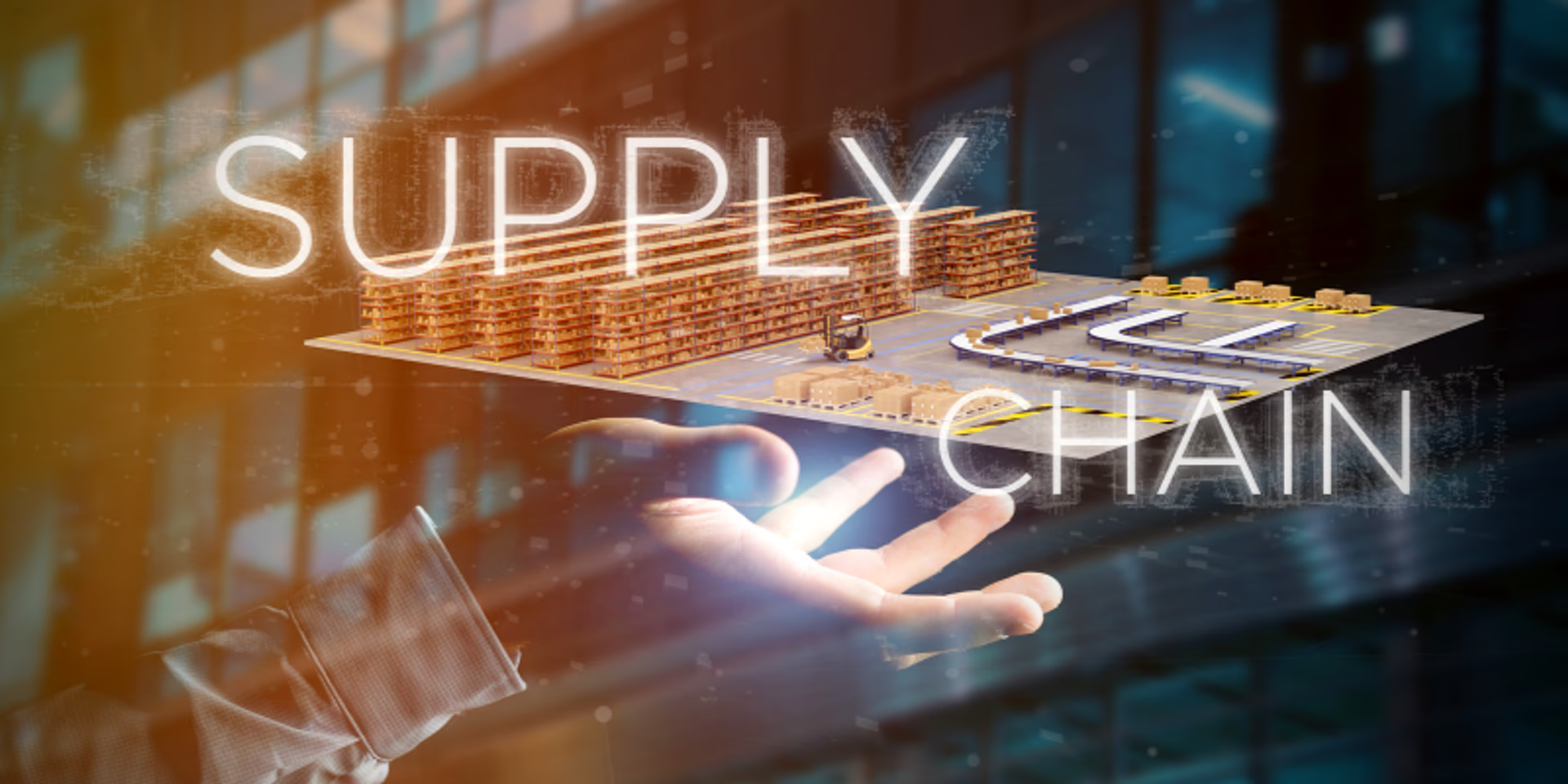
Export-oriented MSMEs in India are entering a new phase as global supply chains continue to evolve due to changing trade policies, geopolitical developments, manufacturing diversification, and rising demand for resilient sourcing. While challenges remain, the shifting landscape is also creating fresh opportunities for businesses that adapt quickly.
Export-oriented MSMEs are preparing for another round of global supply chain changes as international trade patterns continue to evolve. The topic is time sensitive because it is linked to ongoing developments in global trade, manufacturing strategies, tariffs, logistics, and geopolitical events. The article below follows a news reporting style while providing relevant background and context.
Export-Oriented MSMEs Prepare for a Changing Global Trade Landscape
India’s export-oriented MSMEs are closely monitoring fresh shifts in global supply chains as businesses worldwide rethink sourcing strategies, manufacturing locations, and logistics networks. These small and medium enterprises play a vital role in India’s export economy by supplying products ranging from engineering goods and textiles to chemicals, auto components, pharmaceuticals, food products, and handicrafts.
Global companies have increasingly focused on reducing dependence on a single manufacturing destination. The strategy of supplier diversification has encouraged buyers to explore multiple sourcing markets, including India, Vietnam, Indonesia, and Mexico. For Indian MSMEs, this presents opportunities to secure new export orders while also demanding higher standards of quality, compliance, and delivery.
At the same time, changing tariff policies, shipping costs, geopolitical tensions, and regional trade agreements continue to influence international supply chains. Exporters are therefore balancing optimism with caution.
Global Supply Chain Diversification Opens New Opportunities
One of the biggest trends influencing export-oriented MSMEs is the global push toward supply chain diversification. Large multinational companies are expanding their supplier base to improve resilience against disruptions caused by geopolitical conflicts, pandemics, shipping bottlenecks, or trade restrictions.
India has emerged as an attractive destination because of its expanding manufacturing ecosystem, government-backed production incentives, improving logistics infrastructure, and growing skilled workforce.
For MSMEs, this shift creates opportunities in sectors such as:
- Engineering and industrial components
- Automotive parts
- Electronics manufacturing
- Pharmaceuticals
- Textile and apparel exports
- Food processing
- Specialty chemicals
However, winning international contracts requires consistent product quality, competitive pricing, timely delivery, and adherence to international certifications. Buyers are increasingly conducting detailed supplier evaluations before placing long-term orders.
Rising Costs and Compliance Continue to Challenge Exporters
Despite growing export opportunities, Indian MSMEs continue to face several operational challenges.
Freight charges remain volatile in some trade routes, while fluctuations in currency exchange rates directly affect export profitability. Many businesses are also dealing with higher raw material costs and stricter environmental and sustainability standards imposed by overseas buyers.
Exporters supplying European and North American markets are witnessing greater emphasis on product traceability, carbon footprint reporting, responsible sourcing, and environmental compliance.
For smaller enterprises, investing in modern manufacturing systems, digital documentation, and international certifications often requires significant capital. Access to affordable finance therefore remains a crucial requirement for many export-focused businesses.
Industry experts believe that improving productivity through automation and technology adoption can help MSMEs remain competitive despite rising operating costs.
Government Support and Digital Trade Are Becoming More Important
The Indian government continues to promote exports through various initiatives aimed at strengthening MSMEs. Measures such as export promotion schemes, logistics improvements, digital trade facilitation, and manufacturing incentives are designed to enhance India’s competitiveness in global markets.
Digital platforms are also helping MSMEs connect directly with overseas buyers. Cross-border e-commerce, B2B marketplaces, and digital trade documentation are reducing barriers for smaller exporters entering international markets.
Banks, export credit agencies, and industry associations are increasingly encouraging MSMEs to improve financial planning, risk management, and supply chain visibility.
Businesses that invest in technology, quality certifications, and skilled manpower are generally better positioned to respond to changing global demand.
Tier-2 Manufacturing Clusters Could Benefit From Export Growth
The ongoing transformation of global supply chains is creating opportunities beyond India’s major industrial cities. Manufacturing clusters in Tier-2 and Tier-3 locations are gradually becoming part of international supply networks.
Cities known for engineering products, textiles, ceramics, food processing, precision manufacturing, and handicrafts are attracting attention from exporters looking to expand production capacity.
Improved highways, freight corridors, industrial parks, and digital connectivity are making these regions more competitive for export-oriented manufacturing.
For many MSMEs located outside metropolitan areas, this shift could generate employment, attract investment, and strengthen regional industrial ecosystems over the coming years.
Long-Term Success Will Depend on Competitiveness
Global supply chain shifts are unlikely to slow in the near future. International companies are expected to continue balancing cost efficiency with supply chain resilience, creating both opportunities and competitive pressure for exporters worldwide.
Indian export-oriented MSMEs that focus on innovation, product quality, sustainability, digital adoption, and efficient logistics are likely to strengthen their position in global markets.
While external uncertainties such as geopolitical developments and changing trade regulations will remain, businesses that adapt quickly to evolving buyer expectations can benefit from the next phase of international manufacturing and trade.
Key Takeaways
- Global companies are diversifying supply chains, creating new export opportunities for Indian MSMEs.
- Rising compliance requirements and operating costs remain significant challenges for exporters.
- Government initiatives and digital trade platforms are helping smaller businesses access international markets.
- Tier-2 manufacturing hubs could play a larger role in India’s future export growth.
Frequently Asked Questions
1. Why are global supply chains changing?
Companies are diversifying suppliers to reduce risks associated with geopolitical tensions, trade restrictions, logistics disruptions, and overdependence on a single manufacturing location.
2. Which Indian MSME sectors could benefit the most?
Engineering goods, auto components, electronics, pharmaceuticals, textiles, food processing, and specialty chemicals are among the sectors expected to benefit from increased global sourcing.
3. What challenges do export-oriented MSMEs currently face?
Major challenges include fluctuating freight costs, exchange rate volatility, stricter compliance standards, rising input costs, and access to affordable finance.
4. How can MSMEs improve export competitiveness?
Businesses can strengthen competitiveness by adopting technology, maintaining international quality standards, improving sustainability practices, investing in skilled workers, and expanding digital trade capabilities.








Leave a comment