

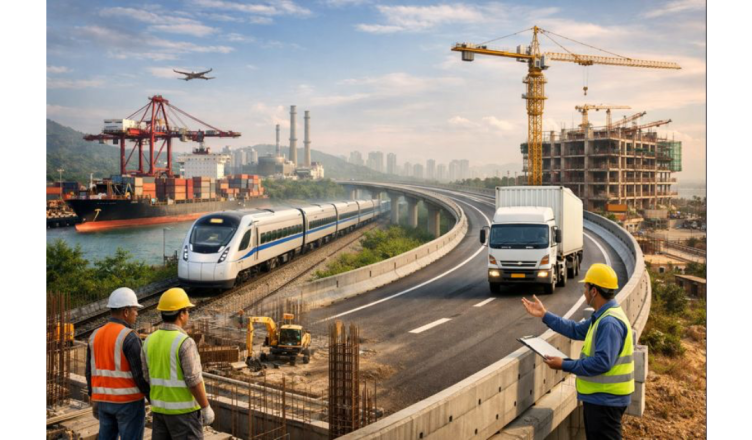
India’s government infrastructure push is playing a critical role in reshaping the startup economy by improving connectivity, reducing costs, and unlocking new markets. These developments are enabling startups to scale faster and expand beyond traditional metro-based ecosystems.
Government Infrastructure Push Driving Startup Growth
Government infrastructure push in India has become a key enabler for startup ecosystem expansion. Large-scale investments in roads, railways, logistics, and digital connectivity are changing how businesses operate across the country.
Improved highways and freight corridors are reducing transportation time and costs, which directly benefits startups in sectors such as e-commerce, logistics, and manufacturing. Faster movement of goods allows companies to serve customers more efficiently and expand into new regions.
At the same time, infrastructure development is not limited to physical assets. Digital infrastructure, including broadband access and mobile connectivity, has significantly improved in recent years. This combination is creating a strong foundation for startups to grow sustainably.
Digital Infrastructure Expands Market Access for Startups
Digital infrastructure India startups are benefiting from widespread internet penetration and affordable data. Platforms like Jio have played a major role in making internet access more accessible across urban and rural areas.
This has enabled startups to reach customers in Tier 2 and Tier 3 cities without the need for heavy physical investments. Online platforms, digital payments, and cloud services are allowing businesses to operate at scale from virtually anywhere.
The rise of digital public infrastructure such as UPI has also simplified transactions. Startups can now onboard users, process payments, and manage operations with greater efficiency, reducing entry barriers for new businesses.
Logistics and Transport Infrastructure Boost Efficiency
India logistics infrastructure growth is transforming supply chains for startups. Projects such as dedicated freight corridors, expressways, and improved warehousing facilities are making logistics more reliable and cost-effective.
For startups in sectors like quick commerce, agri-tech, and retail, efficient logistics is crucial. Reduced delivery times and lower operational costs help improve customer satisfaction and profitability.
The expansion of multimodal transport networks is also enabling startups to optimize routes and reduce dependency on a single mode of transport. This flexibility is particularly important for businesses operating across diverse geographies.
Tier 2 and Tier 3 Cities Benefit from Infrastructure Expansion
Tier 2 startup growth India is closely linked to infrastructure development. As connectivity improves, smaller cities are becoming viable locations for setting up businesses and operations.
Cities like Indore, Nagpur, and Coimbatore are witnessing increased startup activity due to better infrastructure and lower costs. Entrepreneurs in these regions can now access markets, talent, and resources that were previously concentrated in metros.
Government initiatives aimed at regional development are further supporting this trend. Industrial corridors, smart city projects, and startup hubs are creating new opportunities for businesses outside major urban centers.
Policy Support and Ease of Doing Business Improvements
Startup policy India infrastructure initiatives are complemented by regulatory reforms that aim to improve ease of doing business. Simplified compliance processes, digital approvals, and tax incentives are making it easier for startups to operate.
Government programs that support innovation and entrepreneurship are also contributing to ecosystem growth. These initiatives provide funding, mentorship, and incubation support to early-stage startups.
Regulatory bodies such as Securities and Exchange Board of India and other institutions are working to ensure transparency and investor confidence, which is essential for long-term growth.
Challenges in Infrastructure-Led Startup Growth
Despite significant progress, certain challenges remain. Infrastructure development is uneven across regions, with some areas still lacking adequate connectivity and facilities.
Startups may also face delays in project execution and regulatory approvals in certain cases. These issues can impact timelines and increase operational costs.
Additionally, while digital infrastructure has improved, gaps in digital literacy and access still exist in some parts of the country. Addressing these challenges will be crucial to fully realizing the benefits of infrastructure investments.
Long-Term Impact on India’s Startup Economy
The government infrastructure push is expected to have a lasting impact on India’s startup economy. By improving connectivity and reducing costs, it is creating an environment where startups can scale more efficiently.
This shift is also contributing to the decentralization of the startup ecosystem. Instead of being concentrated in a few metro cities, entrepreneurial activity is spreading across the country.
In the long run, this can lead to more inclusive economic growth, increased job creation, and stronger innovation across sectors. Startups that leverage these infrastructure improvements effectively are likely to gain a competitive advantage.
Key Takeaways
• Government infrastructure push is enabling startups to scale and expand across regions
• Digital and logistics infrastructure improvements are reducing operational barriers
• Tier 2 and Tier 3 cities are emerging as strong startup hubs
• Policy support and ease of doing business reforms are strengthening the ecosystem
FAQs
How does infrastructure impact startup growth in India?
Infrastructure improves connectivity, reduces costs, and enables startups to reach wider markets efficiently.
What role does digital infrastructure play for startups?
It allows startups to operate online, reach customers remotely, and manage operations with lower costs.
Are Tier 2 cities benefiting from infrastructure development?
Yes, improved connectivity and lower costs are attracting startups to smaller cities.
What challenges still exist despite infrastructure growth?
Uneven development, regulatory delays, and digital access gaps remain key challenges.








Leave a comment