

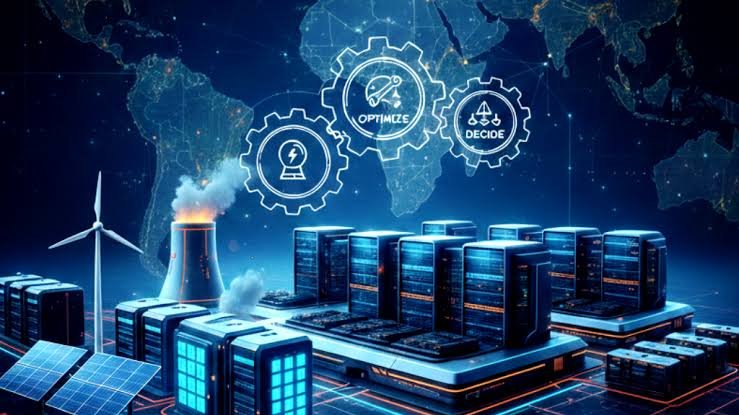
India’s AI infrastructure buildout is moving beyond technology companies, drawing fresh investment into data centres, power, cloud computing, semiconductor ecosystems and engineering services. The shift could influence where Indian businesses deploy capital over the next several years.
AI Infrastructure Becomes a New Investment Priority
AI infrastructure in India is increasingly becoming an investment story in its own right. The rapid adoption of generative AI has created demand for computing capacity, high-performance GPUs, specialised data centres, cloud platforms and reliable power infrastructure.
This is changing the nature of AI investment. Earlier, much of the attention was on software companies developing AI applications. Increasingly, businesses are investing in the physical and digital systems needed to train and run those applications.
The IndiaAI Mission is also supporting this transition. The government programme has an approved outlay of ₹10,372 crore and is designed to strengthen India’s broader artificial intelligence ecosystem, including access to computing infrastructure. More than 38,000 GPUs had been onboarded through the IndiaAI compute portal by April 2026 for use by startups and academia.
The result is a broader investment cycle involving technology companies, infrastructure developers, cloud providers and traditional engineering businesses.
Data Centres Are Moving to the Centre of AI Investment
AI workloads require substantially different infrastructure from conventional enterprise computing. High-performance GPUs generate significant heat and require advanced cooling, networking and power systems.
That is creating a major opportunity for India’s data centre industry.
Princeton Digital Group announced on August 17 that it plans to invest $1 billion in India to expand its data centre capacity. The announcement comes as demand for AI-ready computing infrastructure accelerates across the country.
The development is important because data centres are becoming strategic infrastructure for AI, cloud computing and digital services rather than simply facilities for storing corporate data.
Large-scale facilities also create demand for construction, electrical equipment, cooling systems, networking hardware, security systems and operations services. This means AI investment can spread across several parts of the economy.
Power Supply Could Decide Where AI Investment Goes
The AI data centre expansion is also changing the importance of electricity infrastructure.
A recent industry discussion highlighted power availability as a primary constraint for AI data centres. High-density GPU facilities require large and reliable electricity supplies, making access to power increasingly important when companies choose locations for new facilities.
This creates opportunities for electricity generation, transmission, renewable energy, backup systems and energy-management companies.
It also means that India’s next AI investment cycle will not be limited to technology hubs. Locations with reliable power, suitable land, fibre connectivity and supportive state policies could attract new data centre projects.
For states outside the traditional technology centres, this could create an opportunity to compete for infrastructure investment.
L&T Shows How Traditional Businesses Are Entering AI
The AI infrastructure boom is also bringing companies from outside the conventional technology sector into the investment cycle.
Larsen & Toubro announced in August that it had secured a contract worth up to ₹15,000 crore from US-based AI cloud platform Together AI to develop an AI data centre using Nvidia high-performance computing infrastructure. Reuters reported the contract value at approximately $1.57 billion.
L&T had already announced plans with Nvidia to develop gigawatt-scale AI factory infrastructure in India under the IndiaAI Mission.
The significance goes beyond one company. Large AI facilities require engineering, construction, electrical systems, cooling and project-management expertise. This gives traditional infrastructure companies a route into the AI economy without necessarily becoming AI software developers themselves.
Indian IT Companies Are Expanding Beyond Software
Indian technology services companies are also beginning to participate more directly in AI infrastructure.
HCLTech announced an investment of up to ₹3,500 crore to establish AI data centres in India, with potential capacity of up to 50 MW. The company said the facilities would complement its AI data centre design, cloud operations and AI services capabilities.
This reflects a broader shift in the IT industry.
For years, India’s technology services sector primarily monetised software development, consulting and outsourcing expertise. AI is creating another layer of opportunity involving computing infrastructure, cloud operations, data management and enterprise AI deployment.
Companies that can combine infrastructure with software and managed services could potentially capture more value from the growing enterprise AI market.
GPU Capacity Is Becoming Strategic Infrastructure
Graphics processing units, or GPUs, are central to modern AI workloads. Training and running advanced AI models requires large numbers of high-performance processors working together.
India is therefore trying to expand domestic access to AI compute.
The IndiaAI Mission’s compute programme is designed to make high-performance computing available to startups, researchers and other users at more accessible rates. Industry players are simultaneously building private capacity.
Yotta, for example, announced plans for a supercluster containing 20,736 Nvidia Blackwell Ultra GPUs, with an investment exceeding $2 billion. The company said the infrastructure was expected to become operational by August 2026.
Such projects demonstrate the scale of capital required to support advanced AI workloads.
For startups, wider access to computing could reduce one of the barriers to developing and testing AI models. For businesses, domestic infrastructure could also provide more options for deploying AI workloads within India.
Cloud Infrastructure Creates Opportunities Beyond Big Cities
The AI infrastructure investment cycle could have implications for Tier-2 and Tier-3 cities as well.
Data centres need more than large technology talent pools. They require land, electricity, fibre connectivity, cooling resources and reliable infrastructure.
This creates potential opportunities for states and cities that can offer the right combination of resources and policy support.
At the same time, AI cloud platforms can allow businesses in smaller cities to access advanced computing without building their own expensive infrastructure.
That could matter for regional banks, manufacturing companies, healthcare businesses, educational institutions and startups that want to adopt AI but lack the capital to operate large computing facilities.
The investment impact therefore extends beyond the companies physically building data centres.
AI Investment Could Create a Wider Industrial Supply Chain
The next phase of India’s AI economy could involve a much larger group of businesses.
Data centre construction creates demand for electrical equipment, cooling technology, networking infrastructure, batteries, backup power and building systems. AI computing also increases demand for high-speed connectivity and specialised storage.
This creates opportunities for component manufacturers and engineering companies.
The semiconductor ecosystem is another important link. India is seeking to develop greater domestic capability across semiconductor manufacturing, design and related electronics. While building a complete semiconductor supply chain will take time, growing AI demand strengthens the economic case for investment in advanced computing hardware.
This is why AI infrastructure should be viewed as an industrial investment theme rather than only a technology trend.
The Investment Cycle Also Carries Risks
The scale of AI infrastructure spending does not guarantee attractive returns for every company involved.
Data centres require substantial upfront capital, while revenue depends on securing long-term customers and maintaining high utilisation. Power costs, equipment availability and financing costs can affect project economics.
There is also a risk that computing technology evolves faster than infrastructure projects can be completed.
For investors and businesses, the key question will therefore be whether AI demand grows quickly enough to justify the capital being deployed.
Companies with strong customer contracts, efficient infrastructure and access to reliable power may have an advantage. Businesses taking on large amounts of debt without clear demand visibility could face greater risks.
What India’s Next Business Investment Cycle Could Look Like
India’s AI investment cycle is becoming broader than spending by software and technology companies.
The current developments show capital moving into data centres, AI cloud infrastructure, engineering services and computing capacity. Microsoft has also expanded its Indian cloud infrastructure, with four cloud regions now operating in the country, strengthening the availability of local cloud capacity for AI workloads.
For businesses, this could change capital allocation decisions over the coming years.
Companies may invest in AI infrastructure directly, partner with cloud providers or use third-party computing platforms. State governments may compete for data centre projects, while infrastructure and energy companies could increasingly participate in AI-related investments.
The biggest shift is that AI is becoming an infrastructure story as much as a software story.
If demand for AI computing continues to expand, the companies supplying the physical and digital foundation for that demand could become an important part of India’s next investment cycle.
Takeaways
- AI infrastructure is attracting investment across data centres, cloud computing, engineering, power and high-performance computing.
- Princeton Digital Group announced a $1 billion India data centre investment on August 17, highlighting continued infrastructure demand.
- L&T’s ₹15,000 crore AI data centre contract shows how traditional infrastructure companies are entering the AI economy.
- Power availability, GPU capacity, financing costs and customer demand will be important factors in determining whether AI infrastructure investments generate sustainable returns.
FAQ
1. What is AI infrastructure?
AI infrastructure includes the physical and digital systems required to develop and operate artificial intelligence applications. It includes GPUs, data centres, cloud platforms, high-speed networks, storage, cooling systems and reliable power infrastructure.
2. Why is India investing heavily in AI infrastructure?
Growing demand for AI applications is increasing the need for computing capacity. India is also seeking to expand domestic AI capabilities through initiatives such as the IndiaAI Mission and private investments in data centres and cloud infrastructure.
3. How could AI infrastructure benefit Indian businesses?
Businesses can gain access to high-performance computing, cloud-based AI services and locally hosted infrastructure without necessarily building their own facilities. This could make AI adoption more practical for enterprises, startups and businesses outside major technology hubs.
4. What are the biggest challenges for India’s AI infrastructure expansion?
High capital requirements, power availability, cooling requirements, GPU supply, financing costs and uncertainty around long-term demand are among the key challenges. Data centre operators must also maintain sufficient utilisation to justify their infrastructure investments.
(Internal keyword suggestions: AI infrastructure India, India AI investment, AI data centres India, AI infrastructure investment India, IndiaAI Mission, AI computing infrastructure, GPU infrastructure India, data centre investment India, AI cloud infrastructure, Indian AI ecosystem, AI business investment, AI technology investment India)












Leave a comment