

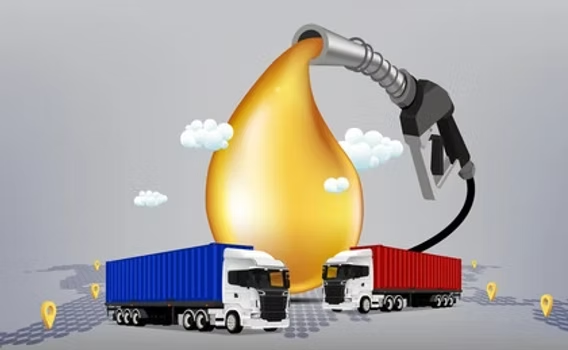
Lower global crude oil prices could help ease rural transportation costs in India and reduce inflationary pressure across the country. As oil prices dip under pressure from a global supply glut, rural households and small town markets may get relief — but the impact will depend on domestic policy and supply conditions.
Oil Price Outlook And What It Means For Fuel Costs
JPMorgan now projects that Brent crude could drop into the 30-dollar per barrel range by 2027, driven by sustained oversupply relative to demand. The New Indian Express+2Business Today+2 For a country like India that imports a major portion of its oil needs, lower crude prices often translate to cheaper retail fuel after accounting for import, refining, taxation and distribution costs. Lower global benchmarks thus raise the prospect of downward adjustments in diesel and petrol prices, which are the backbone of rural transport and freight movement.
For rural and semi-urban India, even a modest reduction in fuel prices can significantly lower costs for farm input transport, goods movement, passenger travel, and logistics. Lower diesel prices reduce the cost of transporting agricultural produce from farms to mandis, ease operating costs for buses and trucks, and make everyday commuting cheaper for millions. That can provide tangible relief to rural households and small-town businesses managing thin margins.
Ripple Effect On Inflation And Commodity Prices
Fuel and transport costs are a major component of logistics and supply-chain expenses for nearly all goods in India. When transportation becomes cheaper, the cost to move raw materials, finished goods, food items and consumer staples falls, which often translates into lower retail prices or slower inflation. Historically, soft global crude prices have helped moderate inflation pressures in oil-importing economies. FIPI+2SciSpace+2
In rural and smaller towns — where many supply chains are longer and distribution infrastructure weak — the benefit from lower fuel costs can be more pronounced. Lower transport costs can ease the price of essential goods, agricultural input, and daily commodities. Over time, this can improve affordability, raise rural purchasing power, and support demand in value-focused markets.
Wider Economic Impact On Agriculture, Supply Chains, and Mobility
Agriculture and allied sectors in India are deeply dependent on transport — for seeds, fertilisers, harvest collection, dispatch, and delivery to markets. Lower diesel prices reduce costs across this chain. Farmers may see improved margins if input costs drop and transportation to markets becomes cheaper.
Similarly, logistics firms, freight operators and informal transport providers can benefit from lower operating costs. This may boost rural mobility and trade flows, enable faster movement of goods, and improve rural supply-chain efficiency. For smaller towns connected via road transport, cheaper fuel could make bus and goods movement more affordable — positively affecting accessibility, market reach and cost of doing business.
Caveats: Taxes, Domestic Fuel Pricing, and Policy Controls
The upside depends heavily on domestic fuel pricing policy and excise/tax structure. Even if global crude prices fall, domestic pump prices may not drop proportionally if taxes, freight margins, currency depreciation, or pricing formulas remain unchanged. Indian fuel pricing includes excise, state taxes, transport & distribution margins — these often blunt the pass- through of global oil price changes to end consumers.
In addition, volatility remains. While forecasts point to a slump, any geopolitical disruptions, supply shocks or demand rebounds could reverse the trend. For rural transport costs and inflation, the benefit may be temporary unless price stabilization endures.
What This Means For Rural Households And Small Town Demand
If fuel prices drop and stay low, rural and small town consumers may see a subtle but steady improvement in cost of living. Lower transport and logistic costs can ease inflation on essentials, making staples and goods more affordable. Over time, this may boost demand for non-essentials, support small retail businesses, and increase discretionary spending among value-conscious buyers.
Agriculture-related costs may decrease, potentially improving farmer incomes. Logistics firms and transport operators benefit from lower operating costs, which may spur expansion into underserved routes or improve efficiency.
For businesses — especially supply-chain intensive SMEs and FMCG players — distribution costs reduce, offering scope to price products competitively or improve margins. This could lead to more aggressive retail penetration into rural and semi-urban markets.
Takeaways
• A slump in global oil prices could ease rural transportation and logistic costs in India if domestic fuel pricing adjusts downward.
• Lower transport costs can reduce inflationary pressure on goods, improving affordability of essentials for rural and small town consumers.
• Agriculture, logistics firms and informal transport sectors may benefit most, improving margins and mobility in non-metro areas.
• Benefit depends on domestic tax and pricing policies; without pass-through, gains may remain limited.
FAQ
Q: Will global oil price decline automatically lower diesel/petrol prices in India
A: Not automatically — domestic taxes, freight margins and pricing rules influence final pump pricing, so only a portion of global decline may reach consumers.
Q: How soon rural transport costs could drop if crude price falls
A: It could take a few weeks to months, depending on how quickly import, refining and retail pricing adjust; distribution lag, taxes and freight adjustments can delay benefits.
Q: Does cheaper fuel guarantee lower inflation for India
A: It can help moderate inflationary pressure, especially on transport-intensive goods, but overall inflation depends on many factors like food prices, currency movement, supply-chain disruption and demand shifts.
Q: Which groups benefit most from lower oil prices
A: Farmers, rural households, small town consumers, transport operators, logistics firms and small businesses with high dependency on fuel and distribution costs.












Leave a comment