

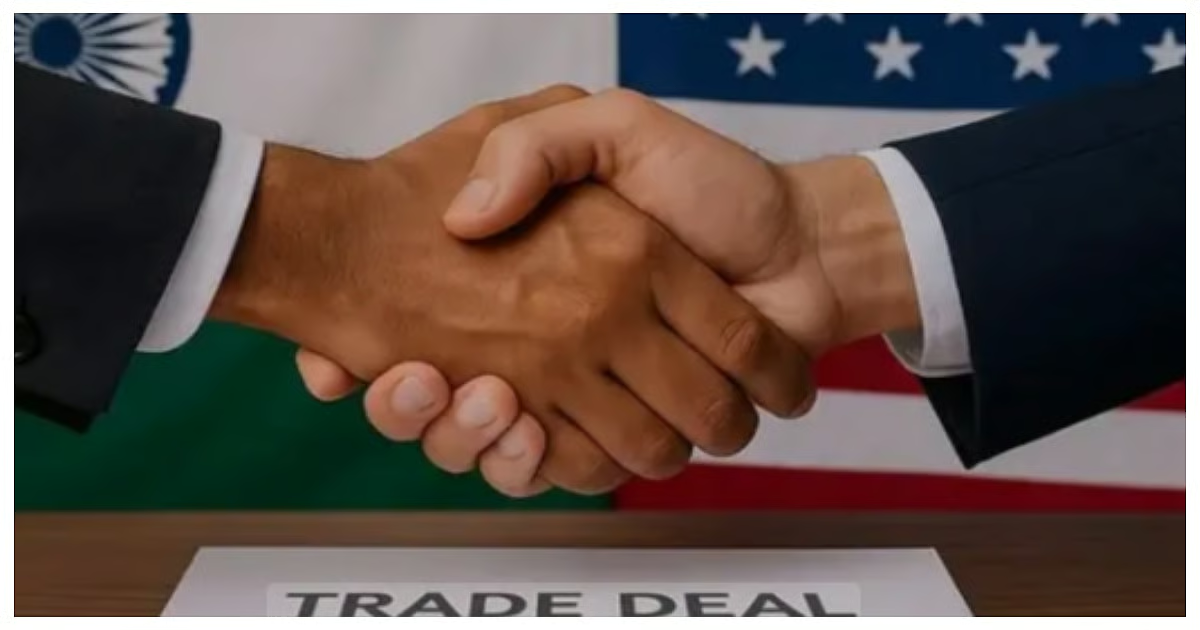
A possible India US trade agreement could reshape opportunities for MSMEs and regional exporters by easing market access, lowering compliance burdens and improving the competitiveness of smaller firms. The negotiations carry high stakes because MSMEs form a major share of India’s export engine.
A trade agreement between India and the United States is time sensitive and has become a closely watched development for industry groups. MSMEs depend heavily on predictable trade rules, lower duties and simpler standards to reach overseas buyers. Any policy shift between the two countries will directly influence export flows from smaller industrial clusters across India.
Why An India US Trade Deal Matters For Smaller Exporters
The India US corridor is already one of the largest trade routes for Indian goods. Sectors such as engineering goods, pharmaceuticals, textiles, leather, handicrafts and processed food rely on steady demand from the American market. For MSMEs that operate with limited resources, high tariffs, strict product standards and complex documentation often increase cost and delay shipments.
A trade agreement could simplify these touchpoints by reducing duties on select categories, clarifying product standards and strengthening digital trade processes. Lower entry barriers would encourage more MSMEs from export hubs like Surat, Tiruppur, Rajkot, Morbi, Ludhiana, Coimbatore and Jaipur to expand their reach. Even marginal tariff reductions can improve profitability because MSMEs typically compete on price in global markets.
Market Access Gains And Sector Level Impact
Textiles and apparel exporters could benefit if the agreement reduces tariffs that currently make Indian goods more expensive compared to competitors. For regions like Tiruppur and Surat, easier access could lead to higher order volumes and better capacity utilization.
Engineering MSMEs from Pune, Rajkot, Coimbatore and Faridabad may gain from improved access for auto components, machine parts and precision tools. These sectors already supply to global manufacturers but face pricing pressure due to duties and compliance hurdles. A friendlier trade environment could help them diversify customers and upgrade technology.
Pharmaceutical producers and chemical MSMEs may benefit if regulatory processes are streamlined. Faster approvals and mutually recognised standards help smaller firms save time in markets that require rigorous compliance. Handicraft and artisanal goods from clusters in Rajasthan, Uttar Pradesh and the Northeast could also gain traction, as the US has strong demand for niche, handcrafted products.
Supply Chain Stability And Technology Transfer Benefits
A comprehensive trade agreement could attract more US companies to integrate Indian MSMEs into their supply chains. This can lead to long term contracts, stable order flows and exposure to advanced manufacturing practices. For smaller firms, such integration offers credibility and predictable revenue.
Technology transfer is another significant benefit. Partnerships in clean energy, electronics assembly, medical devices and digital technology could accelerate adoption of modern processes among Indian MSMEs. Improved technology leads to better product quality, higher productivity and reduced cost per unit.
Regional Exporters And The Push Toward Formalisation
Clusters in smaller cities and semi urban regions stand to benefit more because they face greater friction in connecting with international buyers. A trade agreement could encourage wider digital documentation, simplified customs procedures and transparent certification systems. These changes make exports more viable for first time or small volume exporters.
As compliance becomes straightforward, more regional firms may shift toward formalisation to participate in global trade. This supports better credit access, improved logistics tie ups and greater eligibility for government incentives. Over time, stronger export participation can transform local economies by creating jobs, improving skill levels and attracting private investment.
Risks And Competitive Pressures For Domestic MSMEs
A trade agreement also brings competitive challenges. Lower tariffs on imported goods may pressure domestic manufacturers that compete directly with American products. MSMEs operating in electronics, machinery and premium consumer goods may face more competition if American imports become cheaper.
Compliance requirements, even when simplified, could still require investment in quality systems. Firms that fail to adapt may struggle to retain market share. Policymakers will need to balance market access with safeguards to ensure smaller firms are not overwhelmed by cheaper imports.
Takeaways
• A potential India US trade deal can significantly improve market access and export competitiveness for MSMEs
• Textiles, engineering goods, pharmaceuticals, chemicals and handicrafts may see strong benefits from reduced duties and clearer standards
• Regional clusters could gain through better logistics, easier compliance and access to US supply chains
• Competitive pressure from cheaper imports remains a key risk for domestic manufacturers
FAQ
Q: Which MSME sectors will gain the most from an India US trade agreement
A: Textiles, engineering goods, pharmaceuticals, chemicals and handicrafts are likely to see the greatest export gains due to high demand and tariff sensitivity.
Q: How does a trade deal help smaller exporters in Tier 2 cities
A: It lowers tariffs, simplifies documentation and improves standards clarity, making global trade more accessible for regional producers with limited resources.
Q: Will US imports increase if duties are reduced
A: Cheaper imports are likely in selected categories, which could increase competition for Indian manufacturers, especially in machinery and electronics.
Q: Can MSMEs integrate into US supply chains after a trade deal
A: Yes, clearer rules and stronger trade ties can help MSMEs secure long term contracts with US companies seeking diversified and cost effective suppliers.










Leave a comment