

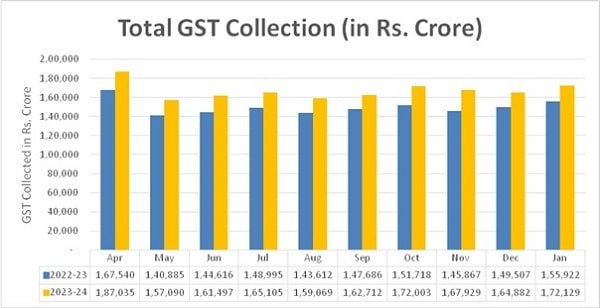
India’s GST collections have recorded strong momentum in the first quarter of FY 2026, reflecting improved compliance and steady economic activity. The trend signals better demand conditions and formalisation, with direct implications for small businesses across Tier-2 and Tier-3 markets.
India’s GST collections have shown a consistent upward trajectory in early FY 2026, making it a time-sensitive business development rather than an evergreen topic. The rise is backed by increased consumption, better reporting systems, and tighter enforcement measures led by the Government of India.
Strong GST Collections Indicate Expanding Formal Economy
India’s GST collections crossing consistently high monthly thresholds indicate that more businesses are entering the formal tax system. This is not just a macroeconomic signal but a structural shift.
For small businesses, especially in Tier-2 and Tier-3 cities, this reflects increasing digitisation of transactions. Tools like e-invoicing and GST return automation are pushing even smaller traders toward compliance.
Higher collections also point to improved tracking of supply chains. As more vendors become GST-compliant, informal operators face pressure to formalise or risk losing business relationships.
This trend benefits compliant MSMEs that can now compete on a more level playing field rather than being undercut by tax-evading competitors.
Rising Consumption Trends Driving GST Growth
A major contributor to the GST growth is rising consumption across sectors like FMCG, auto components, and consumer durables. Rural and semi-urban demand has shown resilience in recent months.
This is particularly important for small businesses that depend heavily on local demand cycles. Increased GST collections often correlate with higher sales volumes, especially in categories like retail trade and services.
For example, small retailers in emerging cities are seeing higher footfall and digital transactions, both of which are captured under GST reporting.
The implication is clear: demand recovery is not limited to metros anymore, and Bharat-driven consumption is playing a larger role in tax buoyancy.
Compliance Improvements and Tech Adoption Among MSMEs
Another key driver behind strong GST numbers is improved compliance through technology. Government-backed initiatives such as e-invoicing thresholds and real-time reporting have reduced tax leakages.
Small businesses are increasingly adopting accounting software and GST filing tools. This reduces manual errors and improves filing accuracy.
Additionally, stricter enforcement measures like data matching and input tax credit validation are discouraging underreporting.
For MSMEs, this shift means higher initial compliance costs but long-term benefits like easier access to formal credit and better financial records.
What This Means for Small Businesses in Tier-2 and Tier-3 Cities
For businesses outside metros, the GST momentum carries both opportunities and challenges.
On the opportunity side, formalisation improves credibility. GST-compliant businesses find it easier to access loans, participate in government tenders, and partner with larger companies.
However, compliance requirements can strain smaller enterprises with limited resources. Many still face challenges in understanding filing norms and managing working capital due to input tax credit cycles.
The key shift is that informal operations are becoming less viable. Businesses that adapt early to GST systems will gain a competitive edge.
Policy Stability and Future Outlook for GST Growth
The government’s focus remains on stabilising GST rates and improving compliance rather than introducing major structural changes in the near term.
Consistent collections provide fiscal stability, allowing the government to invest more in infrastructure and local economic development.
For small businesses, this creates a positive ecosystem where demand, credit access, and policy support align.
If current trends continue, GST collections could remain a strong indicator of India’s economic resilience through FY 2026.
Takeaways
- Strong GST collections reflect rising consumption and better compliance across India
- Tier-2 and Tier-3 businesses are becoming key contributors to tax growth
- Formalisation is accelerating, making GST compliance essential for survival
- Technology adoption is no longer optional for small business operations
FAQs
What does higher GST collection mean for small businesses?
It indicates stronger demand and increased formalisation, which benefits compliant businesses through better market access and credibility.
Why are GST collections rising in 2026?
The rise is driven by improved compliance, digital tracking, and steady consumption growth across urban and rural markets.
How does GST impact Tier-2 and Tier-3 businesses?
It pushes businesses toward formal operations, improving access to credit and partnerships but also increasing compliance responsibilities.
Is GST compliance difficult for small businesses?
It can be challenging initially, but digital tools and accounting platforms have made filing and reporting much easier over time.







Leave a comment