

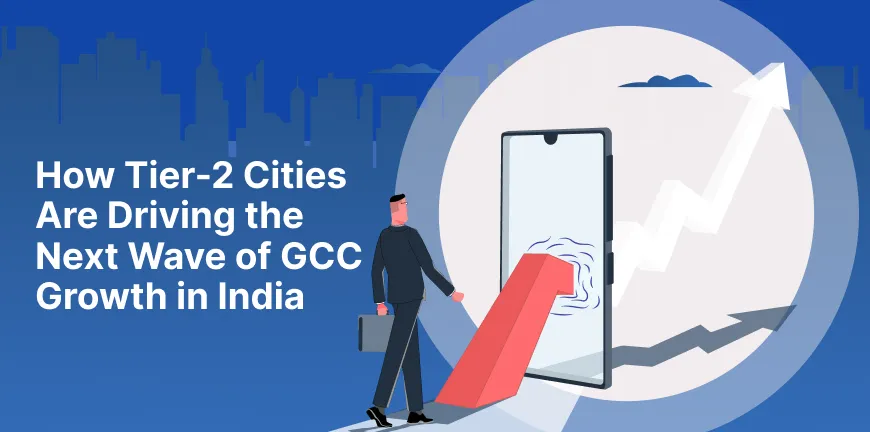
India’s Tier-2 cities are rapidly emerging as major business hubs for retail and manufacturing startups. Lower operational costs, improving infrastructure, rising consumer demand, and government-backed industrial policies are encouraging entrepreneurs and investors to expand beyond metro cities in 2026.
India’s Tier-2 cities are becoming the new growth engines for retail and manufacturing startups as businesses increasingly shift focus away from expensive metropolitan markets. Cities like Indore, Nagpur, Coimbatore, Surat, Jaipur, Lucknow, Bhubaneswar, and Kochi are witnessing a steady rise in startup activity, industrial investments, warehousing projects, and local consumer demand.
This shift is not happening overnight. Over the last few years, rising operational costs in metro cities such as Bengaluru, Mumbai, and Delhi have pushed startups to explore alternative regions where land, labor, and logistics are comparatively affordable. At the same time, digital connectivity and improved transportation infrastructure have made it easier for companies to operate efficiently from smaller cities.
Why Tier-2 Cities Are Attracting Startups
One of the biggest reasons behind this trend is cost efficiency. Retail and manufacturing startups require warehouse space, labor availability, and distribution networks. Tier-2 cities offer these advantages at significantly lower costs than metropolitan regions.
Commercial rentals in smaller cities remain more affordable, allowing startups to allocate larger budgets toward technology, expansion, and hiring. Manufacturing businesses also benefit from industrial corridors, state-level incentives, and easier land acquisition policies introduced by various state governments.
Another important factor is talent availability. Many skilled professionals from Tier-2 cities now prefer working closer to home instead of relocating to overcrowded metro areas. The rise of remote work and hybrid business models after the pandemic has further strengthened this trend.
Several Indian startups are also discovering that smaller cities provide access to underserved consumer markets. Local demand for affordable fashion, electronics, packaged foods, home appliances, and mobility solutions has grown rapidly over the past few years.
Retail Businesses See Massive Demand in Emerging Cities
Retail startups are increasingly focusing on Bharat consumers living outside major metros. Improved internet penetration and digital payment adoption have transformed buying habits across smaller cities.
E-commerce companies, D2C brands, and hyperlocal delivery startups are seeing stronger growth from non-metro markets compared to urban centers. According to multiple industry reports, a significant share of new online shoppers in India now comes from Tier-2 and Tier-3 regions.
Fashion, beauty, grocery, and affordable electronics brands are expanding their offline and online presence in these markets. Shopping malls, organized retail outlets, and branded stores are also growing steadily in cities that previously depended mainly on local markets.
Regional preferences are shaping product strategies as well. Startups are now customizing inventory, pricing, and marketing campaigns according to local demand patterns. Businesses targeting Hindi-speaking states, South Indian markets, or regional cultural preferences are gaining a competitive edge.
Manufacturing Startups Benefit From Industrial Expansion
Manufacturing startups are also finding strong opportunities in Tier-2 India. Government initiatives such as Make in India, Production Linked Incentive schemes, and state-level industrial policies have encouraged investment in sectors like textiles, automotive components, electronics, food processing, and renewable energy equipment.
Cities such as Coimbatore, Rajkot, Aurangabad, and Vadodara already have strong industrial ecosystems. Startups entering these regions gain access to suppliers, skilled labor, and established transport networks.
Logistics infrastructure is improving rapidly through dedicated freight corridors, highway projects, and expanding railway connectivity. Warehousing demand has also increased as companies try to build stronger supply chains closer to regional markets.
Many startups now prefer decentralized manufacturing operations instead of relying entirely on one metro-based facility. This strategy helps reduce transportation costs and improves delivery timelines.
Investors and Venture Capital Firms Shift Focus
Investors are closely watching the rise of startups from smaller cities. Venture capital firms are increasingly funding founders who understand regional markets and consumer behavior.
The startup ecosystem outside metros is also becoming more organized. Incubation centers, co-working spaces, startup accelerators, and government-backed innovation hubs are expanding across emerging business cities.
Investors believe Tier-2 India offers long-term growth potential because these regions still have relatively low market saturation compared to metros. As disposable incomes increase and infrastructure improves, startups operating in these markets could see sustained growth over the next decade.
At the same time, competition in metropolitan cities has become extremely intense. Customer acquisition costs are higher, advertising expenses are rising, and profit margins are shrinking in several sectors. This makes smaller cities more attractive for expansion.
Challenges Still Remain for Startups
Despite the growth opportunities, startups operating in Tier-2 regions still face challenges. Access to large-scale funding remains limited in many cities. Founders often need to travel to metro hubs to secure investor meetings and partnerships.
Infrastructure quality also varies across regions. Some cities still face issues related to logistics efficiency, industrial approvals, and skilled workforce availability for specialized sectors.
However, the overall momentum remains positive. Industry experts believe India’s next wave of business growth will increasingly come from emerging cities rather than traditional startup hubs alone.
Key Takeaways
- Tier-2 cities are becoming major hubs for retail and manufacturing startups in India
- Lower operational costs and rising local demand are driving business expansion
- Manufacturing startups benefit from government incentives and industrial infrastructure
- Venture capital firms are increasingly exploring opportunities in emerging cities
FAQs
Why are startups moving to Tier-2 cities in India?
Startups are shifting to Tier-2 cities because of lower costs, better infrastructure, growing consumer demand, and reduced competition compared to metro cities.
Which industries are growing fastest in Tier-2 India?
Retail, manufacturing, logistics, D2C brands, food processing, electric mobility, and e-commerce sectors are growing rapidly in smaller cities.
Are investors funding startups from non-metro cities?
Yes. Venture capital firms and angel investors are increasingly investing in startups from Tier-2 and Tier-3 regions due to strong market growth potential.
Which Indian cities are emerging as startup hubs?
Cities such as Indore, Jaipur, Surat, Nagpur, Coimbatore, Lucknow, Kochi, and Bhubaneswar are becoming important startup and manufacturing centers.










Leave a comment