

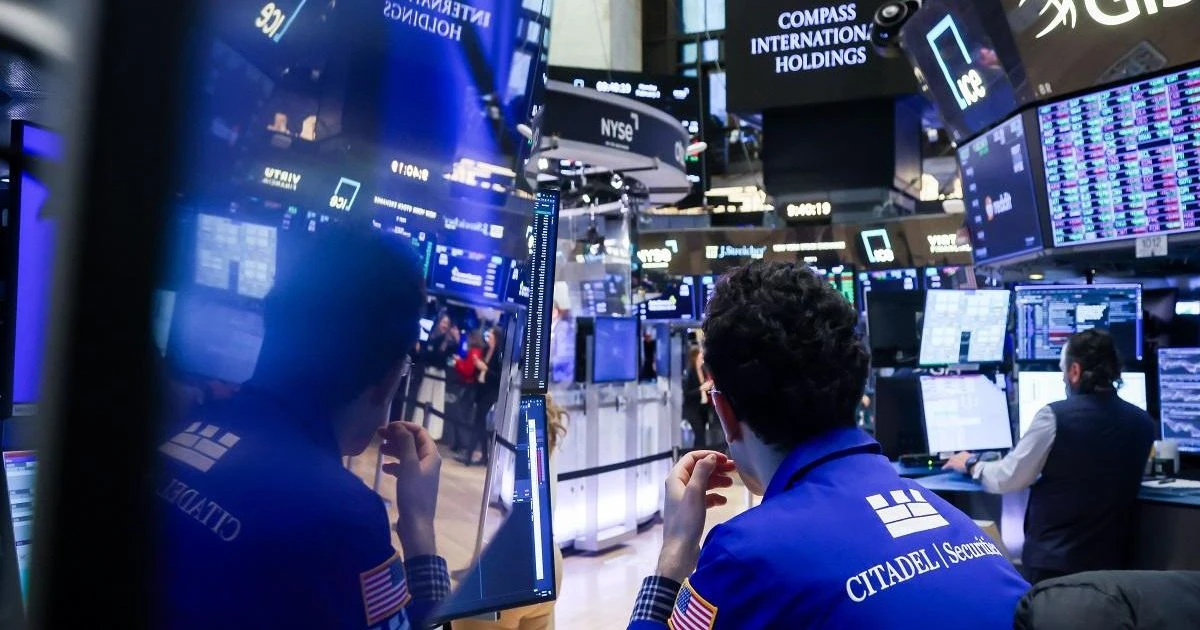
IT stocks slump amid global AI tool launches has become a defining market theme entering 2026, raising fresh questions for retail investors. The correction reflects shifting revenue expectations, margin pressure concerns, and uncertainty around how fast large IT firms can monetise new AI platforms.
Why IT stocks are reacting to global AI developments
This topic is time sensitive and news driven, linked to recent global AI product launches and immediate market reaction. The IT stocks slump is not driven by weak earnings alone but by changing assumptions about future growth. Global AI tools are accelerating automation, shortening software development cycles, and altering enterprise buying behaviour.
For Indian IT companies, this creates a perception risk. Investors worry that traditional outsourcing and application maintenance revenues could face pricing pressure if clients adopt AI driven tools to reduce headcount and project timelines. Even firms investing heavily in AI platforms face near term cost increases before meaningful revenue visibility emerges.
Margin pressure and revenue visibility concerns
One of the key secondary keywords shaping sentiment is margin pressure. Indian IT firms operate on scale driven margins that depend on predictable billing rates and long term contracts. AI adoption introduces uncertainty around pricing models, productivity benchmarks, and billing structures.
Retail investors should track commentary around deal renegotiations and client budgets. If clients expect faster delivery at lower costs due to AI efficiencies, margins could compress unless firms offset this with premium AI led offerings. Short term volatility often reflects this margin reset risk rather than a collapse in demand.
Differentiating between large caps and mid cap IT stocks
Not all IT stocks are equally exposed. Large cap IT firms have stronger balance sheets, diversified client bases, and the ability to invest in proprietary AI platforms. Mid cap and small cap IT companies often rely on niche services or a limited set of clients, making them more sensitive to demand shifts.
Retail investors should assess exposure to legacy services versus digital and AI enabled services. Companies with higher revenue dependence on traditional application maintenance may face longer adjustment periods. Those with cloud, data engineering, and AI integration capabilities may recover faster once spending stabilises.
Client spending trends and sector exposure
Another factor behind the IT stocks slump is uneven client spending across sectors. Banking, financial services, and retail clients remain cautious on discretionary tech spending, while healthcare and manufacturing show selective investment in automation.
Retail investors should watch quarterly disclosures for sector wise revenue mix and deal pipeline quality. A slowdown concentrated in a few sectors is less damaging than broad based demand contraction. AI tools may initially slow spending decisions as clients reassess technology roadmaps before committing capital.
Valuations, corrections, and long term opportunity
Valuations play a central role in market reactions. Many IT stocks entered 2026 trading at premium multiples based on steady growth assumptions. The AI driven reset challenges those assumptions, leading to sharp corrections even without earnings downgrades.
For long term retail investors, this phase may present selective opportunities rather than blanket risk. Stocks correcting due to sentiment rather than fundamentals often stabilise once revenue clarity improves. The key is to avoid averaging blindly and instead focus on companies demonstrating credible AI monetisation strategies.
What retail investors should monitor through 2026
The next few quarters will be crucial. Investors should monitor deal wins tied to AI transformation, employee utilisation trends, and investment intensity in AI infrastructure. Management commentary around pricing discipline and client demand visibility matters more than headline revenue growth.
Retail investors should also track global tech spending cues, as Indian IT remains export driven. AI adoption is a structural shift, but its impact will be phased rather than instantaneous.
Takeaways
- IT stocks slump reflects uncertainty around AI impact, not immediate business collapse.
- Margin pressure and pricing models are key risks for traditional IT services.
- Large cap IT firms are better positioned than mid caps to absorb AI transition costs.
- Selective long term opportunities may emerge as valuations reset.
FAQs
Why did IT stocks fall after global AI tool launches?
Markets fear that AI tools could reduce traditional IT service demand and pressure margins before new revenue streams mature.
Are all IT stocks equally affected by AI disruption?
No. Firms with diversified services and strong AI capabilities are better positioned than niche or legacy focused players.
Should retail investors exit IT stocks in 2026?
Not necessarily. Decisions should be stock specific, based on balance sheet strength, client mix, and AI readiness.
Is the IT stocks slump a short term or long term trend?
It is a short to medium term adjustment phase within a long term technology transition.











Leave a comment