

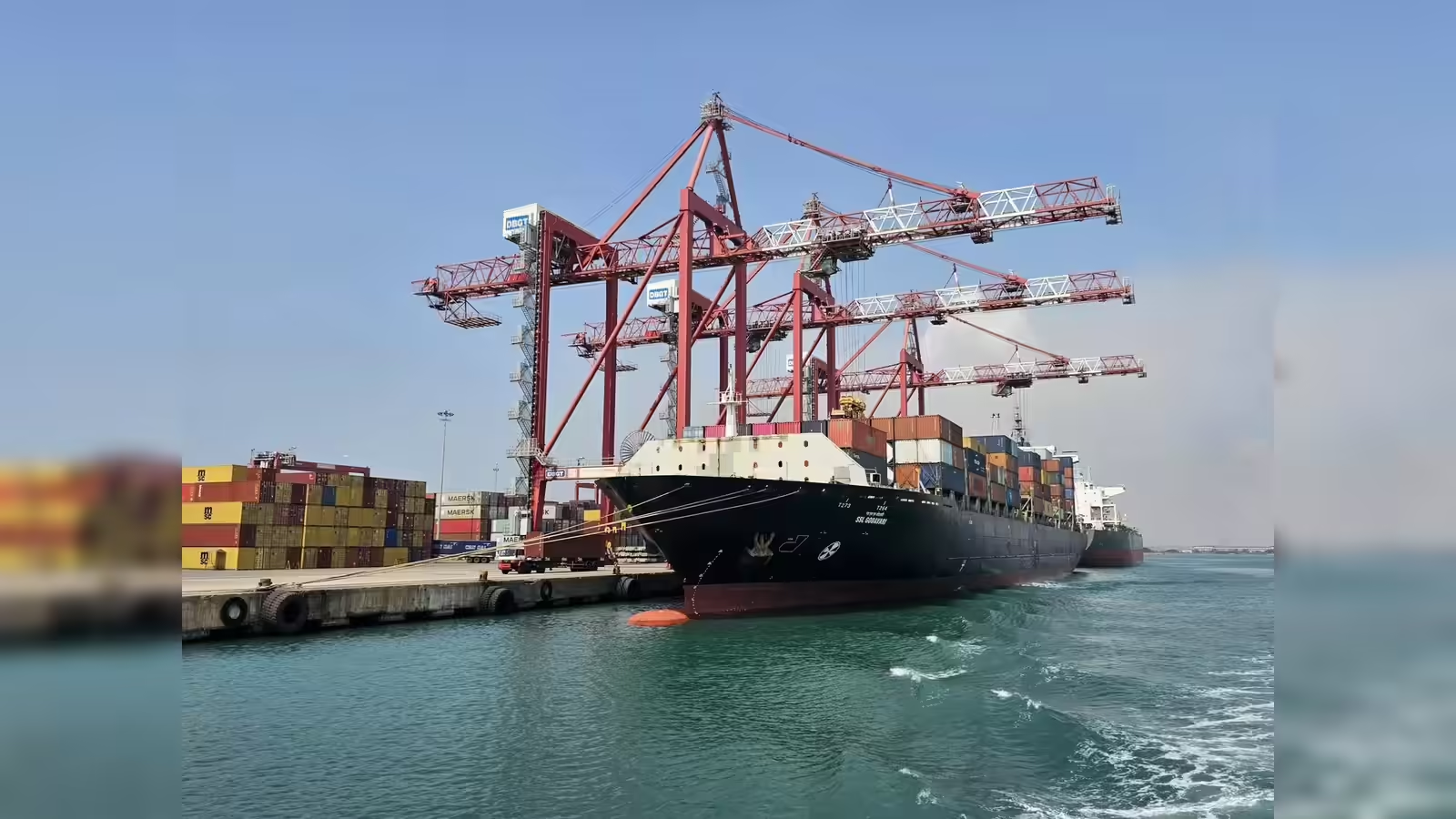
India’s Union Budget 2026 places inland waterways and container infrastructure at the centre of logistics reform, with direct implications for SME logistics costs. The policy direction focuses on reducing freight expenses, improving cargo movement reliability, and easing access to multimodal transport for small and medium enterprises across non-metro regions.
Inland waterways focus in Budget 2026 and policy intent
The topic is time sensitive and tied to Budget 2026 announcements, so the intent is news-driven with explanatory depth. The inland waterways push in Budget 2026 signals a structural shift in how freight movement is planned in India. Instead of relying heavily on road transport, the government is expanding navigable waterways, cargo terminals, and river-linked logistics corridors.
For SMEs, logistics costs typically account for 12 to 18 percent of total operating expenses, significantly higher than global benchmarks. Inland waterways offer a lower cost per tonne-kilometre compared to road transport, making them attractive for bulk and semi-bulk goods such as cement, steel, food grains, fertilisers, and construction material.
Containerisation push and its relevance for SMEs
A key secondary keyword in Budget 2026 logistics policy is containerisation. The budget emphasises expanding container handling capacity beyond major ports into inland container depots and river-linked terminals. This matters for SMEs because containerisation improves cargo safety, reduces transit losses, and standardises freight movement.
Small manufacturers and exporters often face higher logistics costs due to fragmented shipments and dependence on intermediaries. Wider access to container infrastructure allows SMEs to consolidate shipments and access scheduled freight services. This reduces dependency on ad hoc trucking arrangements that are prone to delays and price volatility.
Cost comparison between road transport and waterways
Road transport remains the dominant mode for SME logistics, but it is also the most expensive for long-distance and bulk movement. Fuel costs, toll charges, driver shortages, and vehicle maintenance add to unpredictability. Inland waterways, by contrast, offer lower fuel consumption per unit of cargo and fewer toll-related costs.
For SMEs operating along navigable river corridors or near logistics hubs connected to waterways, this can translate into measurable savings over time. While first-mile and last-mile road connectivity remains necessary, the bulk of the journey shifting to waterways reduces overall freight expenditure.
Impact on Tier-2 and Tier-3 SME clusters
The inland waterways and container push has particular relevance for Tier-2 and Tier-3 SME clusters located near rivers and industrial belts. Many of these clusters struggle with poor rail access and rising road freight charges. Improved river terminals and multimodal parks can integrate these regions into national supply chains.
For example, agro-processing units, building material suppliers, and regional manufacturers can move goods to consumption centres at lower cost. This improves price competitiveness and enables SMEs to expand their market reach without proportionately increasing logistics spending.
Export competitiveness and supply chain reliability
Budget 2026 logistics reforms also strengthen export competitiveness for SMEs. Inland container depots linked to waterways reduce congestion at major ports and shorten turnaround times. Predictable shipping schedules help SMEs plan inventory and production more efficiently.
Reduced logistics costs improve margin stability, especially for exporters operating on thin margins. Over time, this can encourage more SMEs to participate in export markets rather than relying solely on domestic demand.
Practical challenges and adoption timeline
While the policy direction is clear, adoption will be gradual. Not all SMEs are located near navigable waterways, and awareness about alternative logistics modes remains limited. Investments in terminal capacity, private barge operators, and digital booking systems will determine how quickly benefits materialise.
SMEs will need to adapt logistics planning and work with transport aggregators to integrate waterways into their supply chains. The cost benefits are more visible for medium-volume shippers rather than very small consignments, at least in the initial phase.
Long-term outlook for SME logistics costs
Over the long term, the inland waterways and container push from Budget 2026 is likely to exert downward pressure on SME logistics costs. Even SMEs that continue to rely primarily on road transport may benefit indirectly as competition across modes stabilises freight pricing.
The broader impact lies in creating a more balanced logistics ecosystem where cost efficiency, reliability, and scalability improve together. For SMEs, this reduces one of the biggest structural disadvantages they face compared to larger enterprises.
Takeaways
- Budget 2026 promotes inland waterways as a lower-cost alternative to road freight for SMEs.
- Expanded container infrastructure improves cargo safety and shipment predictability.
- Tier-2 and Tier-3 SME clusters stand to gain the most from multimodal connectivity.
- Logistics cost savings will be gradual but structurally significant over time.
FAQs
How do inland waterways reduce logistics costs for SMEs?
They offer lower fuel consumption and cost per tonne-kilometre compared to road transport, especially for bulk and semi-bulk goods.
Which SMEs benefit most from the container push in Budget 2026?
Manufacturing, agro-processing, construction material, and export-oriented SMEs benefit the most due to shipment standardisation and reduced transit losses.
Will all SMEs immediately see cost reductions?
No. Benefits depend on proximity to waterways, shipment volume, and availability of terminal infrastructure. Adoption will be phased.
Does this reduce dependence on road transport completely?
No. Road transport remains critical for first-mile and last-mile movement, but waterways can handle the bulk of long-distance freight.










Leave a comment