

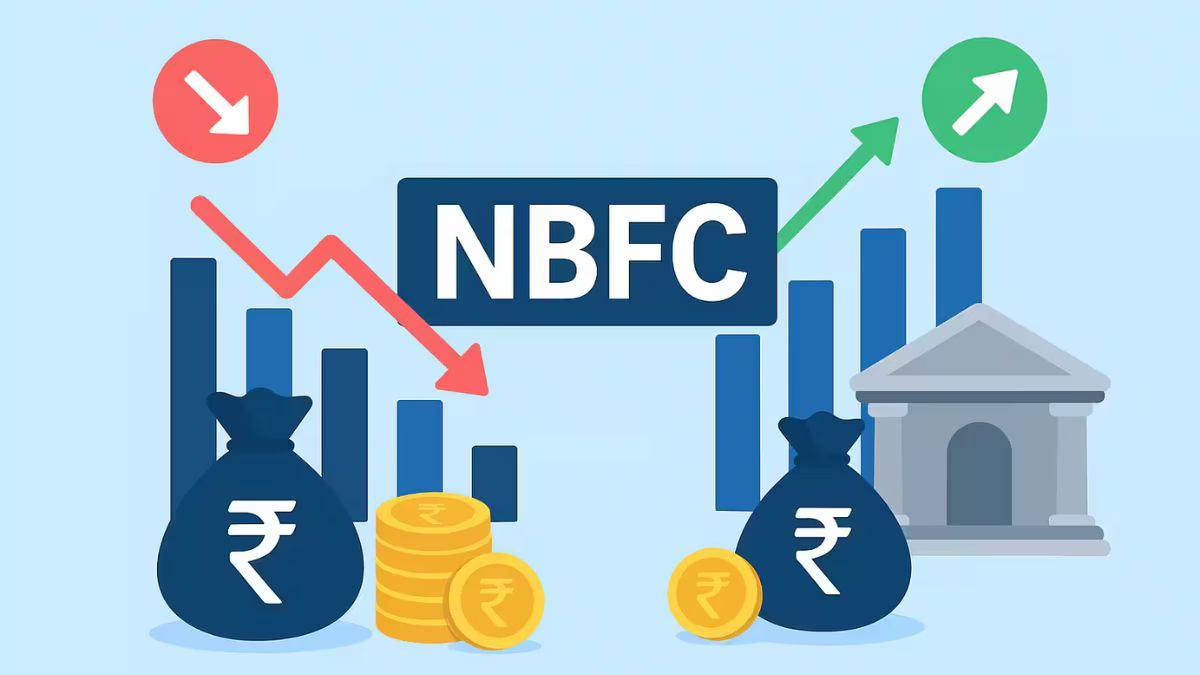
NBFCs in India are shifting toward secured lending as tighter liquidity and rising credit risks reshape the lending environment. This strategic pivot reflects a growing focus on asset quality, stable returns, and cautious expansion across retail and MSME segments.
NBFCs secured lending strategy is becoming more pronounced as non-banking financial companies recalibrate their portfolios in response to shrinking risk appetite. Over the past few quarters, lenders have reduced exposure to unsecured loans and are increasingly prioritising asset-backed products such as gold loans, vehicle finance, and loan against property.
Liquidity pressures reshape NBFC lending strategy
NBFCs are highly dependent on external funding sources, including bank borrowings and market instruments. With liquidity tightening in the financial system, the cost of funds has increased, directly impacting lending decisions.
Higher borrowing costs make unsecured lending less attractive due to its higher default risk and lower recovery potential. As a result, NBFCs are shifting toward secured lending segments where collateral provides a cushion against credit losses.
Secondary keyword focus such as NBFC liquidity challenges India and cost of funds impact explains the structural drivers behind this transition. Lenders are prioritising balance sheet stability over aggressive loan growth.
Unsecured lending slows amid rising credit risk concerns
Unsecured loans, including personal loans and small-ticket MSME financing, had seen rapid expansion in recent years. However, early signs of stress in certain borrower segments have led NBFCs to reassess their exposure.
Lenders are tightening credit filters, reducing loan sizes, and focusing on customers with established repayment histories. In Tier-2 and Tier-3 markets, where income variability is higher, this cautious approach is even more evident.
Secondary keywords like unsecured loan slowdown India and MSME credit risk highlight how changing risk perception is influencing lending patterns across the sector.
Growth shifts to gold loans and asset-backed products
Secured lending products are now driving growth for NBFCs. Gold loans, vehicle financing, and loan against property are seeing increased traction due to their relatively lower risk profile and strong collateral backing.
Gold loans have emerged as a key segment because of their quick processing and high liquidity. Similarly, vehicle loans linked to income-generating assets such as commercial vehicles offer predictable repayment patterns.
Secondary keyword themes such as gold loan NBFC growth and secured lending India trends show how these products are becoming central to NBFC portfolios. Investors are also favouring companies with higher secured loan exposure.
Impact on MSMEs and small borrowers in non-metro markets
The shift toward secured lending has direct implications for MSMEs and small borrowers, especially in non-metro regions. While borrowers with assets such as gold or property continue to access credit, those without collateral face tighter conditions.
This could slow credit access for first-time borrowers and informal sector participants who previously relied on unsecured loans. In Tier-2 cities, where fintech-driven lending had expanded access, the impact is more visible.
At the same time, some borrowers are opting for secured loans due to lower interest rates, indicating a shift in borrowing preferences as well.
Regulatory signals reinforce focus on risk management
Regulatory guidance has played a role in shaping NBFC strategies. The Reserve Bank of India has emphasised prudent lending practices, especially in segments showing rapid growth such as unsecured retail loans.
NBFCs are strengthening their credit assessment frameworks, improving collection systems, and maintaining conservative loan-to-value ratios in secured segments. The focus is on long-term sustainability rather than short-term expansion.
Secondary keywords like RBI NBFC regulations and risk management lending India highlight how policy signals are influencing operational decisions across the sector.
Outlook for NBFC sector amid strategic shift
The transition toward secured lending is expected to continue in the near term as NBFCs navigate a challenging environment. While this may moderate overall credit growth, it is likely to improve asset quality and reduce volatility in loan portfolios.
Over time, as liquidity conditions improve and economic visibility increases, NBFCs may selectively re-enter unsecured segments. However, the current phase indicates a more balanced approach to growth, with greater emphasis on risk-adjusted returns.
For the broader financial ecosystem, this shift reflects a cyclical adjustment where periods of aggressive lending are followed by consolidation and risk recalibration.
Takeaways
• NBFCs are shifting toward secured lending due to rising risk and funding costs
• Unsecured lending is slowing with stricter underwriting norms
• Gold loans and asset-backed products are driving growth
• Credit access may tighten for borrowers without collateral in smaller markets
FAQs
Why are NBFCs moving away from unsecured loans?
Higher default risks and rising cost of funds are making unsecured lending less attractive for NBFCs.
Which secured loan segments are growing the most?
Gold loans, vehicle finance, and loan against property are seeing strong growth.
How does this shift affect small borrowers?
Borrowers without collateral may face stricter lending conditions and reduced access to credit.
Is this change temporary or long-term?
It is likely to continue in the short term, with possible gradual easing as liquidity conditions improve.












Leave a comment