

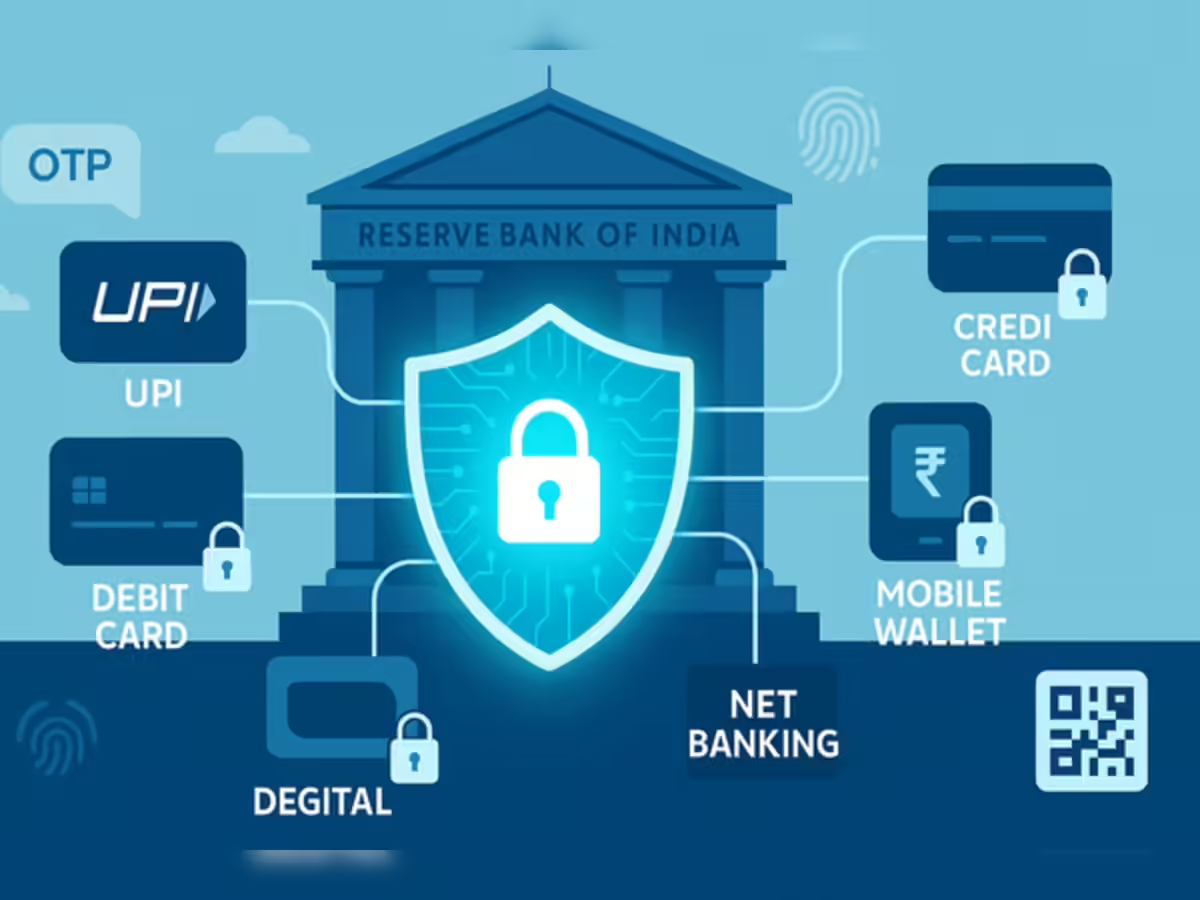
The RBI unified dashboard for payment mandates is set to simplify how Indian consumers track and manage recurring payments across platforms. The move targets better transparency, control, and fraud prevention in India’s rapidly expanding digital payments ecosystem.
The Reserve Bank of India’s push for a unified dashboard for all payment mandates marks a structural upgrade in how recurring transactions are handled. With UPI AutoPay, e-mandates, and standing instructions growing rapidly, the RBI aims to give users a single view of all active mandates across banks, apps, and payment systems.
Growing Complexity in Digital Payment Mandates
India’s digital payments ecosystem has expanded sharply with UPI, cards, and net banking mandates being widely used for subscriptions, EMIs, OTT services, and utility payments. However, this growth has also created fragmentation.
Today, users often struggle to track active mandates across multiple apps and banks. A consumer might have auto-debits set via UPI apps, debit cards, and net banking, but there is no centralized interface to monitor or revoke them easily.
This lack of visibility increases risks such as forgotten subscriptions, duplicate debits, and unauthorized recurring payments. The RBI unified dashboard aims to address this gap by consolidating all mandates into a single interface.
What the RBI Unified Dashboard Will Offer
The proposed system will allow users to view, manage, and cancel all recurring payment mandates from one place. This includes mandates created through UPI AutoPay, cards, and other digital payment modes.
Key features expected in the unified dashboard include a consolidated list of active mandates, details of frequency and amount, and an option to pause or revoke mandates instantly. Users will also be able to see upcoming debit schedules, reducing surprises in account balances.
For consumers in Tier 2 and Tier 3 cities, where digital adoption is accelerating but financial awareness may still be evolving, this move can significantly improve control over finances.
Impact on Consumers and Financial Behaviour
The RBI mandate dashboard is likely to improve financial discipline among users. With better visibility, consumers can actively review subscriptions and cancel unused services, reducing unnecessary spending.
It also enhances trust in digital payments. Many first-time users hesitate to enable auto-debits due to fear of losing control. A centralized dashboard reduces this friction by offering transparency and easy exit options.
Additionally, the move supports financial inclusion. As more users from smaller cities adopt digital payments, simplified tools like this dashboard can reduce confusion and improve user confidence.
Implications for Banks and Fintech Platforms
Banks and fintech companies will need to integrate their systems with the RBI’s unified framework. This may require backend standardization and real-time data sharing across platforms.
For fintech players, this reduces the ability to retain users through friction. If cancelling mandates becomes easier, companies will need to focus more on product value rather than lock-in mechanisms.
At the same time, the move could reduce customer complaints and disputes related to unauthorized debits, improving overall ecosystem efficiency.
Strengthening Payment Security and Compliance
The RBI has been consistently tightening norms around e-mandates and recurring payments over the past few years. This unified dashboard is a continuation of that approach, focusing on user protection and system transparency.
By enabling a single control layer, regulators can also improve monitoring and reduce fraud risks. Consumers will be alerted to all active mandates, making it harder for unauthorized instructions to go unnoticed.
This aligns with the broader goal of building a secure and resilient digital payments infrastructure as India scales its cashless economy.
What Comes Next for Digital Payments in India
The unified mandate dashboard is expected to evolve further with features like alerts, mandate categorization, and AI-based insights on spending patterns. Over time, it could become a financial management tool rather than just a control panel.
With UPI continuing to dominate retail payments and recurring transactions becoming more common, such infrastructure upgrades are necessary to sustain long-term growth.
For Indian consumers, especially those newly entering the digital ecosystem, this move simplifies complexity and strengthens control.
Takeaways
Centralized control will reduce confusion around multiple auto-debit mandates across platforms
Consumers will gain better visibility and the ability to instantly pause or cancel mandates
Fintech companies will need to compete on value instead of relying on user lock-in
The move strengthens trust and security in India’s fast-growing digital payments ecosystem
FAQs
What is the RBI unified dashboard for payment mandates?
It is a proposed system that will allow users to view and manage all recurring payment mandates across banks and platforms in one place.
Will this dashboard include UPI AutoPay mandates?
Yes, it is expected to cover UPI AutoPay along with card-based and net banking mandates.
How will this benefit users in smaller cities?
It simplifies tracking and managing payments, reducing confusion and improving financial control for new digital users.
Can users cancel mandates directly from the dashboard?
Yes, the system is expected to allow instant cancellation or modification of mandates.











Leave a comment