

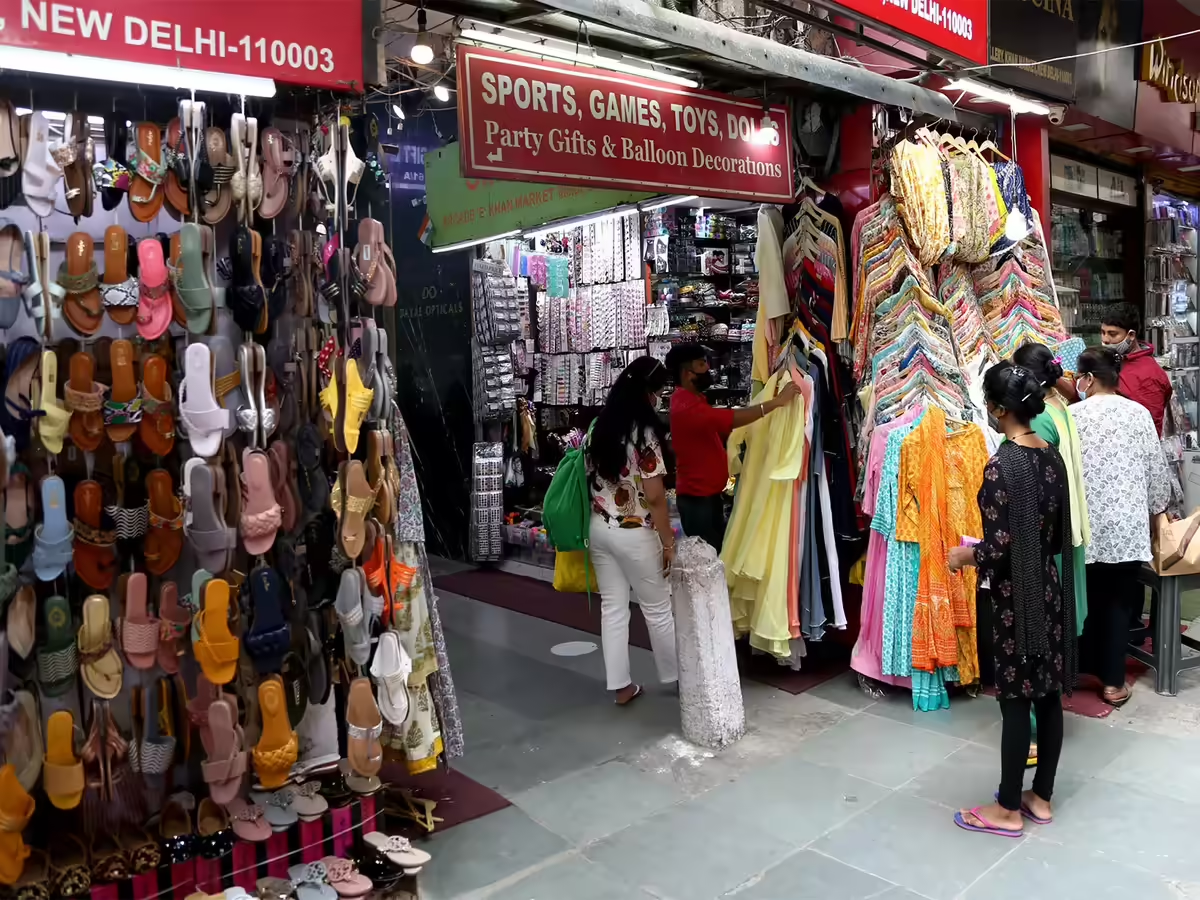
Rural consumption trends in India are showing mixed signals in 2026 even as fintech penetration deepens across villages and small towns. While access to digital finance has improved, spending patterns remain uneven due to income volatility and inflation pressures.
India’s rural consumption trends are currently reflecting a complex picture where increased fintech adoption has not translated into uniform consumption growth. This divergence is becoming a key indicator for policymakers, lenders, and FMCG companies tracking demand from Bharat markets.
Fintech Penetration Expands but Consumption Response Varies
Over the past few years, fintech platforms and digital payment systems have significantly expanded their reach in rural India. UPI adoption, micro-lending apps, and Aadhaar-enabled payment systems have improved financial access for millions of users.
However, the expected boost in consumption has been inconsistent. While some regions are witnessing increased spending, others are showing stagnation or slower growth. This indicates that access to credit and digital payments alone is not sufficient to drive consumption.
The gap between financial access and actual spending is influenced by local economic conditions. Factors such as agricultural income cycles, employment opportunities, and regional inflation trends play a decisive role in shaping consumption behaviour.
Income Volatility Continues to Impact Rural Demand
One of the primary reasons behind mixed rural consumption trends is income volatility. Rural households are still heavily dependent on agriculture and allied activities, which are subject to seasonal fluctuations and climate risks.
Even with improved credit access, consumers tend to remain cautious in their spending. Borrowing is often used for essential needs rather than discretionary purchases. This limits the multiplier effect that fintech-driven credit was expected to create.
Government support schemes and rural employment programs have provided some stability, but they have not fully offset income uncertainties. As a result, consumption patterns continue to vary across different regions and income groups.
Essential Spending Holds While Discretionary Demand Weakens
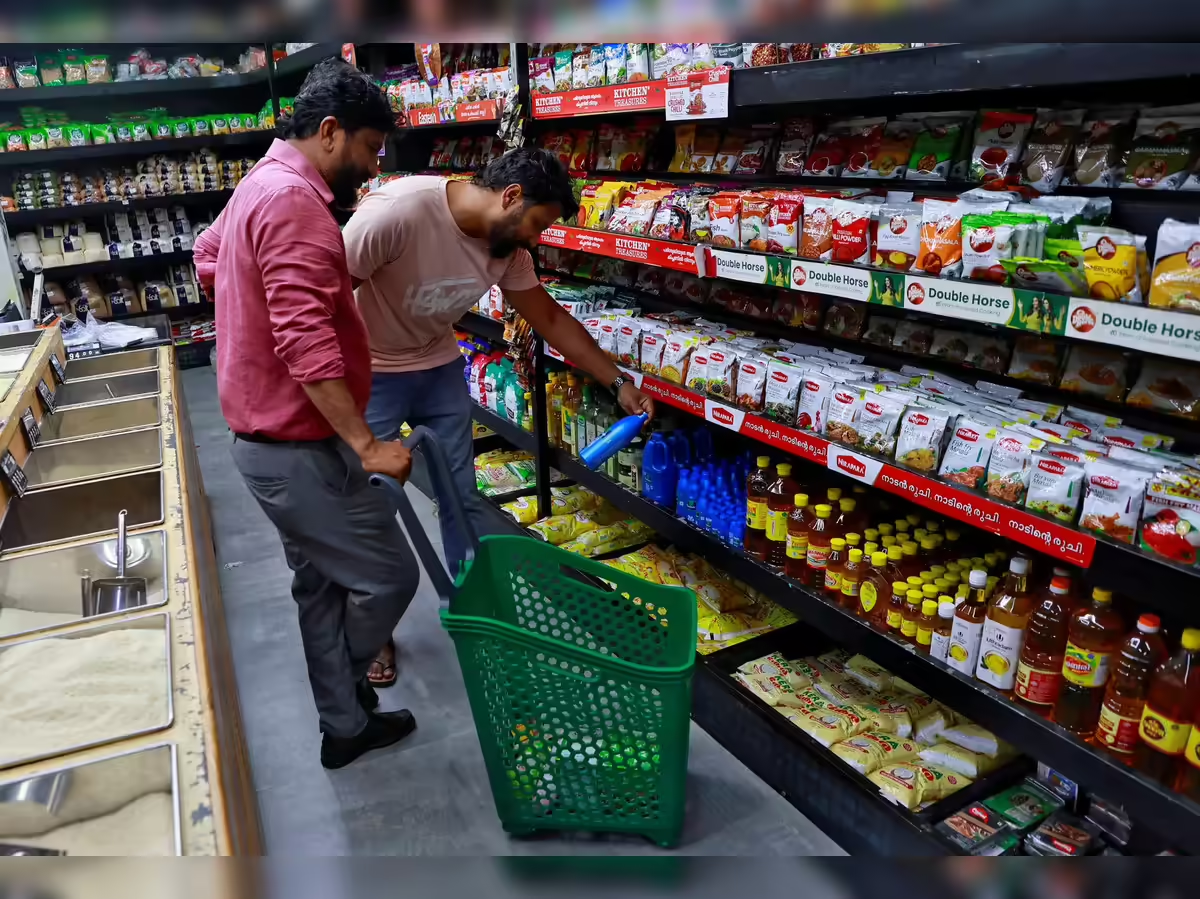
Data from FMCG companies and rural market trackers suggest that essential consumption categories such as food, personal care, and basic household goods remain relatively stable. These categories benefit from consistent demand regardless of income fluctuations.
In contrast, discretionary spending on products like consumer durables, apparel, and non-essential services has shown signs of weakness. Rural consumers are prioritising necessity over aspiration, especially in an environment of rising costs.
This shift in spending behaviour highlights a cautious approach toward financial management. Even with access to digital credit, households are avoiding large-ticket purchases unless income visibility improves.
Role of Fintech in Credit Access and Liquidity
Fintech platforms have played a critical role in improving liquidity in rural areas. Small-ticket loans, buy-now-pay-later options, and instant credit lines have made it easier for consumers to manage short-term financial needs.
These tools are particularly useful during periods of income gaps, such as pre-harvest seasons. However, their impact on long-term consumption growth remains limited.
Many borrowers use fintech credit for:
- Managing daily expenses
- Covering medical or emergency costs
- Supporting small business activities
This indicates that fintech is addressing liquidity challenges more than driving consumption expansion.
Regional Disparities Define Rural Consumption Trends
Rural India is not a uniform market, and consumption trends vary significantly across states and districts. Regions with better irrigation, higher crop yields, and diversified income sources tend to show stronger consumption growth.
On the other hand, areas facing agricultural stress or limited employment opportunities are experiencing weaker demand. This regional disparity explains why overall rural consumption data presents mixed signals.
Infrastructure development, connectivity, and access to markets also influence spending patterns. Regions with better road networks and digital connectivity are more likely to benefit from fintech penetration.
Implications for Businesses and Policymakers
For businesses, especially in FMCG, retail, and BFSI sectors, these trends require a more nuanced approach to rural markets. Blanket strategies are unlikely to work in a landscape defined by regional variation.
Companies are increasingly focusing on:
- Smaller pack sizes and affordable pricing
- Localised distribution strategies
- Region-specific marketing campaigns
For policymakers, the challenge lies in converting financial inclusion into economic growth. This involves improving income stability, strengthening rural infrastructure, and ensuring that credit access leads to productive use.
Takeaways
• Rural consumption trends remain uneven despite increased fintech penetration
• Income volatility continues to limit discretionary spending in rural areas
• Fintech is improving liquidity but not fully driving consumption growth
• Regional disparities play a major role in shaping rural demand patterns
FAQs
1. Why are rural consumption trends mixed in India?
Rural consumption varies due to income volatility, regional disparities, and cautious spending behaviour despite improved access to digital finance.
2. Has fintech increased spending in rural areas?
Fintech has improved access to credit and liquidity, but it has not uniformly increased discretionary consumption.
3. What are rural consumers spending on the most?
Essential categories such as food, fuel, and basic household goods continue to dominate rural spending.
4. What can improve rural consumption growth?
Stable income sources, better infrastructure, and increased employment opportunities can help drive stronger and more consistent consumption.










Leave a comment