

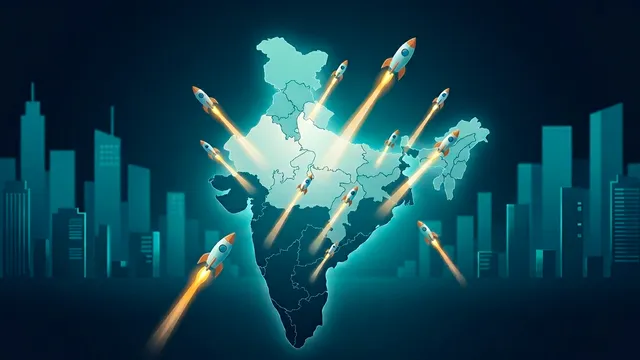
Government initiatives under Startup India continue to expand entrepreneurial opportunities across India’s smaller cities. Improved funding access, digital infrastructure, incubation support, and policy reforms are helping startups emerge from Tier-2 and Tier-3 regions, reshaping the country’s innovation landscape.
Startup India 2026 Strengthens India’s Entrepreneurial Ecosystem
Startup India 2026 continues to play a central role in India’s entrepreneurship journey by supporting startup creation beyond traditional business hubs. While cities such as Bengaluru, Delhi NCR, Mumbai, and Hyderabad remain major startup centers, a growing number of entrepreneurs are emerging from Tier-2 and Tier-3 cities.
The Startup India initiative, launched in 2016, was designed to promote innovation, simplify regulations, improve access to capital, and encourage entrepreneurship across sectors. A decade later, the impact is increasingly visible in smaller cities where founders are building businesses in technology, manufacturing, healthcare, agriculture, logistics, education, and financial services.
Government-backed programs, digital transformation efforts, and expanding investor interest have collectively reduced many barriers that previously limited entrepreneurial activity outside metropolitan regions.
As India aims to become a leading global innovation economy, smaller cities are becoming an important source of startup growth and job creation.
Policy Support and Ease of Doing Business for Startups
One of the key drivers behind entrepreneurial growth is the government’s focus on improving the business environment. Startup India has introduced measures that simplify company registration, compliance requirements, intellectual property support, and access to various startup benefits.
Recognized startups can avail themselves of tax-related incentives, faster patent processing, self-certification under select labor and environmental laws, and participation in government procurement opportunities.
In addition, several state governments have launched their own startup policies to encourage local entrepreneurship. States including Maharashtra, Karnataka, Gujarat, Rajasthan, Uttar Pradesh, Tamil Nadu, and Kerala have established dedicated startup missions, incubation centers, and funding programs.
These initiatives help reduce operational hurdles for founders during the early stages of business development. Easier regulatory processes allow entrepreneurs to focus more on product development, customer acquisition, and business expansion.
Policy-driven support has therefore become a critical pillar of India’s startup ecosystem.
Digital Infrastructure Expands Opportunities in Smaller Cities
The rapid expansion of digital infrastructure has transformed entrepreneurship across India. Affordable smartphones, widespread internet connectivity, digital payment systems, and cloud-based technologies have enabled startups to operate from virtually any location.
Entrepreneurs in cities such as Nagpur, Indore, Surat, Jaipur, Coimbatore, Lucknow, Bhubaneswar, and Kochi can now access customers, suppliers, mentors, and investors without relocating to major metropolitan centers.
Government initiatives including Digital India have played an important role in strengthening digital access and improving connectivity across the country. Unified Payments Interface (UPI), Aadhaar-enabled services, and growing digital commerce adoption have further supported business creation.
As a result, founders can launch online-first businesses with relatively low capital requirements while reaching customers across India and even international markets.
Digital infrastructure has effectively reduced geographical disadvantages that once limited entrepreneurial opportunities in smaller cities.
Startup Funding and Incubation Support Gain Momentum
Access to funding remains one of the most important factors influencing startup growth. Over the years, government-supported initiatives such as the Fund of Funds for Startups (FFS), Startup India Seed Fund Scheme, and various incubation programs have helped strengthen the funding ecosystem.
Incubators and accelerators are no longer concentrated only in metro cities. Educational institutions, industry associations, and innovation hubs across smaller cities are increasingly supporting startup founders through mentorship, training, networking, and investor connections.
Angel investors and venture capital firms are also paying closer attention to startups emerging from non-metro regions. Lower operating costs and access to underserved markets often make these businesses attractive investment opportunities.
Several successful startups have demonstrated that innovation can originate from smaller cities just as effectively as from established technology hubs.
The growing availability of support infrastructure is helping entrepreneurs move from idea generation to scalable business creation more efficiently.
Sectoral Growth Creates New Opportunities
The startup ecosystem in smaller cities is becoming increasingly diverse. Entrepreneurs are addressing local and national challenges through innovative business models across multiple industries.
Agritech startups are helping farmers improve productivity and market access. Healthtech companies are expanding healthcare services through digital platforms. Edtech businesses are providing learning solutions to underserved communities. Fintech startups are improving financial inclusion and digital payments.
Manufacturing and deep-tech ventures are also gaining momentum as government initiatives encourage domestic production and technological innovation.
Many founders are leveraging local expertise and regional market understanding to create solutions tailored to specific customer needs. This approach often gives them a competitive advantage over larger players.
The diversity of sectors represented within India’s startup ecosystem highlights the broad-based nature of entrepreneurial growth occurring across the country.
The Road Ahead for Startup India
As India moves further into its next phase of economic development, entrepreneurship is expected to remain a key growth driver. Government support, digital infrastructure, funding access, and increasing innovation capabilities are creating favorable conditions for startup expansion.
Smaller cities are likely to play an increasingly important role in this transformation. Their growing talent pools, lower operating costs, and improving business ecosystems make them attractive locations for new ventures.
Challenges such as access to growth-stage capital, talent retention, and market competition still exist. However, the overall trajectory remains positive.
The success of Startup India demonstrates that entrepreneurship is no longer limited to a handful of metropolitan centers. Innovation is becoming more geographically distributed, creating opportunities for founders across the country.
This shift could significantly strengthen India’s position as one of the world’s leading startup ecosystems in the years ahead.
Key Takeaways
- Startup India continues to drive entrepreneurial growth across Tier-2 and Tier-3 cities.
- Government policies have improved ease of doing business, funding access, and startup support.
- Digital infrastructure is enabling founders to build scalable businesses from smaller cities.
- Diverse sectors including agritech, fintech, healthtech, and manufacturing are witnessing strong growth.
FAQs
What is Startup India?
Startup India is a government initiative launched in 2016 to promote innovation, entrepreneurship, and startup growth through policy support and ecosystem development.
Why are Tier-2 and Tier-3 cities becoming startup hubs?
Improved digital infrastructure, lower operating costs, local talent availability, and government support are encouraging startup growth in smaller cities.
What funding support is available for startups?
Programs such as the Startup India Seed Fund Scheme, Fund of Funds for Startups, incubators, accelerators, and angel investors provide funding and support opportunities.
Which sectors are growing rapidly in smaller cities?
Agritech, fintech, healthtech, edtech, manufacturing, logistics, and digital services are among the fastest-growing startup sectors.
(Keywords: Startup India 2026, Startup Ecosystem India, Tier 2 Startup Growth, Government Startup Policies, Entrepreneurial Growth India, Startup Funding India, Digital India Startups, Startup India Scheme, Small City Entrepreneurs, Indian Startup Ecosystem)










Leave a comment