

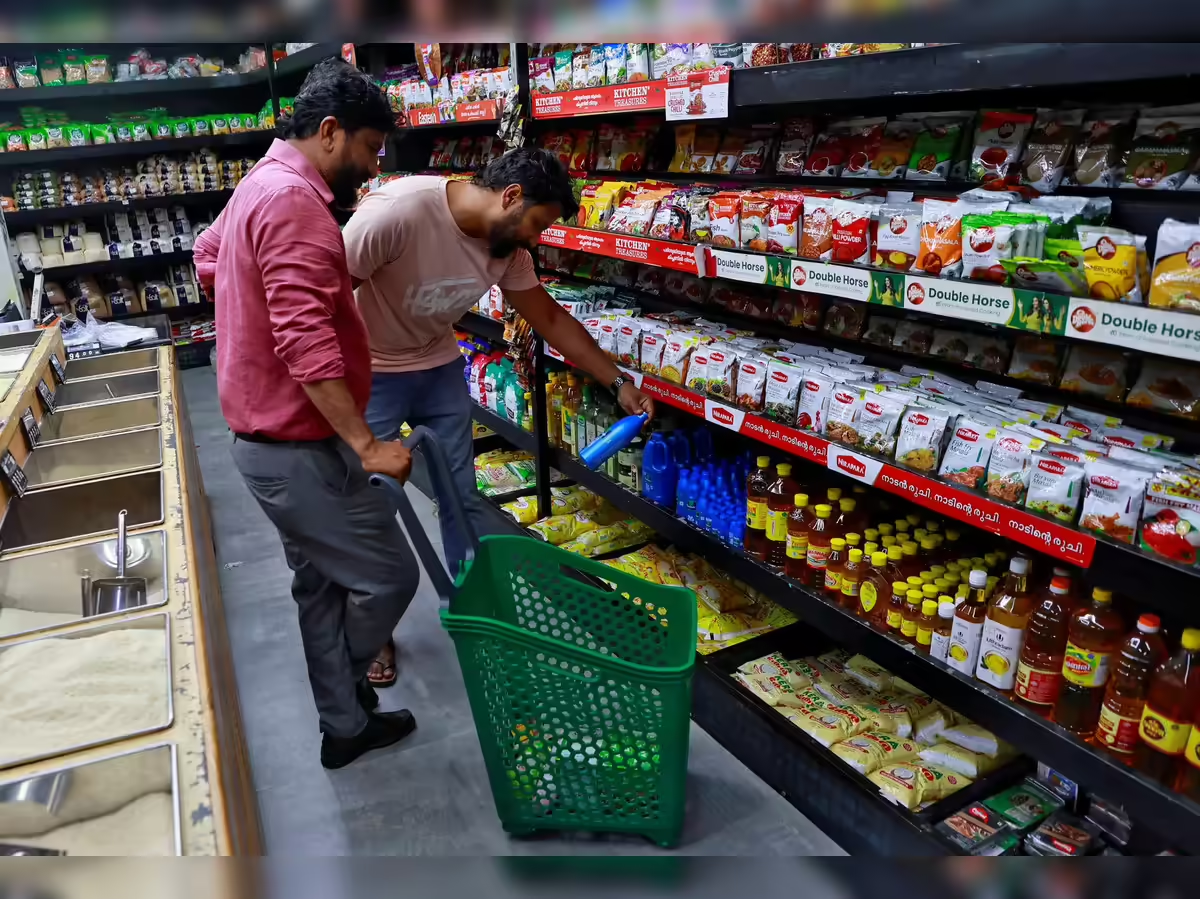
Tier-2 consumers are emerging as the key drivers of retail credit growth in India, reshaping lending strategies for banks and NBFCs. With rising incomes, digital access, and financial inclusion, smaller cities are becoming central to the country’s next phase of credit expansion.
India’s retail credit growth in Tier-2 cities is gaining momentum as lenders expand beyond metros to capture new demand. This shift reflects deeper financial penetration and changing consumption patterns across emerging urban centres.
Retail Credit Expansion Moves Beyond Metro Markets
India’s retail lending landscape has traditionally been dominated by metro and Tier-1 cities. However, recent trends indicate a structural shift. Tier-2 cities are now contributing a growing share of new credit demand, particularly in segments such as personal loans, two-wheeler financing, and small-ticket consumer durable loans.
This transition is driven by saturation in urban markets and the need for lenders to tap new borrower segments. Banks and NBFCs are actively expanding their footprint in cities such as Indore, Nagpur, Jaipur, and Coimbatore, where formal credit penetration remains relatively low but demand is rising.
Improved digital infrastructure has enabled lenders to onboard customers remotely, reducing dependency on physical branches. This has significantly lowered the cost of acquisition in smaller cities.
Financial Inclusion and Digital Adoption Fuel Growth
Financial inclusion initiatives and widespread smartphone usage have played a critical role in accelerating retail credit growth in Tier-2 markets. With the expansion of digital payment systems like UPI, more consumers now have transaction histories that can be used for credit assessment.
The availability of alternative data has enabled fintech lenders to underwrite customers who were previously excluded from the formal credit system. This includes gig workers, small business owners, and first-time borrowers.
Government-backed initiatives aimed at expanding banking access have also strengthened the ecosystem. As a result, consumers in these regions are increasingly comfortable using formal financial products instead of informal borrowing channels.
Changing Consumer Behaviour in Emerging Cities
Consumer behaviour in Tier-2 cities is evolving rapidly. Rising disposable incomes, urbanisation, and aspirational spending are driving demand for credit-led consumption. Households are increasingly using loans to finance lifestyle upgrades, including electronics, vehicles, and home improvements.
At the same time, borrowing patterns in these markets differ from metros. Ticket sizes are typically smaller, and repayment behaviour tends to be more cautious. Many borrowers prefer short-tenure loans and structured repayment options such as EMIs.
There is also a growing preference for instant digital credit, where approval and disbursal happen within minutes. This has increased the appeal of fintech platforms among younger consumers.
Lenders Adjust Strategies for Tier-2 Credit Demand
Banks and NBFCs are recalibrating their strategies to capture this opportunity. Instead of focusing solely on high-value customers, lenders are building portfolios around volume-driven growth in smaller cities.
Key strategic shifts include:
- Expanding co-lending partnerships with fintech platforms
- Designing products tailored to first-time borrowers
- Investing in vernacular interfaces for better user engagement
- Strengthening risk assessment models using alternative data
However, this expansion also comes with risks. Unsecured lending exposure is increasing, prompting regulators to monitor credit quality closely. Lenders are therefore balancing growth with prudent underwriting practices.
Implications for India’s Consumption and Credit Cycle
The rise of Tier-2 consumers as a credit growth engine signals a broader transformation in India’s economic structure. Consumption is no longer concentrated in metros. Instead, it is becoming more distributed across smaller cities.
This trend has positive implications for economic resilience. A wider credit base reduces dependence on a few urban centres and supports more balanced growth.
At the same time, sustainable expansion will depend on maintaining credit discipline. Over-leveraging in new borrower segments could pose risks if not managed carefully.
Overall, Tier-2 driven retail credit growth reflects both opportunity and transition. It marks the next phase of India’s financial deepening, where access, technology, and aspiration converge.
Takeaways
• Tier-2 cities are emerging as the fastest-growing segment in retail credit demand
• Digital infrastructure and alternative data are enabling first-time borrowers
• Lenders are shifting from metro-focused strategies to volume-driven expansion
• Sustainable growth will depend on balancing access with credit risk management
FAQs
1. Why are Tier-2 cities driving retail credit growth in India?
Tier-2 cities have lower credit penetration, rising incomes, and increasing digital adoption, making them key markets for lenders seeking new growth opportunities.
2. What types of loans are popular in Tier-2 markets?
Common products include personal loans, two-wheeler loans, consumer durable financing, and small business loans.
3. How are fintech companies contributing to this growth?
Fintech firms use digital onboarding and alternative data to offer credit to first-time borrowers who lack traditional credit histories.
4. Are there risks associated with rapid credit expansion in these markets?
Yes, higher exposure to unsecured lending and new-to-credit borrowers can increase default risks if not managed with strong underwriting practices.










Leave a comment