


Tier 3 India UPI usage is now contributing over 25 percent of total transaction volumes, highlighting a major shift in the country’s digital payments landscape. Smaller cities and towns are no longer lagging but actively shaping the next phase of fintech growth.
Tier 3 India UPI usage has become a defining trend in the evolution of India’s digital payments ecosystem. Data from NPCI and industry reports indicate that smaller towns and rural regions are contributing a growing share of UPI transactions, driven by increasing smartphone penetration and simplified payment interfaces.
Rise of UPI Adoption in Tier 3 Cities
The rapid growth of UPI adoption in Tier 3 cities is rooted in accessibility and ease of use. Unlike traditional banking systems that required physical branches, UPI allows instant payments through mobile devices, eliminating geographical barriers.
Low cost smartphones and affordable data plans have played a critical role in enabling this shift. Telecom expansion has ensured that even remote regions now have access to reliable internet connectivity.
Government initiatives promoting digital payments, along with incentives for merchants and users, have further accelerated adoption. As a result, Tier 3 regions are no longer passive participants but active contributors to UPI growth.
Why Tier 3 Markets Are Driving Digital Payments Growth
Several factors explain why Tier 3 markets are driving digital payments growth in India. Cost efficiency is one of the biggest drivers. UPI transactions are free for users and merchants, making it an attractive alternative to cash.
Ease of onboarding has also improved significantly. With Aadhaar based KYC and simplified app interfaces, even first time users can start using UPI with minimal friction.
Another key factor is trust. As more people in smaller towns see peers using UPI successfully, network effects come into play, accelerating adoption further.
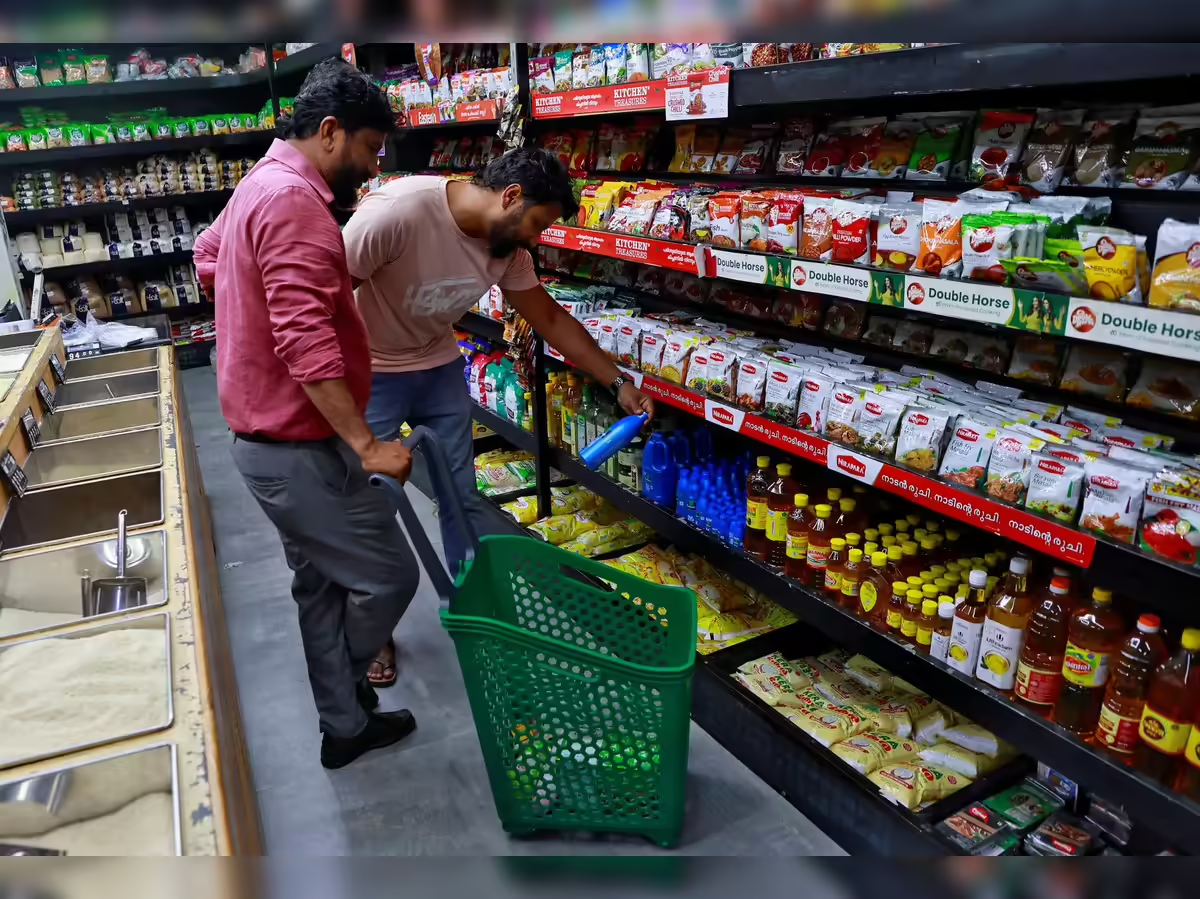
Local businesses, including kirana stores, street vendors, and small service providers, have widely accepted UPI, creating a strong ecosystem at the grassroots level.
Impact on Financial Inclusion and Rural Economy
The rise in Tier 3 India UPI usage is directly linked to financial inclusion. Digital payments are bringing previously unbanked or underbanked populations into the formal financial system.
Government benefit transfers, subsidies, and welfare payments are increasingly routed through bank accounts linked to UPI. This ensures transparency and reduces leakages.
For small businesses, digital payments improve cash flow visibility and enable access to credit. Transaction data can be used to assess creditworthiness, opening doors to formal lending.
This shift is gradually formalizing the rural economy and increasing participation in digital financial services.
Role of Fintech and Banks in Tier 3 Expansion
Fintech companies and banks have actively targeted Tier 3 markets as the next growth frontier. Payment apps have introduced vernacular language support, voice based features, and simplified user interfaces to cater to diverse user groups.
Banks are collaborating with fintech firms to expand reach without heavy investment in physical branches. Initiatives like Digital Banking Units and agent networks complement UPI adoption.
Marketing strategies have also evolved. Instead of urban focused campaigns, companies are investing in regional outreach and on ground education programs to build awareness and trust.
Challenges in Sustaining Growth in Smaller Markets
Despite strong growth, there are challenges in sustaining UPI adoption in Tier 3 regions. Digital literacy remains uneven, and users may be vulnerable to fraud or scams.
Infrastructure issues such as inconsistent internet connectivity and power supply can affect transaction reliability in certain areas.
Another concern is monetisation. With zero MDR on UPI transactions, banks and fintech companies face revenue constraints, which could impact long term investment in these markets.
Addressing these challenges will be critical to maintaining momentum and ensuring sustainable growth.
What This Means for India’s Digital Payments Future
The increasing contribution of Tier 3 India UPI usage signals a shift in the center of gravity for digital payments. Growth is no longer driven primarily by metro cities but by smaller towns and rural regions.
This trend has strategic implications. Companies that succeed in these markets will need to focus on simplicity, trust, and local relevance rather than advanced features alone.
For policymakers, the focus will be on strengthening infrastructure, enhancing security, and ensuring that digital adoption translates into meaningful economic benefits.
As UPI continues to scale, Tier 3 India will remain a key driver of volume growth and ecosystem expansion.
Takeaways
Tier 3 regions now contribute a significant share of UPI transactions, driving overall growth
Low cost access, ease of use, and strong local networks are key adoption drivers
Digital payments are improving financial inclusion and formalizing the rural economy
Challenges around literacy, infrastructure, and monetisation need to be addressed
FAQs
What is driving UPI growth in Tier 3 India?
Affordable smartphones, free transactions, and increasing trust among users are key factors.
How does UPI help small businesses in rural areas?
It improves cash flow visibility and enables access to formal credit through transaction data.
Are there risks associated with UPI adoption in smaller towns?
Yes, including digital fraud and lack of awareness, which require continuous education and safeguards.
Will Tier 3 India continue to drive digital payments growth?
Yes, as adoption deepens and infrastructure improves, these regions will remain central to growth.










Leave a comment