

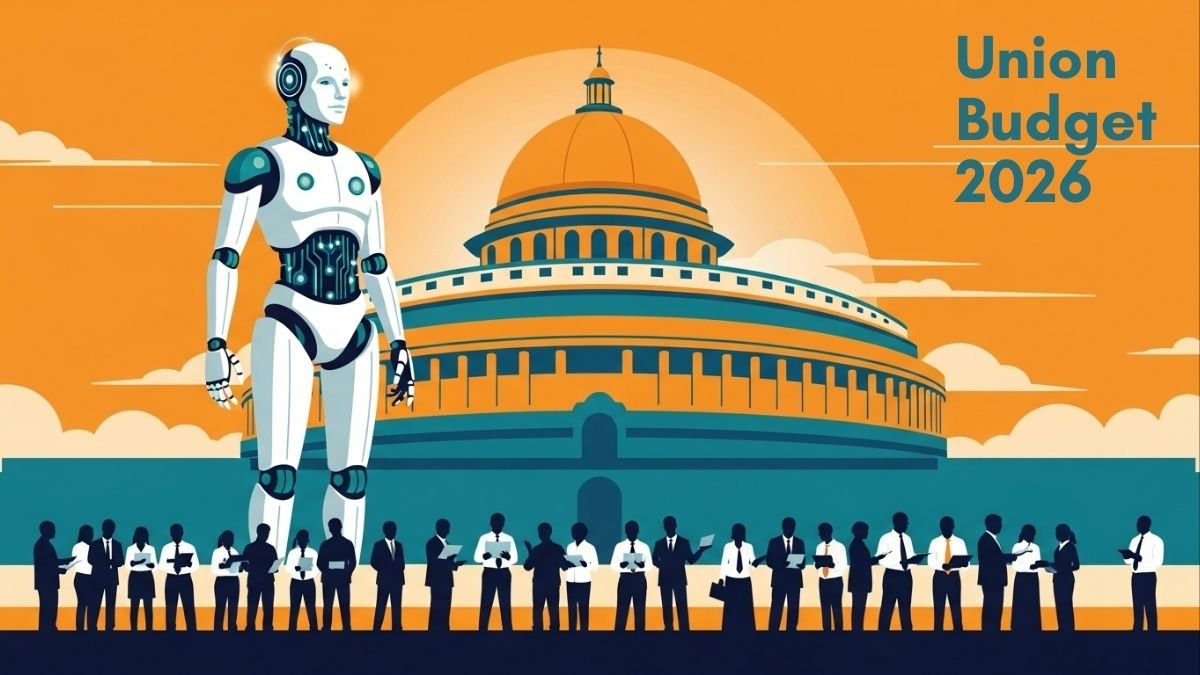
The Union Budget 2026 is being closely watched for what it signals on artificial intelligence and startup support. For Indian SMEs, especially outside metro cities, AI funding priorities and startup allocations will shape access to technology, credit, skilling and market opportunities over the next few years.
Budget intent and policy context
Union Budget 2026 is not just a fiscal exercise. It is a policy signal. Over the last few budgets, the government has steadily positioned artificial intelligence, digital public infrastructure and startup enablement as growth multipliers. Budget 2026 continues this trajectory, focusing on productivity, formalisation and global competitiveness rather than short term stimulus.
For SMEs, the intent is clear. AI is being treated as an enabling layer across sectors such as manufacturing, logistics, agriculture, healthcare and financial services. Startup allocations are increasingly being aligned with solving operational problems faced by small and mid sized businesses rather than funding consumer facing experimentation.
AI allocations and what they really mean for SMEs
AI allocations in Union Budget 2026 are structured around capacity building rather than direct subsidies. The focus is on expanding national AI infrastructure, datasets, compute access and applied research. For SMEs, this matters more than headline funding numbers.
Access to shared AI infrastructure reduces entry barriers for smaller firms that cannot afford high compute costs. Sector specific AI use cases in areas like predictive maintenance, demand forecasting, credit scoring and supply chain optimisation are being prioritised through public platforms and pilot programs.
The emphasis on AI skilling through universities, ITIs and digital learning platforms directly impacts SME hiring. Instead of competing with large tech firms for elite talent, SMEs can tap into a broader pool of applied AI professionals trained for operational roles.
Secondary keywords such as AI infrastructure funding and applied artificial intelligence become relevant here because the budget focus is less about building new labs and more about making AI usable at scale.
Startup allocations and the shift towards SME relevance
Startup allocations in Union Budget 2026 show a clear directional shift. Rather than expanding blanket incentives, the government is tightening focus on startups that integrate with MSME supply chains, manufacturing clusters and local service ecosystems.
Funds routed through Startup India, SIDBI backed vehicles and state level innovation missions are increasingly outcome driven. Startups working in enterprise SaaS, fintech for SMEs, logistics tech, agritech and industrial IoT are better positioned to benefit.
For SMEs, this changes the nature of startup engagement. Instead of being end consumers of discounted tech, SMEs are becoming co creators, pilot partners and early adopters. This improves solution relevance and reduces implementation risk.
Secondary keywords like startup funding policy and MSME startup collaboration fit naturally in this context as the budget aligns incentives on both sides.
Credit, compliance and digital public infrastructure
One of the most practical impacts of Budget 2026 for SMEs comes through digital public infrastructure. Continued support for platforms such as GSTN, Account Aggregator, ONDC and UPI creates indirect AI leverage for small businesses.
AI driven credit assessment using consent based financial data improves loan access for SMEs with limited collateral. Automated compliance tools reduce administrative overhead. Digital marketplaces help regional manufacturers and traders access national demand without heavy marketing spends.
While these are not labelled as AI allocations, they form the backbone of AI adoption for SMEs. The budget reinforces this ecosystem by funding upgrades, cybersecurity and interoperability.
Tier 2 and Tier 3 impact dynamics
For Tier 2 and Tier 3 SMEs, the relevance of Budget 2026 lies in decentralisation. AI centres of excellence, startup incubators and skilling hubs are being encouraged beyond metro cities. State government alignment with central schemes plays a critical role here.
Manufacturing clusters, agro processing zones and logistics corridors in smaller cities benefit from AI enabled efficiency gains. Local startups addressing vernacular workflows, offline to online transitions and regional supply chains are better positioned to access funding support.
This reduces the traditional metro bias in both startup capital and technology adoption, which is critical for inclusive SME growth.
Risks and realistic expectations for SMEs
Despite positive signals, SMEs should maintain realistic expectations. Budget allocations do not translate into immediate cash support. Adoption requires internal readiness, process digitisation and management buy in.
AI tools without quality data or clear use cases can add complexity rather than value. SMEs that treat AI as a productivity tool rather than a branding exercise are more likely to see returns.
Startup partnerships also require due diligence. Not all funded startups are operationally mature. SMEs need to prioritise reliability, integration support and long term viability.
Strategic takeaway for SME owners
Union Budget 2026 reinforces a long term structural shift. AI and startups are being positioned as productivity enablers for the real economy. SMEs that align early with this direction gain a compounding advantage in efficiency, compliance and competitiveness.
The budget is less about handouts and more about ecosystem readiness. SMEs that invest in digital foundations today are the ones that will benefit most from AI led policy support tomorrow.
Takeaways
- AI allocations focus on infrastructure, skilling and applied use cases rather than direct subsidies
- Startup funding is increasingly aligned with solving SME and MSME operational problems
- Digital public infrastructure acts as the real AI enabler for small businesses
- Tier 2 and Tier 3 SMEs gain from decentralised AI and startup ecosystems
FAQs
Is Union Budget 2026 directly giving AI grants to SMEs?
No. The budget focuses on shared infrastructure, platforms and skilling that SMEs can leverage indirectly rather than offering direct AI grants.
How can SMEs practically benefit from startup allocations?
By partnering with startups solving enterprise problems such as accounting, logistics, compliance, credit and supply chain management.
Does this budget help small manufacturing businesses?
Yes. AI driven manufacturing, quality control, predictive maintenance and supply chain optimisation are priority areas under current policy direction.
Should SMEs invest in AI immediately after the budget?
SMEs should first strengthen digital processes and data quality, then adopt targeted AI tools aligned with clear business outcomes.









Leave a comment