

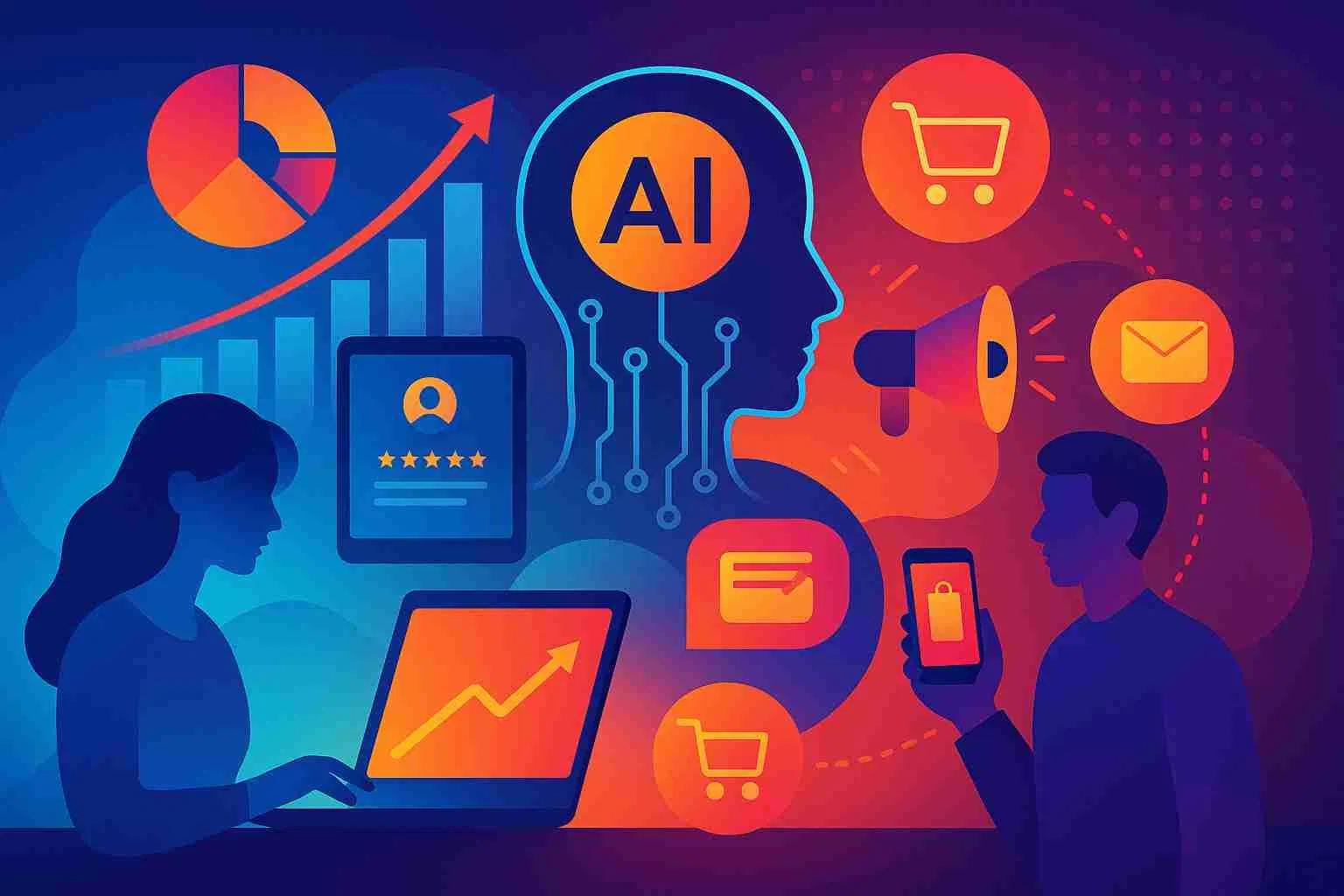
As AI driven recommendation systems get smarter, Indian advertisers are likely to shift budgets in response to more precise targeting and evolving consumer behaviour. The topic blends time sensitive signals with global retail AI trends, making a news analysis approach essential. For brands targeting Tier 2 cities, this shift represents both an opportunity and a strategic challenge.
AI led personalisation is moving beyond metro audiences and becoming a core layer of discovery across e commerce, entertainment, payments and local retail platforms.
Why Smarter Recommendation Engines Are Changing Advertising Spend
Recommendation systems have become central to consumer decision making. Whether users browse shopping apps, watch short videos, stream movies or explore local services, AI models decide what they see first. Recent advances in ranking algorithms, behavioural prediction and contextual modelling allow platforms to deliver highly personalised content with far greater accuracy.
As a result, advertisers no longer rely primarily on broad demographic targeting. Instead, they direct budgets toward high intent micro segments identified by AI. This improves conversion rates and reduces wastage, prompting brands to reallocate spending toward platforms where personalisation quality is strongest.
The global retail market has already seen this transition. AI driven recommendation engines deliver a measurable uplift in user engagement and sales across categories. India, with its high digital penetration and fast growing Tier 2 consumer base, is entering the same phase at scale.
How AI Is Transforming Consumer Discovery In Tier Two Markets
Tier 2 users now form a significant share of India’s digital consumption. These audiences rely heavily on recommendations because they often prefer assisted discovery over manual search. Local language content, visual cues and simplified UIs amplify the impact of algorithmic suggestions.
AI models trained on regional behaviour identify patterns such as festival linked purchases, seasonal buying cycles, family driven spending and price sensitivity. This allows platforms to present highly relevant products and services without requiring the user to articulate complex preferences.
For advertisers, this means that reliance on generic campaigns will decline. Instead, they will optimise creative and messaging for specific behavioural clusters. Example: A footwear brand targeting Nagpur may run different creatives for college youth, service employees and small business owners based on AI predicted interest rather than broad geography alone.
Why Brands Will Reassess Their Media Mix In 2026
As recommendation systems grow more effective, performance based channels will attract greater budget allocation. Platforms that offer strong signal quality, precise attribution and regional penetration can command higher advertiser spending. This includes e commerce apps, short video platforms, OTT channels, fintech apps and travel aggregators.
Traditional digital channels like static display or mass targeting could experience reduced share unless they integrate AI driven personalisation. The rise of programmatic buying also strengthens this trend. Instead of broad impressions, advertisers will pay for algorithmically enriched placements with higher purchase likelihood.
Tier 2 brands, local retailers and regional D2C players will rely more heavily on these tools because they operate with tighter budgets and need measurable ROI. AI driven channels help them run targeted campaigns without excessive experimentation costs.
How Brands Should Prepare For AI First Advertising
Brands must build a data ready mindset. AI optimisation works best when advertisers provide clear signals such as product attributes, audience segments, purchase cycles and creative variations. Poorly structured product catalogues or vague targeting instructions reduce model effectiveness.
Creative strategy must evolve. AI systems now test multiple creative formats simultaneously. Brands should supply varied visuals, short form videos and regional language versions to maximise algorithmic matching. Static one size fits all creative will underperform.
Brands targeting Tier 2 audiences should also invest in vernacular assets. Recommendation engines reward content that increases engagement, and regional language creatives consistently outperform generic messaging in non metro markets.
Another preparation lever is continuous experimentation. AI driven platforms operate in dynamic feedback loops. Brands must run small experiments, evaluate uplift, iterate quickly and feed learnings back into the system.
The Rising Importance Of Retail Media And First Party Data
Retail media networks are emerging as powerful advertising channels globally. E commerce marketplaces monetise their first party shopper data through sponsored listings, in app banners and personalised deals. Indian platforms are following this playbook and expanding retail media inventory.
As cookies decline and privacy regulations tighten, first party data becomes central to marketing optimisation. Brands operating in Tier 2 markets must build deeper understanding of their customer base through CRM, loyalty programmes and repeat purchase tracking.
Those who invest early in first party data can collaborate better with AI driven platforms and improve recommendation alignment.
Potential Risks As AI Influences Advertising At Scale
Greater dependence on black box algorithms creates transparency challenges. Brands may struggle to understand why certain segments perform better or why budgets shift automatically. This requires stronger analytics literacy and internal oversight.
Another risk is homogenisation. If all brands optimise toward the same high intent clusters, competition intensifies and costs rise. Brands must maintain creative differentiation to avoid blending into algorithmic recommendations.
Finally, privacy concerns must be managed carefully. As models become more predictive, platforms must enforce responsible data governance, especially when dealing with sensitive behavioural patterns in non metro markets.
Takeaways
AI powered recommendation engines are transforming how Indian advertisers allocate budgets across digital channels.
Tier 2 discovery patterns now influence national marketing strategies as personalisation becomes mainstream.
Brands must optimise creatives, data inputs and regional language assets to align with AI driven targeting.
Retail media, first party data and experimentation frameworks will define the next phase of AI first advertising.
FAQs
Why are recommendation engines influencing ad budgets so strongly
They improve conversion rates by targeting high intent micro segments, making advertiser spending more efficient and measurable.
How should brands adapt for Tier 2 audiences
They should invest in regional language creatives, structured product data, varied content formats and continuous A B testing.
Will traditional digital advertising decline
It may lose share unless it integrates AI driven personalisation. Platforms with strong first party data will gain dominance.
What risks come with AI driven advertising
Lack of transparency, increased competition for high intent users and potential privacy concerns require careful oversight.












Leave a comment