

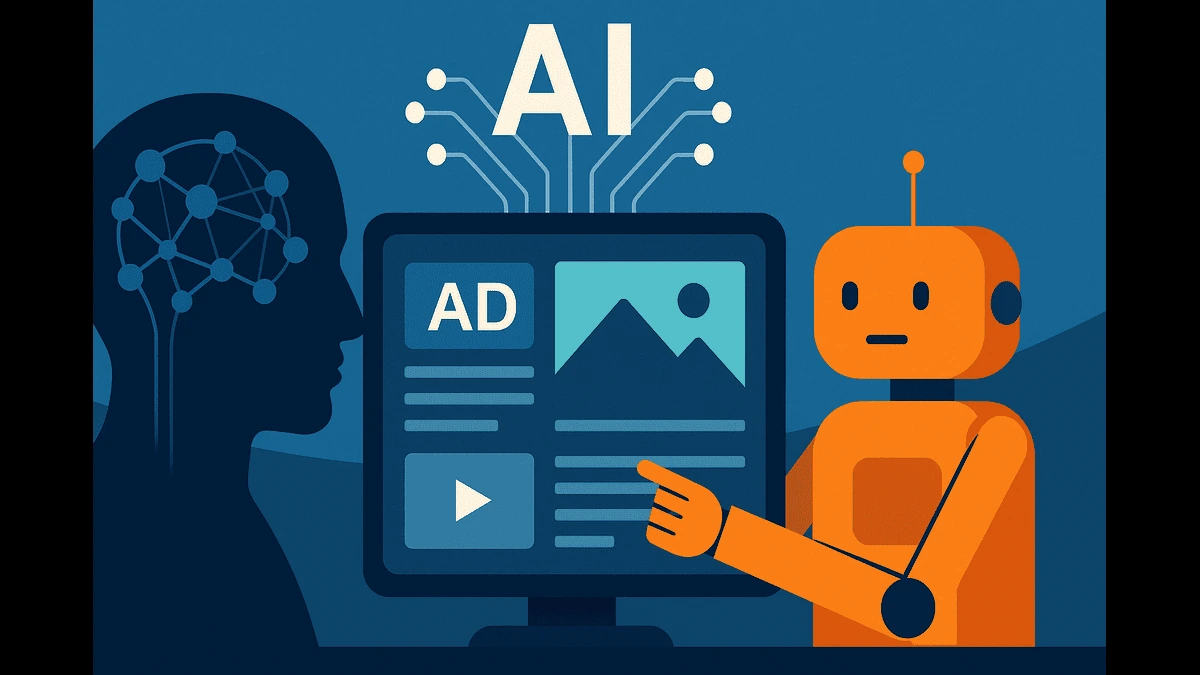
AI disruption in advertising is raising urgent questions about whether the backbone of traditional agencies is beginning to crack. This topic is evergreen with strong current relevance, as AI driven automation, content generation and performance optimisation tools rapidly alter workflows that have defined agency operations for decades. The shift challenges legacy structures built on manual creative development, layered approval processes and manpower heavy execution.
As brands adopt AI tools for speed, cost efficiency and precision targeting, traditional agencies must recalibrate their value proposition. The survival of large legacy agencies now depends on how quickly they integrate technology and redesign talent structures.
Why AI is challenging long standing agency operating models
Traditional agencies grew around multi step creative cycles, creative director led teams, account management layers and production setups. These structures worked in an era where campaigns were slower, mediums were limited and creativity was largely human generated. AI has disrupted this foundation by making content creation faster, real time and less reliant on large teams.
Generative AI tools can produce copy, layouts, campaign concepts and adaptations within minutes. Media planning algorithms optimise ad spending automatically. Performance tools track and adjust campaigns without human intervention. These capabilities reduce the need for large design, copy and media execution teams.
Clients are also experimenting with AI internally, which diminishes their dependency on agency craft for everyday content. Agencies that do not adapt risk losing relevance in the very functions where they once held exclusive expertise.
How AI shifts the balance of power between clients and agencies
AI adoption by brands increases their control over campaign timelines and brand voice. Clients are building in house teams equipped with AI content studios, real time analytics dashboards and automated campaign tools. This reduces turnaround time and lowers reliance on agencies for high volume creative tasks.
Agencies must therefore justify their fees with strategic thinking, insight driven creativity and cross channel expertise. Routine activities that were once billable are no longer differentiators. AI has accelerated procurement pressure, with clients demanding faster delivery and lower costs.
In sectors like retail, BFSI, D2C and entertainment, AI tools are already generating social media content at scale. Performance teams rely more on AI powered dashboards than manual optimisation. As clients become more self sufficient, agencies must move up the value chain or risk losing accounts.
Where AI strengthens agency capabilities rather than replacing them
Despite the disruption, AI does not eliminate the need for agencies. Instead, it shifts the focus to high value tasks. Agencies that integrate AI can enhance their strategic delivery, from data driven insights to hyper personalised campaigns.
Creative teams can use AI for mood boards, draft scripts, layout options and audience modelling, speeding up conceptualisation. Strategy teams can analyse customer behaviour across micro segments and design targeted communication that AI alone cannot conceptualise without guidance.
AI helps agencies produce more variations of ads for A/B testing, tailor regional versions and adapt creatives for different platforms. This enables agencies to deliver precision at scale, which is critical for multi market brands and fast growing consumer companies.
Why the backbone of traditional agencies is under risk
The core risk lies in workforce structure. Traditional agencies rely on large pools of designers, junior copywriters, artworkers, media planners and account executives. AI significantly reduces the need for these roles. This threatens the operating model built around layered hierarchies and billing based on man hours.
Additionally, agencies with slow approval cycles and centralised decision making struggle to match the speed of AI powered content systems. Campaigns today require rapid iteration, and legacy agencies often cannot respond at this pace due to structural constraints.
Financial pressure compounds the issue. As clients demand cost cuts, agencies with large overheads find it difficult to compete with leaner, AI native firms. This pushes traditional agencies toward consolidation, layoffs and mergers, as already seen in recent global restructures.
The rise of AI native agencies and regional disruptors
AI native agencies, often smaller and more flexible, operate with fewer people and high automation. Their cost advantage allows them to compete aggressively for both local and national accounts. Many startups offer AI powered creative, influencer management, media buying and brand identity packages at a fraction of the cost of legacy agencies.
Regional agencies are also adopting AI quickly for vernacular content, micro campaigns and social commerce creatives. They can produce 20 versions of a localised ad faster than traditional agencies can produce one. This agility positions them strongly in Tier 2 and Tier 3 markets where cultural nuance and speed matter more than long form brand films.
Traditional agencies that do not embrace these tools risk being outperformed by smaller, more adaptable competitors.
What traditional agencies must do to stay relevant
Legacy agencies need to redesign roles, reduce dependency on manual tasks and retrain teams. Creative directors must evolve into AI orchestrators who guide tools rather than execute tasks manually. Strategy teams must integrate data fluency. Production units must adopt automated workflows.
Agencies also need to rebuild pricing models that reflect strategic value rather than headcount. Hybrid structures combining human insight with AI generated output will become standard.
The agencies that survive will be those that shift from craft execution to intelligence, insight and creative direction.
Takeaways
AI is disrupting traditional agency structures built on manpower and layered workflows.
Clients are becoming more self sufficient with in house AI tools and content studios.
Agencies can stay relevant by shifting to strategy, insight and AI guided creativity.
Lean, AI native agencies and regional players are gaining competitive advantage.
FAQs
Will AI completely replace advertising agencies
No. AI reduces manual tasks but agencies remain essential for strategy, creative direction and integrated brand thinking.
Which roles are most at risk in traditional agencies
Roles dependent on repetitive tasks, such as artwork adaptation, basic copywriting and media optimisation, face the highest automation pressure.
Can small agencies benefit more from AI than large networks
Yes. Small agencies can adopt AI faster, reduce costs quickly and compete aggressively with lean structures.
How can traditional agencies adapt to AI disruption
By redesigning workflows, retraining teams, integrating AI tools across departments and shifting toward high value strategic services.











Leave a comment