


IIT led funds are accelerating the journey from lab to market for deep tech startups outside big tech hubs as academic institutions mobilise capital, mentorship and research infrastructure. These funds expand opportunities for founders building advanced technologies in regions that previously lacked strong venture support.
Academic capital and its role in deep tech development
Academic capital plays a crucial role in deep tech development because many breakthrough ideas originate in engineering and science laboratories. Unlike consumer tech, deep tech ventures require long development cycles, expensive prototyping and specialised testing facilities. Startups emerging from academic environments often face challenges raising early capital due to long revenue timelines and high technical risk.
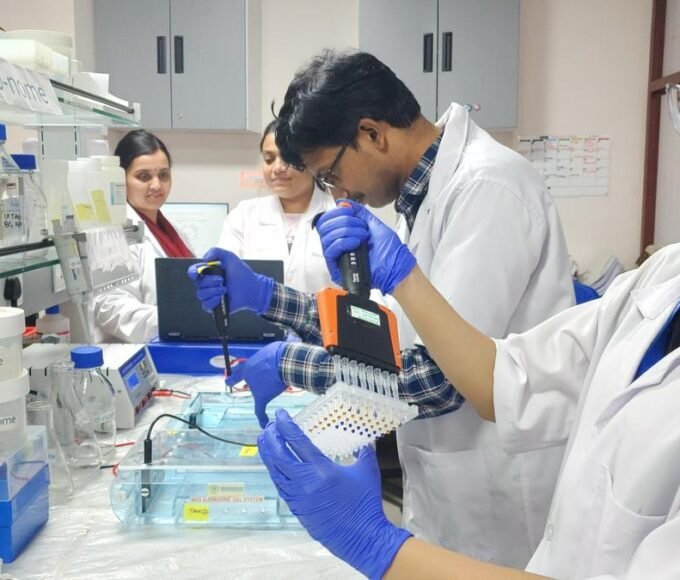
IIT led funds bridge this financing gap by offering structured seed and early stage investment rooted in research strength. These funds not only provide capital but also integrate access to laboratories, fabrication tools, expert faculty and cross departmental collaboration. This combination helps startups validate scientific hypotheses, refine prototypes and strengthen intellectual property before entering commercial markets.
The model benefits regions outside major tech hubs by creating local innovation anchors. Founders no longer need to relocate to cities like Bengaluru or Hyderabad to secure initial funding or research access. This reduces operational costs and retains talent within emerging ecosystems.
Regional advantages and sector opportunities for non metro deep tech startups
Regional advantages for non metro deep tech startups are becoming more prominent as IIT led funds begin to engage founders across smaller cities. Local markets offer cost efficient environments where startups can experiment without the high overheads associated with metro ecosystems. Access to specialised talent from nearby technical institutes also strengthens early development teams.
Sector opportunities in these regions include advanced materials, robotics, environmental engineering, agricultural technology and industrial automation. These focus areas reflect real world challenges in manufacturing clusters, farming belts and industrial corridors where deep tech solutions can have immediate impact. A robotics startup near an industrial hub, for instance, can co develop automation systems with local factories and achieve faster product iteration cycles.
IIT led initiatives help startups commercialise these solutions by offering industry linkages and partnership networks. When a laboratory innovation aligns with market needs, mentors help founders shape viable business models and navigate regulatory requirements. This is crucial for sectors such as medical devices or energy systems where compliance steps are extensive.
Strengthening intellectual property and research commercialisation pathways
Intellectual property protection is critical for deep tech startups because technological differentiation often hinges on patents and proprietary algorithms. IIT led funds typically prioritise IP creation by guiding founders through patent drafting, technology transfer procedures and licensing frameworks. Academic institutions offer strong legal and research offices that support this process.
Commercialisation pathways become clearer when IP is properly structured. Startups can license technologies, build hardware products or develop enterprise solutions based on protected research. Institutional backing increases investor confidence during future funding rounds because IP driven businesses offer defensible moats.
The presence of dedicated technology transfer offices further enhances commercial readiness. These teams help founders engage with government bodies, industrial partners and pilot deployment opportunities. For startups operating in hardware intensive sectors, pilot visibility is essential to secure manufacturing partners and validate product reliability.
Building national deep tech capacity through decentralised innovation
Decentralised innovation strengthens national deep tech capacity by distributing talent, capital and institutional resources across regions. IIT led funds enable this by supporting founders outside traditional startup clusters. As more startups emerge from northern, eastern and central India, the ecosystem becomes more geographically diverse and less dependent on metropolitan hubs.
This diversification reduces concentration risk and promotes balanced economic development. Deep tech ventures often create specialised jobs in engineering, fabrication, data science and industrial design. When these companies scale outside big cities, they stimulate local supply chains and create skilled employment opportunities in regions that historically relied on traditional industries.
National competitiveness in strategic sectors such as semiconductors, space technology, renewable energy and materials science improves as regional institutions participate in applied research. The combination of academic infrastructure and venture capital creates a strong platform for long term innovation.
Why founders benefit from blended academic and market oriented support
Founders benefit significantly from the blended academic and market oriented support that IIT led funds provide. Academic mentors help refine technological accuracy while investor networks push startups toward commercial viability. This balanced approach prevents over engineering and accelerates product market fit.
Early exposure to industry partners allows founders to incorporate customer feedback during prototype development. This reduces redesign costs and strengthens eventual market adoption. Academic incubators also offer structured compliance guidance, helping startups manage certifications, data standards and testing protocols.
For first time founders, the ecosystem offers training across financial planning, hiring, IP strategy and governance. These capabilities are essential as deep tech ventures require rigorous operational discipline to navigate long gestation periods.
Takeaways
IIT led funds bridge the financing gap for deep tech research startups
Regional founders gain support without relocating to major tech hubs
Institutional IP and commercialisation frameworks strengthen market readiness
Decentralised innovation enhances national deep tech competitiveness
FAQs
Why are IIT led funds important for deep tech founders
They provide early capital, research access and mentorship that help founders validate and commercialise complex technologies.
Which sectors benefit most from these initiatives
Robotics, advanced materials, medical devices, energy systems, climate engineering and industrial automation see strong support.
Do founders outside major tech hubs gain an advantage
Yes, they receive funding and infrastructure access without the high operational costs of metro based ecosystems.
How do these funds improve commercialisation outcomes
They integrate IP support, industry partnerships and structured incubation, enabling startups to reach pilot and market stages faster.











Leave a comment