

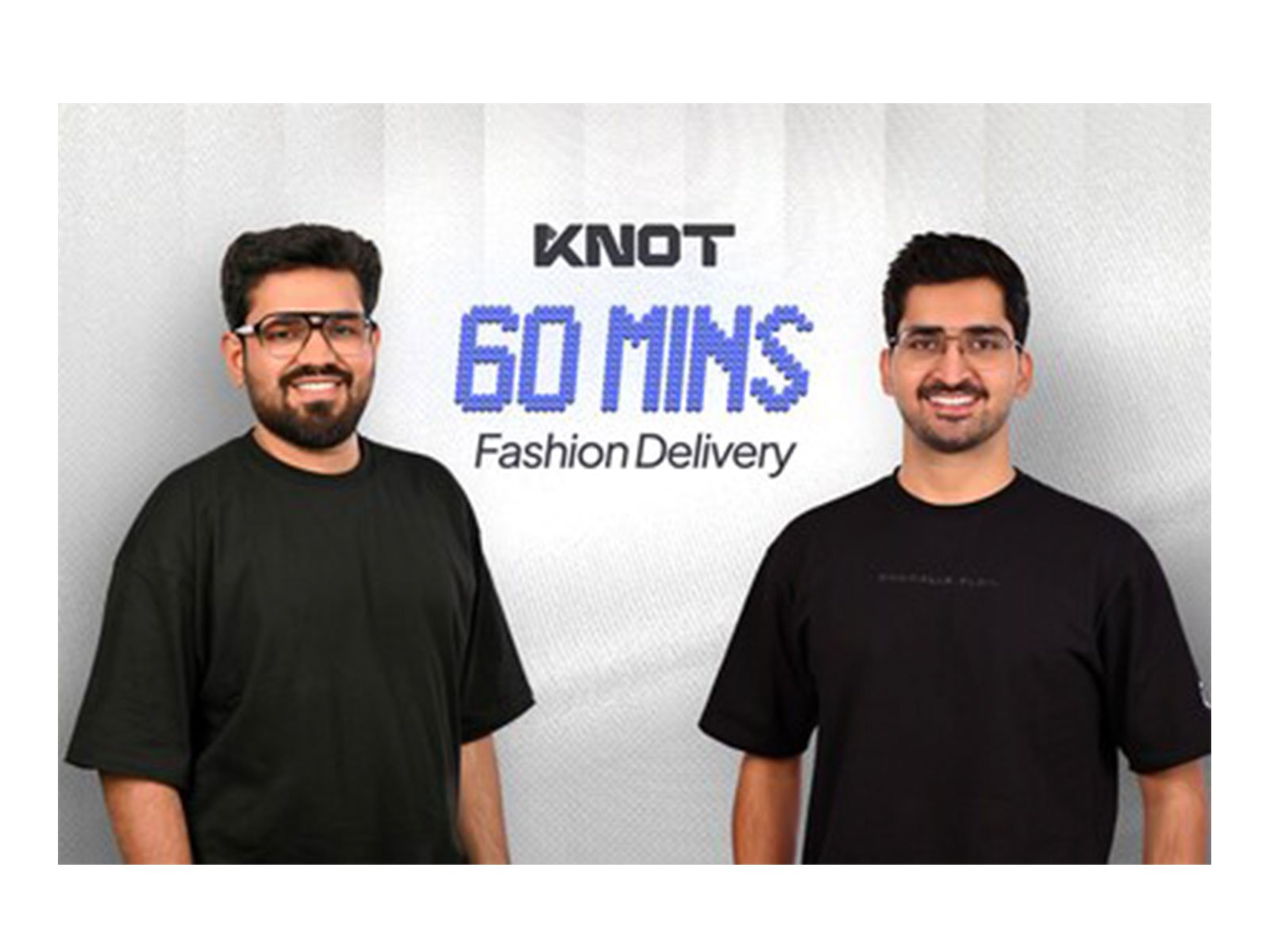
KNOT’s 5 million dollar raise in 60 minute fashion delivery highlights renewed investor confidence in on demand logistics, and the main keyword appears naturally in the first paragraph. The funding arrives at a time when rapid commerce models are becoming more selective, yet strong operational execution and disciplined growth continue to attract capital.
This topic is time sensitive and tied to a recent funding announcement, so the tone follows a news reporting style. While many quick delivery markets have experienced consolidation, fashion delivery remains a differentiated category due to higher basket sizes, stronger margins and predictable demand peaks. KNOT’s model combines curated inventory with hyperlocal logistics, reducing the limitations that affected earlier rapid commerce players.
Why on demand logistics stays relevant and secondary keywords like delivery efficiency
On demand logistics continues to attract investors because it offers measurable value in customer convenience and predictable monetisation patterns. Consumers increasingly expect faster fulfilment, especially in fashion where purchase intent often declines within hours.
Delivery efficiency plays a critical role in both customer satisfaction and margin protection. KNOT operates with controlled assortment and city specific hubs, reducing fulfilment distance and enabling 60 minute drop offs. Unlike grocery rapid delivery, fashion does not require cold chain management, lowering operating complexity.
Investors see this combination as a more sustainable model with better unit economics as long as inventory control remains tight.
The founders playbook and secondary keywords like operational discipline
KNOT’s founders prioritise operational discipline over aggressive expansion. Their approach focuses on unit level profitability, controlled city launches and a deep understanding of fashion specific logistics.
The founders playbook includes three key strategies. The first is limiting inventory breadth while maintaining high depth in trending categories. This ensures better forecasting and fewer unsold items. The second is building logistics capabilities that match fashion demand cycles rather than copying grocery delivery frameworks. The third is leveraging data to anticipate peak hours, enabling smarter workforce allocation and delivery routing.
This focus on fundamentals appeals to investors who now prefer execution heavy models instead of marketing led growth.
Market behaviour and secondary keywords like consumer demand
Consumer demand for rapid fashion delivery has increased as buying behaviour shifts toward occasion driven purchases. Customers frequently seek last minute outfits for work events, travel plans and social gatherings. The willingness to pay for convenience is higher in fashion compared to other categories, improving revenue potential.
KNOT’s model targets urban shoppers who want curated options quickly. The company avoids excessive catalogue expansion and focuses on apparel and accessories with strong repeat purchase patterns. Consumer demand in these segments aligns closely with efficiency driven logistics because speed enhances category relevance.
This behavioural consistency allows KNOT to project demand cycles more accurately than businesses dependent on volatile consumption trends.
Investor sentiment and secondary keywords like sustainable scaling
Despite funding moderation across the startup ecosystem, investor sentiment toward operationally sound on demand logistics remains positive. Sustainable scaling is now a priority, and KNOT’s approach matches this expectation.
Investors are focusing on companies that deploy capital toward infrastructure, technology and process improvements rather than short term customer acquisition. KNOT’s commitment to refining warehouse layouts, improving routing algorithms and building delivery partner stability positions it well for expansion.
The company’s growth strategy emphasises consolidation in existing markets before entering new cities, reducing capital waste and improving long term return potential.
Category differentiation and secondary keywords like fashion logistics
The fashion logistics category differs significantly from grocery or pharmacy delivery. Fashion products have higher average order values and lower perishability risk. This allows operators to design cost efficient inventory systems and maintain healthier margins.
KNOT’s approach integrates city wise warehousing with curated fashion brands, ensuring that deliveries stay within short travel radiuses. This reduces fuel costs and enables better service level agreements.
Technological integration also improves accuracy. By mapping inventory at the SKU level and tracking local demand spikes, KNOT can maintain real time visibility that supports fast movement of high demand products.
Implications for the broader on demand ecosystem and secondary keywords like last mile innovation
The success of KNOT’s funding round shows that the on demand ecosystem is entering a stage of selective maturity. Companies with strong last mile innovation and financial discipline can still secure growth capital even as the broader market undergoes correction.
Startups that focus on narrowing their value proposition and mastering category specific logistics are better positioned for long term viability. Rapid commerce is no longer a scale at all costs market. Instead, investors want business models backed by clear operational strengths and defensible margins.
KNOT’s trajectory reinforces the idea that on demand logistics still has room to grow when supported by disciplined execution and a differentiated sector approach.
Takeaways
KNOT raised 5 million dollars to expand its 60 minute fashion delivery operations
On demand logistics remains investable due to rising consumer expectations and strong margins
The founders playbook relies on controlled inventory, operational discipline and demand forecasting
Investors favour selective scaling and logistics innovation over rapid expansion
FAQs
Why does fashion delivery work better than grocery for rapid logistics
Fashion has higher order values, predictable demand peaks and no perishability risk, making delivery operations more cost efficient.
What makes KNOT attractive to investors
Strong operational discipline, curated inventory strategies and reliable unit economics make the company more resilient than earlier rapid delivery models.
How does KNOT manage 60 minute deliveries
It operates city specific hubs, optimises routing through real time data and maintains focused inventory depth to reduce fulfilment distances.
Will on demand logistics continue to attract investment
Yes, investors remain interested in models that combine disciplined scaling with category specific efficiencies and stable customer demand.











Leave a comment