

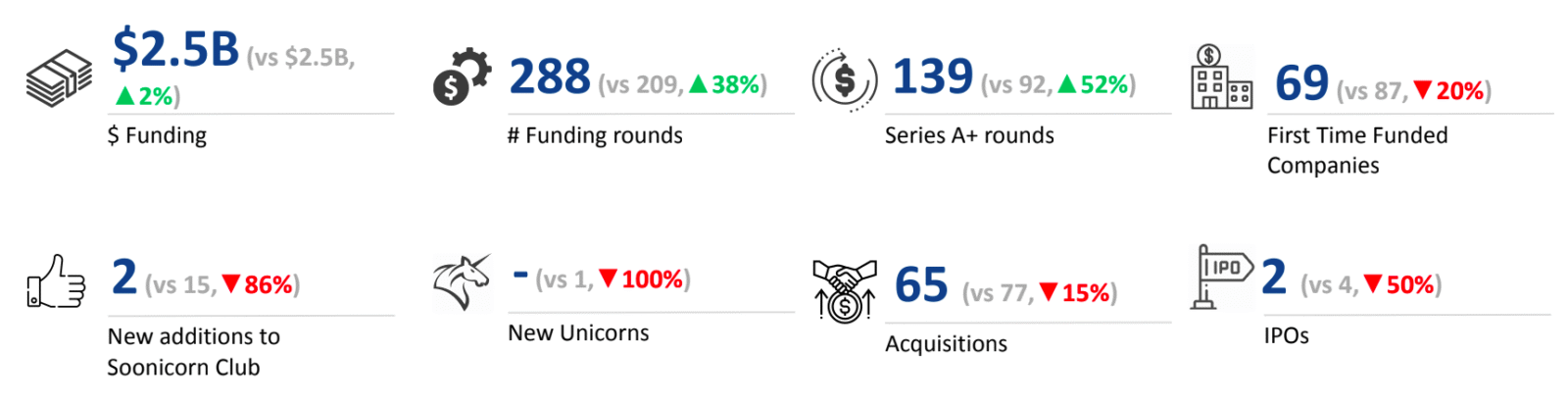
Karnataka tech ecosystem reports $3.8B raised in 2025, reinforcing its position as India’s leading startup funding hub. Strong venture capital inflows across enterprise tech, fintech, deep tech and consumer platforms underline Bengaluru’s continued dominance in attracting domestic and global investors.
Karnataka tech ecosystem reports $3.8B raised in 2025, marking a significant milestone in India’s startup funding landscape. The capital inflow highlights sustained investor confidence in the state’s innovation-driven economy. With Bengaluru at its core, Karnataka has consolidated its reputation as the primary destination for venture capital, private equity and growth-stage investments.
The funding momentum reflects structural advantages such as access to talent, established startup infrastructure and proximity to global technology companies. Even in a more selective funding environment, Karnataka continues to lead in deal volume and value.
Bengaluru’s Dominance in Venture Capital Funding
Bengaluru remains central to Karnataka’s technology growth story. Often described as India’s Silicon Valley, the city hosts a dense cluster of startups across fintech, software as a service, artificial intelligence and healthtech.
Secondary keywords such as venture capital funding India and startup investment trends are closely linked to Karnataka’s performance. Investors prefer ecosystems with mature support networks including incubators, accelerators and experienced founders. Bengaluru offers all three.
Large domestic funds and international venture capital firms maintain offices in the city, enabling faster deal flow and local due diligence. Proximity to portfolio companies also strengthens investor engagement. This concentration of capital and talent creates a reinforcing cycle where successful exits generate fresh angel investment and mentorship.
Sectoral Distribution of the $3.8B Funding
The $3.8B raised in 2025 reflects diversified sector participation. Enterprise technology and software as a service companies continue to attract global capital due to scalable business models and export potential.
Fintech startups also remain prominent, supported by India’s digital payments infrastructure and regulatory clarity. Deep tech ventures in semiconductor design, robotics and electric mobility have gained traction as policy incentives encourage manufacturing and research.
Consumer internet and e commerce platforms have secured selective funding, though investors are now prioritizing profitability and sustainable growth over aggressive expansion. Healthtech and edtech platforms have seen steady, though moderated, capital inflows compared to earlier peak years.
The diversified funding mix suggests maturity in Karnataka’s startup ecosystem rather than dependence on a single sector.
Policy Support and Infrastructure Strength
Karnataka’s policy environment has consistently favored innovation and entrepreneurship. State-level startup policies, combined with central government incentives for digital infrastructure and manufacturing, create a supportive regulatory backdrop.
Technology parks, research institutions and global capability centers operated by multinational corporations enhance the state’s innovation capacity. Collaboration between academia and industry also supports talent development in emerging technologies.
Infrastructure in Bengaluru, while facing urban challenges, still provides superior access to venture networks compared to most other Indian cities. Improved connectivity and expansion into suburban tech corridors have further broadened the ecosystem.
Tier two cities within Karnataka are gradually integrating into the technology supply chain, though Bengaluru remains the primary funding magnet.
Comparison with Other Indian Funding Hubs
While Maharashtra, Delhi NCR and Tamil Nadu host significant startup activity, Karnataka continues to command the highest share of venture capital inflows. Mumbai remains strong in fintech and financial services innovation. Delhi NCR leads in consumer brands and e commerce. Chennai has gained ground in SaaS and deep tech.
However, the scale of capital concentration in Karnataka sets it apart. The presence of multiple unicorns and late-stage companies contributes to higher deal sizes. Mature startups attract follow-on funding rounds, increasing aggregate investment value.
Investors also view Karnataka as a lower execution risk market due to experienced leadership teams and global exposure.
Challenges Amid Growth
Despite its funding leadership, Karnataka’s tech ecosystem faces challenges. Competition for talent drives up salary costs, particularly in artificial intelligence and software engineering roles. Urban infrastructure strain and rising operational expenses can affect early-stage startups.
Funding cycles remain sensitive to global macroeconomic trends. A tightening global liquidity environment can reduce late-stage funding availability. Startups must therefore focus on capital efficiency and clear revenue pathways.
Regulatory compliance and data protection requirements are evolving, particularly for fintech and AI-driven companies. Maintaining alignment with national and international regulations will be critical for sustained growth.
Outlook for 2026 and Beyond
The $3.8B raised in 2025 signals resilience rather than exuberance. Investors are deploying capital selectively, emphasizing unit economics and product differentiation. Karnataka’s ecosystem appears well positioned to adapt to this disciplined funding phase.
Deep tech, climate technology and enterprise software are likely to remain priority sectors. Global companies expanding operations in India may further strengthen the state’s innovation network.
As India aims to increase its share in global technology exports, Karnataka’s leadership role will be closely watched. Continued collaboration between policymakers, investors and entrepreneurs will determine whether the state can maintain its funding edge in a competitive national landscape.
Takeaways
Karnataka raised $3.8B in 2025, reinforcing its funding leadership
Bengaluru remains the primary driver of venture capital inflows
Funding spans enterprise tech, fintech, deep tech and consumer sectors
Sustained growth depends on talent availability and capital efficiency
FAQs
Q1. Why is Karnataka considered India’s funding hub?
Karnataka, led by Bengaluru, hosts a dense startup ecosystem with strong investor presence, experienced founders and access to global markets.
Q2. Which sectors attracted the most funding in 2025?
Enterprise technology, fintech and deep tech segments accounted for a significant share of total investment.
Q3. How does Karnataka compare with other startup states?
While Maharashtra and Delhi NCR are strong ecosystems, Karnataka leads in overall venture capital inflows and deal value.
Q4. What risks could impact future funding growth?
Global economic conditions, talent shortages and rising operational costs may influence funding momentum.












Leave a comment