


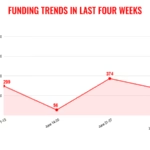
Early stage funding momentum has strengthened with more than 50 deals recorded in a recent uptick, signaling renewed investor confidence in seed and Series A startups. The surge highlights sector specific capital allocation and evolving strategies among venture funds.
Early stage funding momentum is building again, with over 50 deals marking a noticeable uptick in activity across seed and Series A rounds. This rise in deal count suggests that venture capital firms are regaining confidence in India’s startup pipeline despite a more disciplined investment environment. While ticket sizes remain measured, the breadth of participation reflects a healthy flow of innovation and capital.
The current funding landscape differs from earlier boom cycles. Investors are not chasing hyper growth narratives. Instead, they are focusing on defensible business models, scalable technology and realistic valuations. The increase in deal volume points to strong founder activity and improved investor comfort at early stages where risk is diversified across portfolios.
Sector Breakdown in Early Stage Deals
A closer look at the sector breakdown reveals concentrated interest in fintech, SaaS, climate tech and consumer brands. Fintech startups continue to attract seed capital due to expanding digital payments infrastructure and rising demand for credit inclusion. Products focused on small business lending, embedded finance and regulatory technology are gaining traction.
SaaS companies remain strong contenders in early stage funding rounds. Indian software startups serving global clients benefit from recurring revenue models and comparatively lower capital intensity. Enterprise automation, cybersecurity and data analytics platforms are particularly active segments.
Climate tech and clean energy solutions are also witnessing growing investor participation. Startups working on electric mobility components, battery technology and sustainable supply chains are drawing seed capital as policy incentives align with environmental goals.
Consumer brands targeting Tier 2 and Tier 3 markets have secured early stage backing as well. Investors are betting on differentiated products and strong distribution strategies that tap into rising aspirational spending in non metro regions.
Shift in Investor Strategy and Risk Appetite
The 50 plus deal uptick signals a strategic shift among venture capital firms. Rather than concentrating capital in fewer large rounds, funds are spreading risk across multiple early stage investments. This approach allows investors to capture upside in emerging themes without overexposure to a single high valuation company.
Angel networks and micro venture funds are playing a pivotal role in this cycle. Their smaller check sizes and faster decision making processes help bridge capital gaps for first time founders. Institutional venture funds often follow in subsequent rounds once product market fit is validated.
Risk appetite has become more calibrated. Investors are demanding clearer paths to revenue, disciplined cost structures and governance readiness from the outset. Founders who demonstrate early traction and transparent reporting are better positioned to secure capital.
Geographic Diversification of Startup Activity
Another notable feature of the early stage funding momentum is geographic diversification. While Bengaluru, Mumbai and Delhi remain major hubs, several deals are emerging from smaller cities. Founders based in Jaipur, Surat, Kochi and Coimbatore are gaining investor attention.
Lower operating costs and access to local talent pools make these regions attractive for early stage ventures. Digital infrastructure improvements enable startups to build and scale products without being physically located in traditional tech clusters.
Investors are increasingly comfortable backing remote first or distributed teams. This shift broadens the opportunity set and contributes to balanced regional development.
Impact on 2026 Startup Ecosystem Outlook
The rise in early stage deals has broader implications for the startup ecosystem in 2026. A strong seed pipeline today can translate into robust growth stage companies in the next three to five years. The current deal momentum indicates that innovation continues despite global funding moderation.
This trend may also improve capital efficiency. Startups raising smaller rounds with disciplined spending habits are less likely to face severe valuation corrections later. The focus on sustainable growth enhances long term stability within the ecosystem.
Private equity and growth investors are closely monitoring early stage activity to identify future scale up candidates. As early stage companies mature, those with consistent execution may attract larger institutional funding.
Challenges and Execution Risks
Despite positive deal momentum, challenges remain. Competition for high quality founders is intense. Valuation expectations, though moderated, can still create friction in negotiations. Regulatory compliance and data protection requirements are becoming more stringent, particularly for fintech and healthtech ventures.
Market saturation in certain segments such as quick commerce and direct to consumer brands may also limit differentiation. Investors must carefully assess competitive positioning and unit economics before committing capital.
Currency fluctuations and global macroeconomic trends can influence foreign capital inflows. However, diversified domestic funding sources are cushioning the ecosystem from external shocks.
Overall, the 50 plus deal uptick reflects a startup landscape that is cautious yet active. Early stage funding momentum is not driven by hype but by selective conviction in scalable, technology enabled businesses.
Takeaways
• Over 50 early stage deals indicate revived investor confidence
• Fintech, SaaS and climate tech lead sector activity
• Investors are spreading risk across multiple seed investments
• Geographic diversification beyond metros is accelerating
FAQs
Q1. What does early stage funding momentum mean?
It refers to increased investor participation in seed and Series A rounds, reflecting confidence in new startup ideas and founding teams.
Q2. Which sectors are seeing the most early stage investment?
Fintech, SaaS, climate technology and consumer brands targeting regional markets are among the most active sectors.
Q3. Are valuations returning to previous highs?
Valuations remain more disciplined compared to peak funding years, with investors prioritizing revenue visibility and cost control.
Q4. How does this trend impact founders?
Founders with strong execution, clear product market fit and governance readiness are more likely to secure capital in the current environment.











Leave a comment